

 EN
EN  ES
ES 238 government implementing units receive updates and technical assistance from Digepres to formulate the preliminary draft of the 2023 General State Budget
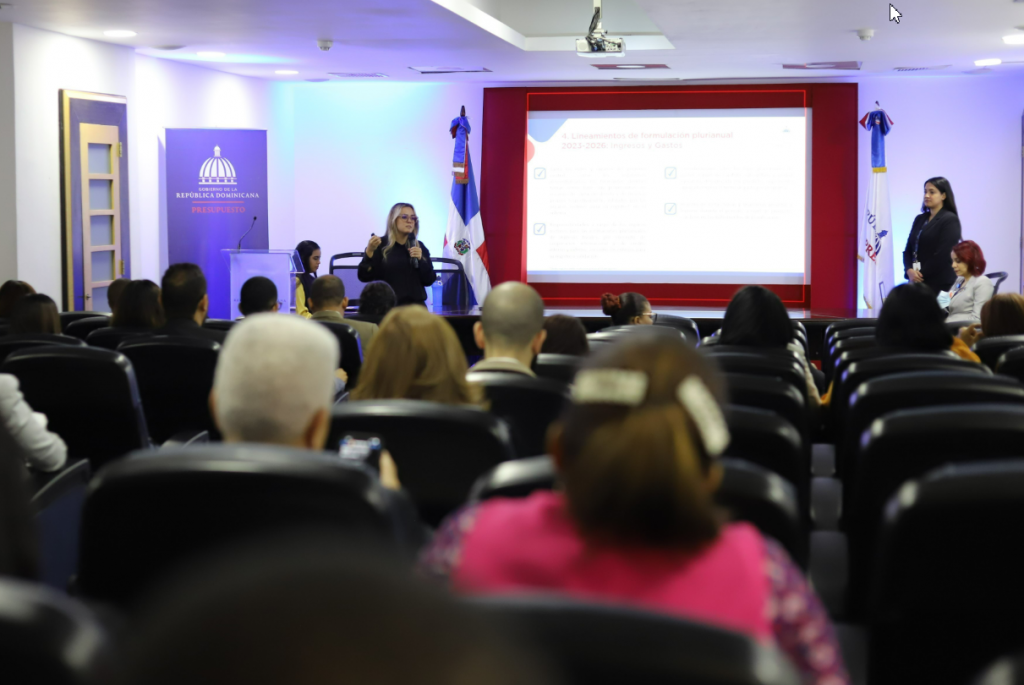
Attendance at the socialization sessions exceeded 500 employees from all areas of the national government who are preparing to draft the preliminary budget bill. The General Directorate of Budget (Digepres) concluded a series of meetings with national government institutions to provide them with input and knowledge for preparing their preliminary drafts for the 2023 General State Budget. Through the Directorate of Quality and Evaluation of Budget Management, 10 working sessions were held, attended by 560 employees from 238 implementing units. Based on these meetings organized by Digepres, it is expected that the implementing units will complete their institutional preliminary drafts by August 31, and then prepare the draft General State Budget Bill, to be submitted on October 1, in compliance with the Constitution. These initiatives are part of Digepres's ongoing efforts to improve processes related to all stages of the budget cycle. Furthermore, they aim to ensure that implementing units have up-to-date information for the formulation stage and are familiar with the guidelines and procedures for registering their institutional budget proposals. Throughout the cycle, a large team of Digepres technicians, leading the activity, provided the necessary assistance and support to guarantee that each public entity efficiently prepares its budget proposal under the multi-year model, which allows for greater planning and control. Likewise, basic criteria were explained that each executing unit must observe when preparing the Budget, including general and specific guidelines for the 2023 formulation, multi-year formulation guidelines for income and expenses for the 2023-2026 fiscal year, and the multi-year formulation of financial and physical records for 2023. Similarly, aspects related to the Financial Management Information System (SIGEF), Functional Classifier, resource projections, physical targets, programmatic categories, and other relevant topics within the budget process were covered. More than 500 participants from 238 implementing units attended this ten-meeting series, which brought together representatives from institutions such as the General Directorate of Ethics and Governmental Integrity (DIGEIG), the National Emergency and Security System 9-1-1, the State Land Titling Technical Unit, the Dignified Community program, the Single Beneficiary System (SIUBEN), the General Directorate of Strategic and Special Projects (PROPEEP), the Social Cabinet, the Supérate program, the Directorate of Governmental Strategy and Communication (DIECOM), the Emergency Operations Center (COE), the National Council for the Elderly (CONAPE), and other state institutions. The event was held in the Juan Bosch Room at the General Directorate of Budget. The workshop included introductory sessions conducted via a virtual platform and a question-and-answer session.
Digepres presents progress in budget management of the water sector
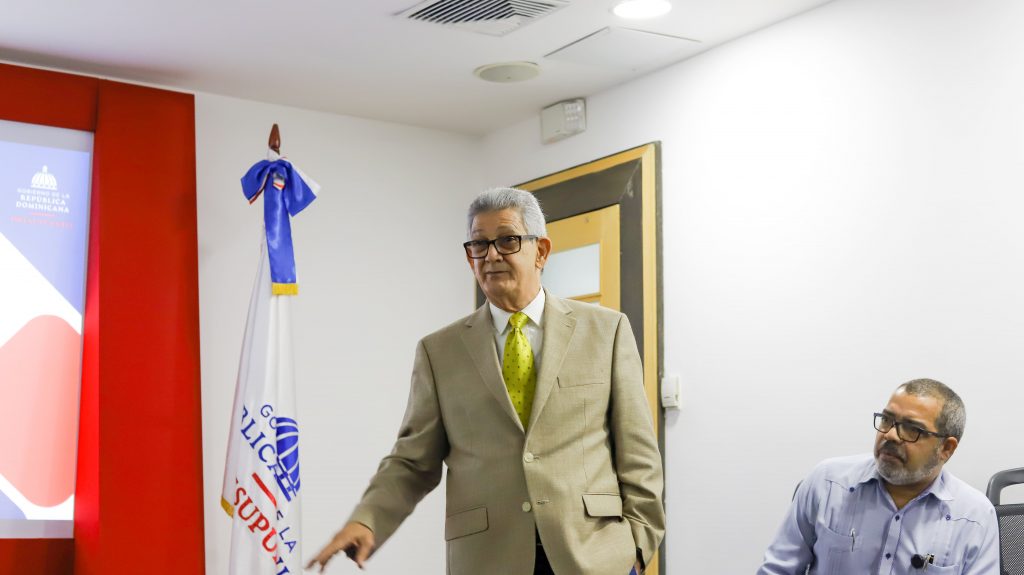
More than 401,000 public water sector companies are already executing their budgets through SIGEF. The General Directorate of Budget presented the progress achieved by water sector companies that have adopted the online execution method in the first quarter of the year through the Financial Management Information System (SIGEF). This initiative responds to Presidential Instruction No. 8661, issued on April 29, 2021, which mandates that Non-Financial Public Companies must execute their budgets through SIGEF. It is part of the General Directorate of Budget's Institutional Strategic Plan, which aims to strengthen budget management and transparency. In a presentation led by the Director General of the Budget, José Rijo Presbot, and Ana Lucía Burgos, Head of Public Enterprise Services at the Budget Directorate (Digepres), it was announced that, of the eight Water and Sewerage Corporations (CORAA) and the National Institute of Drinking Water (Inapa), four have completed their integration into the Integrated Financial Management System (SIGEF) between January and March. The remaining entities are partially integrated and are working to finalize pending activities so that, between April and June, they can complete their integration into the system and execute their budgets online. Moca, La Romana, Boca Chica, and La Vega are the four corporations currently using the system. Rijo Presbot took the opportunity to reiterate the need to continue complying with regulations and adhering to transparency in the management of public resources, and emphasized the Budget Directorate's support for continuing to promote efficiency and transparency. "There is a commitment from the President, a will, which has our support to continue efficiently resolving the water problem," added Rijo Presbot. Performance Improvements and a More Transparent Process According to the report submitted by Digepres, the expenses of entities in the water sector began to be recorded in SIGEF starting in February with an amount of RD$272.92 million, primarily allocated to contracting services. In March, the amount reached RD$738.83 million, along with a greater breakdown of expenses, such as the construction of hydraulic and sanitary works, payroll, and the purchase of materials and supplies. This demonstrates an improvement in the performance of the entities executing their budgets through SIGEF. The Integrated Financial Management System (SIGEF) is an online tool that allows public institutions to manage their budgets, record their accounting, and authorize payments, serving as a mechanism for transparency in public administration. Wellington Arnaud, Executive Director of Inapa, was present at the meeting. Alberto Rodríguez, Financial Director of the Santo Domingo Water and Sewerage Corporation (CAASD); Andrés Burgos, Director of Coraasan; Reynaldo Méndez, Director of Coraamoca; Wandy Batista, Director of Coraarom; Oliver Nazario, Director of Coraaplata; Félix de la Cruz, Director of Coraabo; Roque Badía, Director of Coraamon; and Vladimir Viloria, General Director of Coraavega.
Treasury resolution establishes automatic integration between SIGEF and the Transactional Purchasing Portal
Presupuesto, junto a la DIGES y Contrataciones Públicas, serán instituciones ejecutoras de cambios para gestión presupuestaria más ágil y transparente Santo Domingo. – A través de una resolución oficial, el Ministerio de Hacienda anunció la integración automática entre el Módulo de Gasto del Sistema de Información de la Gestión Financiera (SIGEF) y el Sistema Electrónico de Contrataciones Públicas (SECP) – Portal Transaccional, en el marco de ejecución del procedimiento de contratación que se da en las instituciones públicas. La Resolución Número 157-2022 responde también a los fines de automatizar el proceso en las etapas del gasto tipo preventivo y compromiso, así como el registro de la factura que da lugar al devengado, por parte de la institución que emite el contrato. La ejecución del programa de implementación será realizada con el acompañamiento y soporte a las Unidades Administrativas y Financieras que se incorporarán al proceso, por la Dirección de Gestión del SIAFE (DIGES), la Dirección General de Contrataciones Públicas (DGCP) y la Dirección General de Presupuesto (DIGEPRES). El documento establece que la Dirección General de Contrataciones Públicas, será la encargada de presentar un programa de implementación que incluya el alcance de las instituciones, un cronograma de fechas de integración y los criterios de capacitación y comunicación para la integración automática entre el Módulo de Gasto del SIGEF y el Sistema Electrónico de Contrataciones Públicas – Portal Transaccional. De acuerdo con el cronograma de implementación, se espera que, para el 1 de enero de 2023, el Ministerio de Hacienda, a través de la Dirección de la Gestión del SIAFE (DIGES), deshabilitará la opción de registro de compras en el SIGEF fuera del Portal Transaccional de Compras, para dar paso a este nuevo proceso automatizado. Gestión más ágil y transparente El documento explica que la medida será aplicable a todos los entes y órganos que ejecutan sus presupuestos a través del SIGEF y realizan sus procesos de compras a través del Portal Transaccional. Además, a partir de la implementación de estos cambios, el Certificado de Disponibilidad de Apropiación Presupuestaria será generado automáticamente en el SIGEF, desde el Portal Transaccional, por la Unidad Administrativa y Financiera en la partida presupuestaria relacionada al proceso de contratación. Tal como lo establece la Guía Alfabética de Imputaciones Presupuestarias por concepto del Gasto, publicada por la DIGEPRES. De igual forma, indica que, para más transparencia, una vez generado el certificado, se podrá publicar el proceso de contratación, y tanto el SIGEF como el Portal Transaccional garantizarán que el monto esté reservado en todo el ciclo del proceso hasta la firma del contrato. El Certificado de Disponibilidad de Cuota para Comprometer también será generado automáticamente en el SIGEF desde el Portal Transaccional. Sobre el SIGEF El Sistema Integrado de Gestión Financiera (SIGEF) es una herramienta informática para facilitar el desarrollo de los procesos de la gestión financiera pública del Presupuesto General del Estado; optimizar el tiempo y recursos a las instituciones y un mecanismo de transparencia. Es un sistema que, a través del internet, permite que las instituciones públicas gestionen sus presupuestos, registren su contabilidad y autoricen los pagos. Fue creado mediante el decreto 94-09.