

 EN
EN  ES
ES Rijo Presbot: “The Government is working to make public spending more efficient
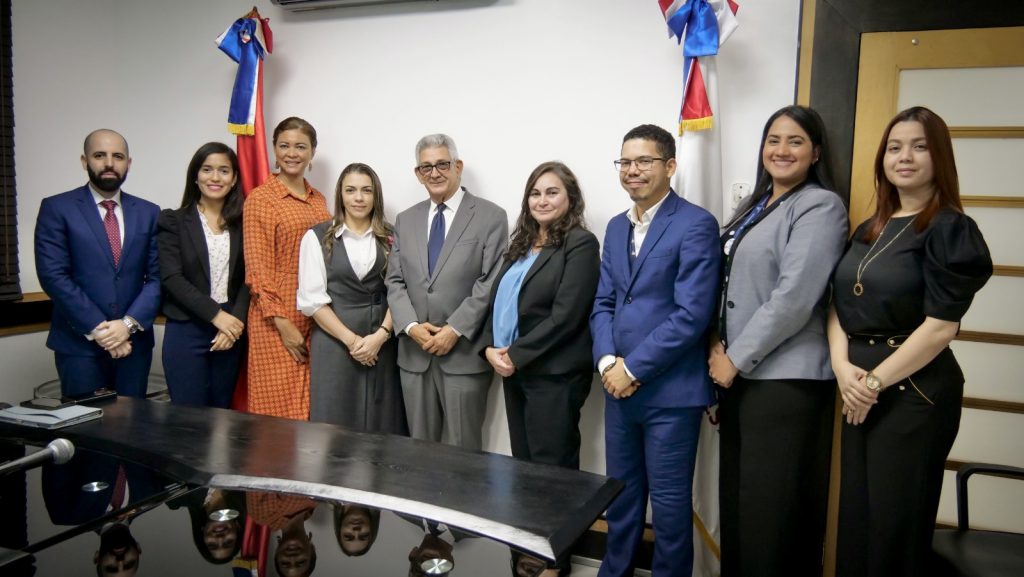
The Director General of the Budget Office received a visit from the International Monetary Fund (IMF) mission, which aimed to address crucial issues related to the country's economic performance. The Directorate General of the Budget Office welcomed Pamela Madrid, a member of the International Monetary Fund (IMF) mission visiting the Dominican Republic to strengthen bilateral relations and discuss crucial issues related to the country's economic performance, reforms, challenges, and financial future. During the meeting with the IMF representative, the Director General of the Budget Office, José Rijo Presbot, was accompanied by Odilys Hidalgo, Director of Budget Services; Griselda Gomez, Director of Quality and Evaluation of Public Spending; Rafael Jovine, Director of Economic Studies and Financial Monitoring; and Ana Miguelina Terrero, Head of Budget Performance Evaluation. María Victoria Ortiz, head of the Standards and Methodologies Department, and Juan Portalatín, head of the Financial Management Department for Formulation and Execution of the Directorate of Economic Studies and Financial Monitoring, were present. The welcoming remarks were delivered by the Budget Director, who, in addressing the topics, emphasized the Dominican Government's commitment to sound economic management, rationalizing spending, and the proper execution of public resources to improve people's quality of life. According to data provided by the Budget Director, “The Government is committed to improving spending. This is the first time in the last five election years that a primary fiscal surplus has been recorded, even amidst the political campaigning surrounding the recent municipal, congressional, and presidential elections. The deficit remained below 0.5% of GDP for five months,” Rijo Presbot stated in his address. He also said that this is an indicator of the Government's effort to avoid the historical practice of allocating the Budget for political and electoral purposes. The director of Digepres stated that the administration, led by President Luis Abinader, is making an effort to adjust non-priority spending. He also reiterated the commitment to improving management culture, segmenting the country to streamline spending, and aligning the planning and budget to ensure that physical and financial targets are met. The visit of Pamela Madrid, representative of the IMF, is in accordance with Article IV of its Articles of Agreement, under which the IMF holds bilateral discussions with its members annually to gather economic and financial information and analyze the nation's progress and economic policies with the authorities. Rafael Jovine, director of Economic Studies and Financial Monitoring, presented a comprehensive report to the IMF representative, detailing topics related to investment processes, expenditures, tax reform, budget formulation, public administration restructuring, public spending efficiency, and other issues concerning health, labor, education, infrastructure, trusts, budget formulation, police reform, social security, gender, and climate change, among other subjects. It is also worth highlighting that, during the presentation on climate change, Ana Miguelina Terrero, Head of Budget Performance Evaluation, and Griselda Gomez, Director of Quality and Evaluation of Public Spending, emphasized information on the actions, unified efforts, and transformations that the Budget Office, in conjunction with other government institutions, has been developing on this issue. Regarding budget transparency, Rafael Jovine, who led the presentation, spoke about the reforms and budget transparency implemented by the General Directorate of Budgets (Digepres). “The level of transparency at the Budget Office is evident in the weekly Budget Execution report, published without fail every Tuesday on the Digepres website. With careful analysis, one can access even the smallest record of government spending,” Jovine stated. Following the explanations provided by the Budget Office staff, Pamela Madrid of the IMF thanked Digepres for their hospitality, expressing the Fund's interest in monitoring the country's economic processes and its willingness to provide technical support in financial training for Budget Office personnel. The meeting with the IMF representative took place in the Budget Office room.
Digepres, through the Sustainable Budget project, carries out a coastal cleanup day
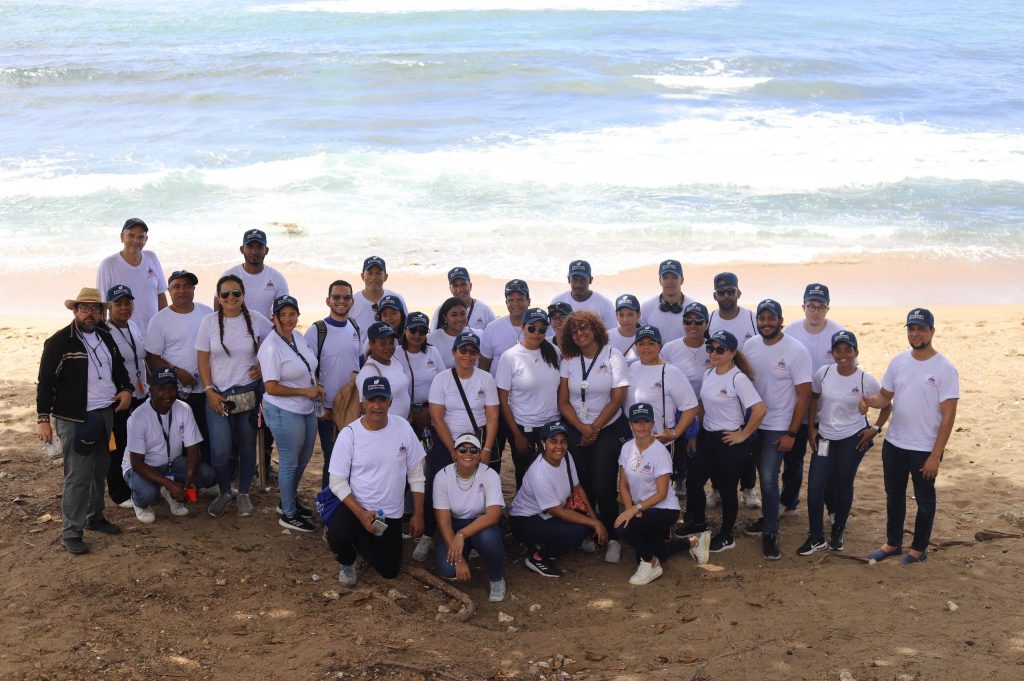
The initiative, which brought together more than 50 employees of the institution, is part of the Budget Directorate's social responsibility efforts to foster a culture of awareness and civic engagement in favor of the environment. The General Directorate of Budget (Digepres), under the leadership of the Ministry of Environment and Natural Resources, carried out a beach cleanup in Güibia, on the Malecón in the Dominican capital, as part of its institutional commitment to environmental promotion and protection. The activity, led by Francisco Abreu, head of the Budget Directorate's Human Resources department, along with Luichy Sosa, provincial director, and María Yepes, head of beach cleaning for the Ministry of Environment, involved more than 50 Budget Directorate employees who joined together in a collaborative effort to clean the shores of the popular capital city beach. In his welcoming remarks, Abreu stated that the event reflects the Budget Office's ongoing commitment to environmental sustainability and raising awareness about the importance of caring for our natural resources. He further explained that the activity is part of the institutional Sustainable Budget initiative, which aims to share the institution's social responsibility and encourage other entities to replicate this commitment to protecting our planet. "The beach cleanup is a day of celebration in which we reaffirm our commitment to the environment and promote practices that protect both the natural environment and the spaces we share," said Francisco Abreu. For her part, María Yépez, in charge of Beach Cleanups, thanked the Budget Office for joining these efforts, as the waste that accumulates on the beaches significantly impacts the planet and the health of citizens in the country. Yépez also thanked the volunteers from the Budget Office and the Environment Office who participated in the event. During the activity, organic waste, plastic containers, and disposable bags were collected, along with other types of waste that commonly pollute coastal areas. Digepres, in conjunction with the Ministry of the Environment, provided the logistical support for the successful morning event. Regarding the Sustainable Budget initiative, as part of its social responsibility efforts, Digepres is joining the search for solutions to the social and environmental problems facing our society. Through the Sustainable Budget project, Digepres is implementing a comprehensive work plan that incorporates communication and social responsibility initiatives to encourage the adoption of environmentally responsible habits. The initiative also includes the formation of a volunteer program to support the actions carried out by the institution.
Digepres launches innovative Budget Simulator: it joins initiatives for social participation and transparency
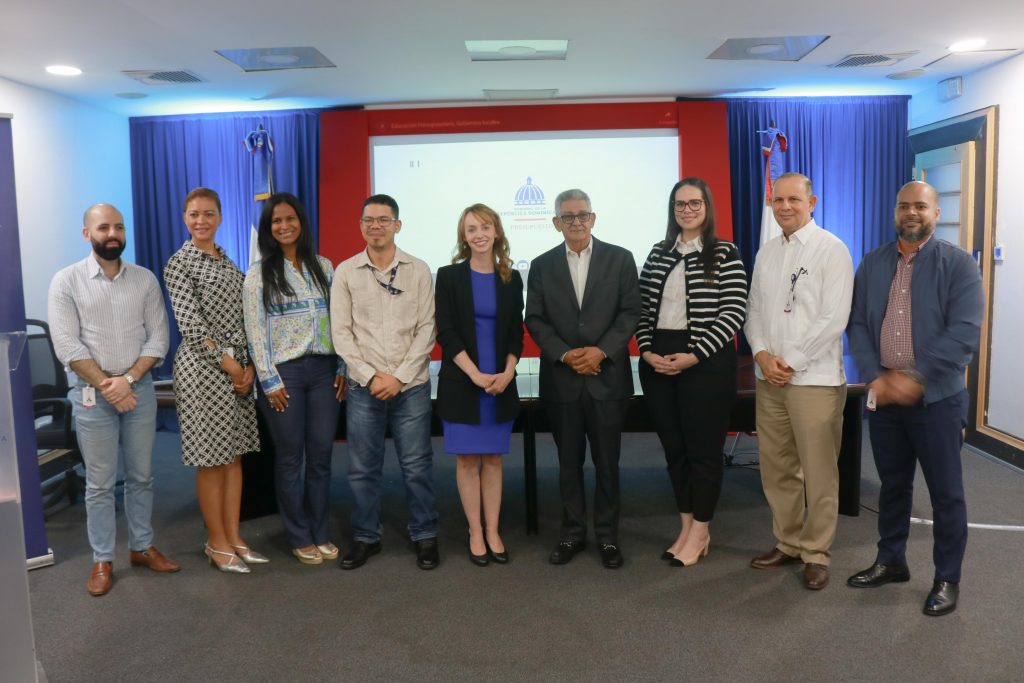
The open-access tool was developed with the support and cooperation of the U.S. Embassy in the Dominican Republic and aims to further foster civic interest in issues concerning central government spending. During a Citizen Forum, the General Directorate of Budget (DIGEPRES), as part of its strategic focus on Transparency and Social Control, and with the cooperation of the U.S. Embassy in Santo Domingo, made the 2024 Budget Simulator available to the public. This open-access tool seeks to further foster civic interest in issues concerning central government spending in the Dominican Republic and to increase transparency and social control over the budget cycle. The tool, developed with technical cooperation from the U.S. Embassy in Santo Domingo in conjunction with the Budget Directorate, initially presents the fiscal scenario that led to the formulation of Law No. Section 80-23 of the 2024 General State Budget was presented, outlining total revenue projections by category, including taxes, donations, and other income, as well as the major sectors to which total spending is allocated, according to the functional classification, related to education, debt interest, social protection, health, general administration, and energy and fuels. The event was led by José Rijo Presbot, Director General of the Budget; Iván Ramírez, Deputy Director General of the Budget; Ariel Jahner, Economic Attaché at the U.S. Embassy; and representatives from various government institutions. In her welcoming remarks, Ariel Jahner praised the initiative of the General Directorate of the Budget (Digepres) and the commitment made by the United States to support the Dominican Republic in its efforts to combat corruption and increase government transparency for its citizens. “The 2024 Budget Simulator allows citizens to stay informed about how tax revenues are spent and demonstrates the Government's commitment to promoting understanding of public spending processes among citizens and civil society organizations so they can participate in building a better society and strengthening democracy,” stated Ariel Jahner in his remarks. He also emphasized that the tool allows Dominicans to make recommendations on the use and management of the taxes they pay, which the Government uses to finance public needs. For his part, Rafael Jovine, Director of Economic Studies and Financial Budget Monitoring, explained that the tool allows users to simulate the distribution of income and expenses that best suits their criteria, within established limits, enabling them to submit their “ideal budget” to the government along with comments and opinions. “At Digepres, we don't just want to publish documents, but also to promote social participation and strengthen budget transparency,” said Rafael Jovine, explaining the tool's general features. At the close of the platform's launch, the Director General of the Budget highlighted the limitations of the current fiscal scenario, where almost 90.1% of the total projected tax revenue for 2024 is committed to six major areas: education, debt interest, social policies and subsidies, public health, central bank recapitalization, and local governments. “For us, it is important to leverage information and communication technologies (ICTs) to bring the government closer to society, in order to learn firsthand their specific assessments and opinions on current budget policy,” emphasized Rijo Presbot. Likewise, it encouraged the academic community, journalists, unions, influencers, young people, and civil society to actively participate in the discussion on spending priorities by submitting their proposals and joining the Citizen Meetings actively organized by DIGEPRES. Initiatives that guarantee the right to know: As part of its commitment to the right to know, DIGEPRES adds the Budget Simulator to other initiatives such as the Citizen Budget, the Citizen Meetings on Budgeting, weekly budget execution reports, and budget infographics; as well as actions promoted in coordination with the Ministry of Economy, Planning and Development (MEPyD), such as the registration of territorial consultations for validating citizen demands in budget formulation, which are incorporated into the RUDCT platform. This set of initiatives has earned international recognition, placing the country first in the Americas for social participation in the budget and third for social transparency, according to the 2023 Open Budget Survey by the International Budget Partnership (IBP). The event took place in the Juan Bosch Budget Room, with the participation of directors, division heads, and staff from the General Directorate of Budget (Digepres).
Fundación Solidaridad presents results of the Open Budget Survey: Dominican Republic ranks number 1 in the continent in public budget participation
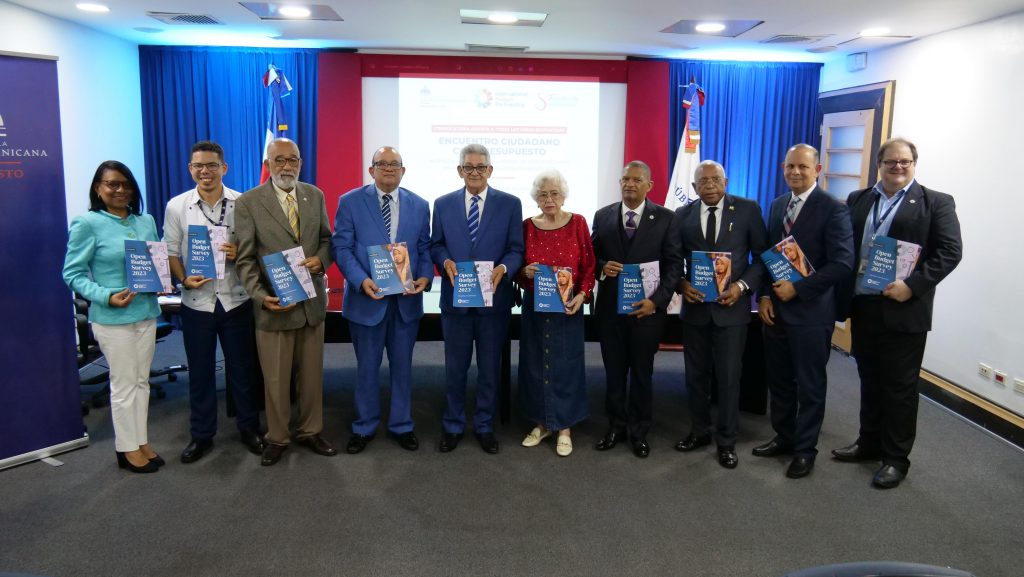
The Open Budget Survey, conducted by the International Budget Partnership, indicates that the country registered a 22-point increase compared to its 2021 score. During a Citizen Forum on Budgeting, the Solidarity Foundation, the organization representing the International Budget Partnership in the country, presented the General Directorate of Budget (Digepres) with the country results of the 2023 edition of the Open Budget Survey. The Dominican Republic obtained a score of 48 points in Public Participation, doubling its 2021 score. In this edition of the Open Budget Survey for the Dominican Republic, conducted by the International Budget Partnership (IBP), the results place the country fourth globally out of 125 countries and first among Latin American and Caribbean countries, according to data from the IBP's Open Budget Survey for the Dominican Republic. The survey also indicates that the Dominican Republic increased from 22 points in 2021 to 48 in 2023, registering a 26-point increase between the two measurements. This data was shared during the formal presentation of the document to the General Directorate of Budget. The Open Budget Survey (OBS) is the result of collaborative research between the International Budget Partnership (IBP) and civil society organizations in 125 countries, representing diverse regions and income levels over a 16-month period. The event was led by José Rijo Presbot, Director General of Budget; Iván Ramírez, Deputy Director General of Budget; Milagros Ortíz Bosch, Director of the General Directorate of Ethics and Governmental Integrity (DIGEIG); Rómulo Arias Moscat, Director General of Government Accounting; Derby de los Santos, Vice Minister of the Treasury; and Camila Hernández Villamán. The event was attended by Juan Carlos Arguelles, head of the Fiscal Studies Department of the General Directorate of Fiscal Analysis and Policy at the Ministry of Finance; Martín Zapata Sánchez, Vice Minister of the General Directorate of Tax Policy and Legislation; and Juan Castillo and Katia Lambis, Executive Director and Researcher, respectively, of Fundación Solidaridad. Rafael Jovine, Director of Economic Studies and Financial Budget Monitoring, explained in his opening remarks that the meeting aimed to further strengthen transparency, social oversight, and accountability regarding the country's fiscal governance and the General State Budget for the benefit of the public. For his part, Juan Castillo, from Fundación Solidaridad, explained that the Open Budget Survey is based on three fundamental pillars: transparency, participation, and oversight. “Transparency helps the public understand the government’s budget priorities; formal budget oversight by the legislative branch guides and examines budgetary options, while auditing entities evaluate the legality, efficiency, and effectiveness of public spending,” Castillo emphasized while sharing the survey results. Milagros Ortiz Bosch, director of DIGEIG, stated that receiving this international evaluation from the International Budget Partnership is highly gratifying, demonstrating that the country continues to advance in transparency and public participation. “We are working well, and these growing numbers prove it,” Ortiz Bosch affirmed. She added that for this progress to continue, citizens must demand that the laws be enforced. In his closing remarks, José Rijo Presbot expressed the government’s commitment to continuing to strengthen and empower citizens to build together the society we all want. Transparent and Participatory Budgeting: The International Budget Partnership's (IBP) Open Budget Survey is the only independent, comparative measure of budget transparency worldwide, regularly used by governments, donor agencies, and civil society organizations to inform budget reforms and other issues. Since August 2020, the General Directorate of Budget (Digepres) has implemented innovative measures and projects aimed at promoting and strengthening transparency, social oversight, and citizen participation in the budget cycle. For the first time ever, Digepres publishes a weekly report on budget execution, which details the management of public resources by the central government and is updated every Tuesday at the end of each week. Furthermore, in an effort to bring the budget closer to the public, Citizen Forums are held to address topics related to the General State Budget, its formulation, approval, execution, and monitoring, in an open forum with various sectors of civil society. The Budget Office has the institutional portal Digepres.gob.do and its social media @DigepresRD to make all budget information available to citizens.
For the first time, Digepres conducts an external evaluation of the budget program and includes equity among criteria
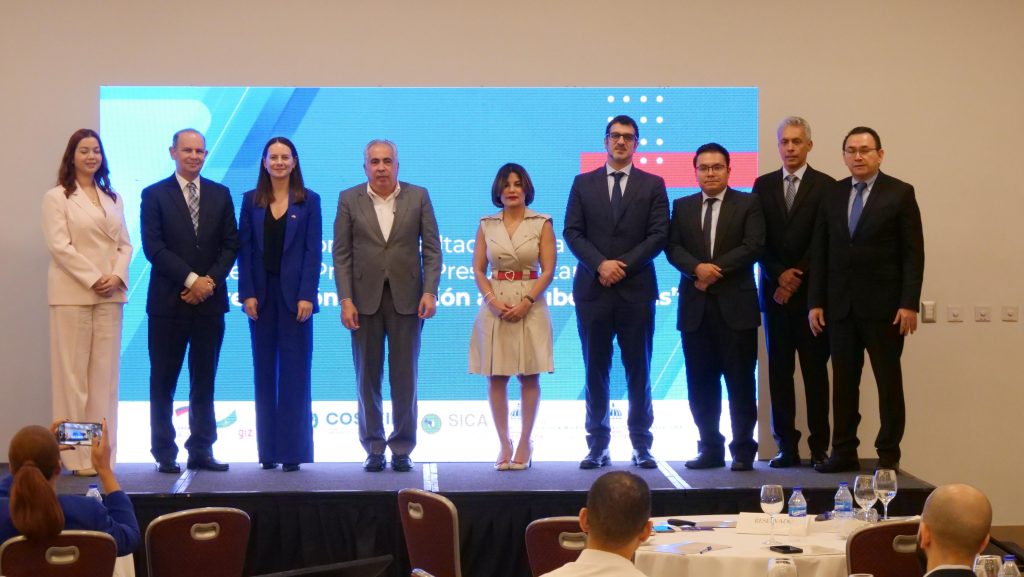
The evaluation of the Results-Oriented Budget Program for Tuberculosis Care and Prevention sets a precedent in budgeting practices, regulations, and the impact of measurements by international organizations. Santo Domingo, Dominican Republic – For the first time, and in a joint effort to improve the efficiency of public spending and maximize social welfare, the Dominican Republic's General Directorate of Budget, the German Development Cooperation, and the Executive Secretariat of the Council of Ministers of Finance of Central America, Panama, and the Dominican Republic (COSEFIN) presented the report on the results of the external evaluation of the Budget Program for Tuberculosis Care and Prevention in the Dominican Republic. The report outlines measures, strengths, and challenges related to the issue. This initiative represents a significant step forward for the Dominican Republic in the evaluation of budget programs, the measurement of public spending efficiency, and contributions to a gender perspective and the needs of vulnerable sectors. The event was led by Iván Ramírez, Deputy Director of the General Directorate of Budget; Janna Krenz, Economic and Cooperation Attaché at the German Embassy in Santo Domingo; Ricardo Elías Melgen, Director of Population Health Management; Rafael Gómez, project consultant; Puja Noshadi, Director of the Good Financial Governance Program at the German Cooperation Agency (GIZ); and Ana Miguelina Terrero, project technical coordinator, were present. Representatives from various government institutions involved in the process also participated. Ms. Janna Krenz, from the German Embassy in Santo Domingo, delivered the welcoming remarks, highlighting the importance of this initiative because it contributes to improving public services and fiscal sustainability. Ms. Krenz took the opportunity to acknowledge Digepres' leadership in promoting efficient public finance management. "We are honored to share the progress and impact of the Evaluation, which also received support from German cooperation," said Ms. Krenz. For his part, Iván Ramírez, Deputy Director of the Budget Office, representing the Director of the Budget Office, José Rijo Presbot, highlighted the milestone marked by the evaluation of budgetary programs. “This first program we evaluated paves the way for others, providing citizens with information on the actual investment of resources and the Government's commitment to ensuring the social well-being of Dominicans,” he stated. Likewise, Ana Miguelina Terrero, from the project's technical coordination team, noted that it sets a precedent in the work of the Budget Office, its regulations, and its influence on high-level measurements by international organizations. Rafael Gómez, a consultant for the project, described the results as satisfactory and emphasized, among other aspects, the fact that, for the first time, this type of evaluation includes the criteria of equity and a gender perspective. The evaluation also focused on the most vulnerable sectors, the social impact and human benefit, and how tuberculosis reduces family income, causes social exclusion, and increases mortality. Finally, Dr. Ricardo Melgen, Director of Population Health Management at the Ministry of Public Health, addressed the attendees, stating that tuberculosis is the second leading infectious cause of death after COVID-19, according to the WHO. The tuberculosis incidence rate in the targeted regions was 38.6% in 2023, and the detection gap was reduced to a record low of 15.6% in 2022. Government institutions such as the National Health Service and the Supérate program also participated in the event. The report is available on the institutional website Digepres.gob.do.
DIGEPRES successfully concludes first phase of external audit of the Integrated Quality and Anti-Bribery System
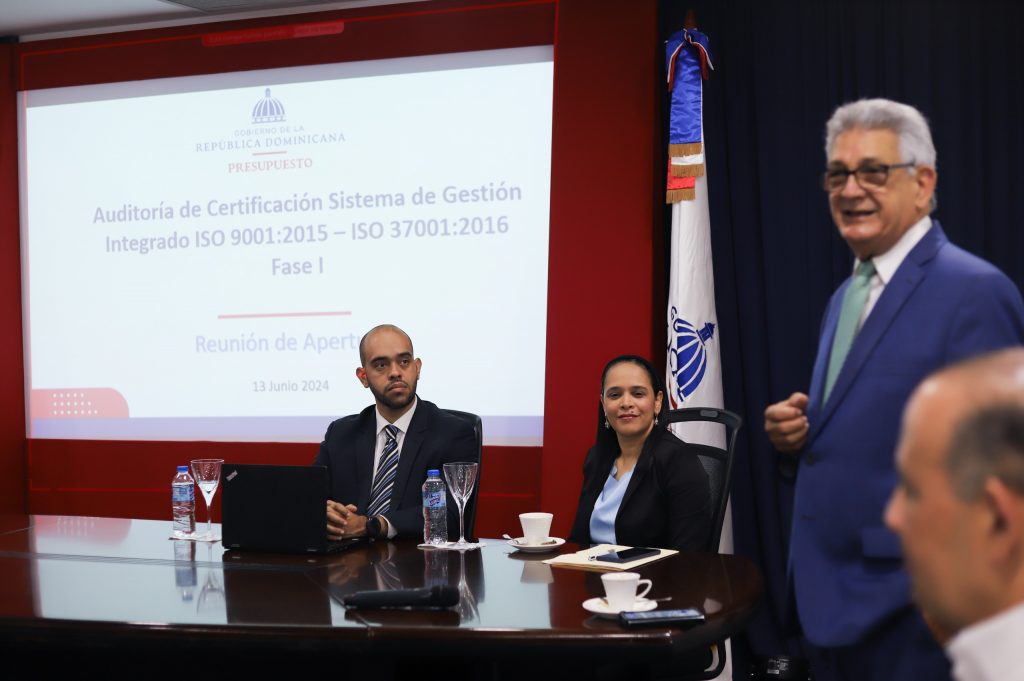
With this initiative, the Budget Directorate reaffirms its commitment to strengthening processes, controls, and quality standards in all its areas of operation for continuous improvement. The General Directorate of Budget (DIGEPRES) successfully completed the first phase of the External Audit of the Integrated Quality and Anti-Bribery System to determine the organization's capacity to comply with applicable legal, regulatory, and contractual requirements to obtain certifications under ISO 9001:2015 and ISO 37001:2016. The activity, coordinated by the Planning and Development Department, was led by external auditors Jhoan Regalado, Armando Montero, Alberto Almonte, and Heidy Castillo from the Dominican Institute for Quality (INDOCAL). The opening ceremony included welcoming remarks from the Director General of Budget, José Rijo Presbot, accompanied by Iván Ramírez, Deputy Director General, and other officials of the institution. Rijo Presbot, in his remarks, stated that the process is part of Digepres' commitment to continuous quality improvement and measures to prevent inappropriate conduct within the institution. "This process contributes to what we have been striving to establish since the first day of our administration: a horizontal, participatory, open, transparent organization committed to values and ethics," Rijo Presbot emphasized. He also affirmed that compliance with regulations within the Budget Department is paramount. For his part, Jhoan Regalado, lead auditor of the evaluation team, thanked the Budget Department for its commitment and willingness to provide feedback and identify opportunities for institutional growth and development. The meeting then moved on to the day's agenda. Patricia Castillo, head of the Planning and Development Department, expressed that maintaining and consolidating the Integrated Quality and Anti-Bribery Management System entails commitments and responsibilities from all participants; therefore, she expressed her gratitude for the work that the Directorate, area managers, and staff have been carrying out for months to improve the System. During the process, which began at eight in the morning and concluded at four in the afternoon, the auditors met with various managers from each of Digepres's departments. They verified the system, the defined objectives of the processes, and the effective execution of established procedures to ensure quality and continuous improvement within Digepres. Audit Closure: Finally, in the afternoon, the lead auditor, Jhoan Regalado, formally declared the review and evaluation of the effectiveness of the Integrated Quality and Anti-Bribery Management System closed, acknowledging the importance of having certified processes in the future. Regalado highlighted the Budget Department's unwavering commitment to continuous improvement and opportunities for growth and development at the organizational level, and also reported on the process of delivering the final audit report. For his part, Iván Ramírez, Deputy Director of Budget, sent a heartfelt message of congratulations and recognition to all collaborators for the satisfactory results obtained in the first phase of the audit: “Congratulations to all those involved for emerging victorious in this first stage, a product of our own awareness and organizational culture.”
Analysis of budget execution

The analysis of budget execution must always be objective and based on the appropriate use of the data collection tools. Since the beginning of this administration, the General Directorate of Budget (DIGEPRES) has established transparency and social oversight as one of its strategic priorities. This has placed the Dominican Republic first in the Americas and fourth out of 125 countries evaluated in terms of citizen participation in the budget, according to the 2023 Open Budget Survey (OBS) conducted by the International Budget Partnership (IBP). The primary source for budget analysis is DIGEPRES' weekly publication on its website, from which, through the correct use of a pivot table, precise information can be extracted according to the different budget classifications. Thus, to say that: “In April, the Government allocated 1,037 million pesos in “per diems and representation expenses”, averaging almost 35 million pesos daily”, is a misuse of the information provided and of the concept of government, since in that data it is not differentiated between the Executive Branch and the other constitutional bodies of the State, including the Central Electoral Board. Excluding the Central Electoral Board's (JCE) expenditure on "per diems and representation expenses" in the context of presidential, congressional, and municipal elections, which totaled RD$973.6 million from January to April, the Executive Branch's spending on these items amounts to RD$152.8 million in 2024, compared to RD$334.1 million in 2019 and RD$367.1 million in 2020. It is worth noting that during 2019 and 2020, the Ministry of Foreign Affairs alone spent RD$320.3 million and RD$350.9 million, respectively—significantly more than all other ministries combined in 2024. Specifically, in April 2020, the Executive Branch spent RD$93.8 million. millions, in “per diems and representation expenses”, while the amount spent in 2024 reached only RD$38.6 million. Similarly, when it says: “In April 2024, the Government reported having allocated 20,929 million pesos in remuneration, an increase of 2,095 million pesos compared to the monthly average of 2023 (excluding the months of double salary payment, of course)”, the data is again used inaccurately and the classification is incorrect. In sub-account 2.1.1 Remuneration, it is true that the exact increase in the Executive Branch is 2,024 million pesos, but this is because a clear policy has been followed to comply with the 4.1% of GDP allocated to education and improving the salaries of police, defense, and drug and controlled substance prevention personnel at the national level, representing 80.1% of the increase. The "onion salary" no longer exists. The increase in remuneration for the other institutions averaged RD1.1%, which, considering natural inflation between periods, is not significant. Finally, to make fair comparisons between years, it is necessary to deflate the amounts to isolate the effect of price increases between 2024 and previous years such as 2019. Furthermore, it is essential to understand the changes made to budget classifications, in this case, the expenditure category, and administrative decisions that increase transparency in expenditure records, a factor evidenced by the elimination of the use of "scrapbook" accounts. Without considering these elements, any comparison can be misleading. Never before have the Government and the General Directorate of Budget implemented measures to guarantee citizens' right to know and to raise levels of transparency, oversight, and social participation. For example, the information provided by the institution and the tools employed to bring the General State Budget closer to the public than ever before are readily available.
The Dominican Republic ranks 1st in the continent for social participation in the Budget, achieving a historic rating in the 2023 Open Budget Survey
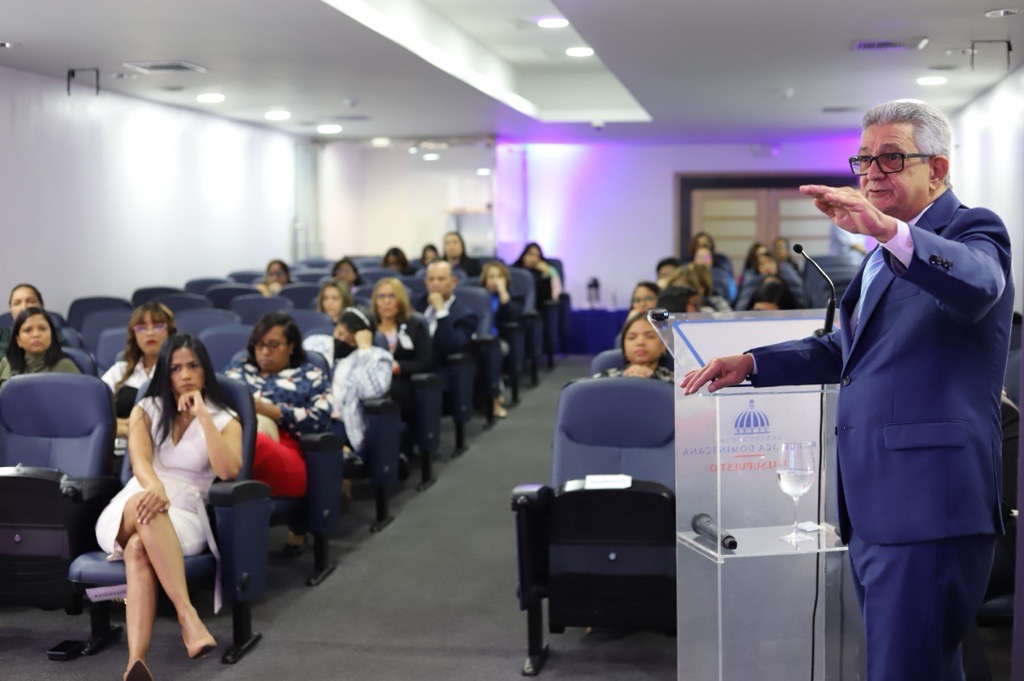
Citizen Encounters, Territorial Development Councils, the RUDCT (Regional Network of Community-Based and Territorial Councils), and more interactive and effective communication are among the strategic social participation initiatives highlighted in the results of the 2023 Open Budget Survey. The International Budget Partnership (IBP), through the 2023 Open Budget Survey, ranks the Dominican Republic first in the Americas in the Social Participation in the Budget Index and fourth globally, behind only South Korea, New Zealand, and the United Kingdom, out of 125 countries evaluated. In this assessment, the country achieved a record score of 48 points, compared to the global average of just 15 points, rising from 22 to 48 points in only two years. Despite a regional context of decline in budget transparency in Latin America and the Caribbean, the Dominican Republic maintained its score of 77 points. In this category, the global average is only 45 points. In this edition, the Dominican Republic ranks 12th out of 125 countries and 3rd among countries in the region, behind Brazil and Mexico and ahead of Canada (16th) and the United States (22nd). The global report, available on the IBP website, highlights the country's efforts in demonstrating how the budget is distributed and impacts different groups, such as children, gender equality, and geographic areas, as specific aspects that have improved compared to previous editions. The report also recognizes the alignment of the budget with the 2021-2024 National Multi-Year Plan and the Sustainable Development Goals, particularly in tracking the needs of specific groups and making long-term strategic investments to improve people's lives and strengthen the economy. The same report highlights that “an important lesson to be learned from the Dominican Republic is the value of presenting information over several years, which can demonstrate the impact budgets have on communities over time, improve advocacy, and keep countries on track to meet development goals.” Again, in terms of transparency, we continue to ensure the public availability of the eight strategic documents in the budget cycle. The Dominican Republic’s budget management achievements have been recognized by IBP Executive Director Ana Patricia Muñoz in the global report: “The Dominican Republic has made progress in each consecutive round of the survey, and its efforts to broaden public deliberation around investment projects help create a shared sense of acceptance of the development agenda of one of Latin America’s fastest-growing economies. These positive points underscore that an open budget agenda is indeed possible anywhere, provided there is political will and leadership to drive reform.” These achievements, evidenced in the results of the 2023 Open Budget Survey, reflect this administration's commitment to providing genuine opportunities for citizen participation in the General State Budget. The IBP report highlights several strategic initiatives of this administration that have contributed to these results, including the Territorial Development Councils, Citizen Meetings, and the Single Registry of Territorial Citizen Demands (RUDCT). The report also emphasizes and values three specific aspects: (1) the decentralization of budget formulation, (2) more meaningful and interactive communication, and (3) the impact on both budget formulation and execution. In particular, the report underscores the high performance achieved in the area of social participation in budget formulation, as part of the budget cycle, with a score of 80 points. This aspect is particularly relevant considering that citizen participation in this stage of the draft budget has historically been the most opaque. It demonstrates that the days of budget discussions behind closed doors, among bureaucrats and without public oversight, are over. This represents a giant leap, increasing from 22 to 48 points in just two years, and demonstrates the firm commitment of the current administration to raising the levels of budget transparency, social participation, and efficiency in the management of public resources intended to improve the lives of citizens and continue guaranteeing the growth and strength of the Dominican economy. A more citizen-focused and accessible General State Budget: Since the beginning of the current administration led by José Rijo Presbot, the General Directorate of Budget has undertaken efforts aimed at citizen participation, social oversight, and transparency. These initiatives include the weekly budget execution report, Citizen Meetings, the Citizen Budget, the publication of reports and infographics on the institutional website and through social media, and an effective response through public access channels to information to guarantee citizens' right to know. This demonstrates that the days when the budget was discussed behind closed doors and without public scrutiny are over.
Digepres closes Ethics Week with journalist Altagracia Salazar as an ethical role model
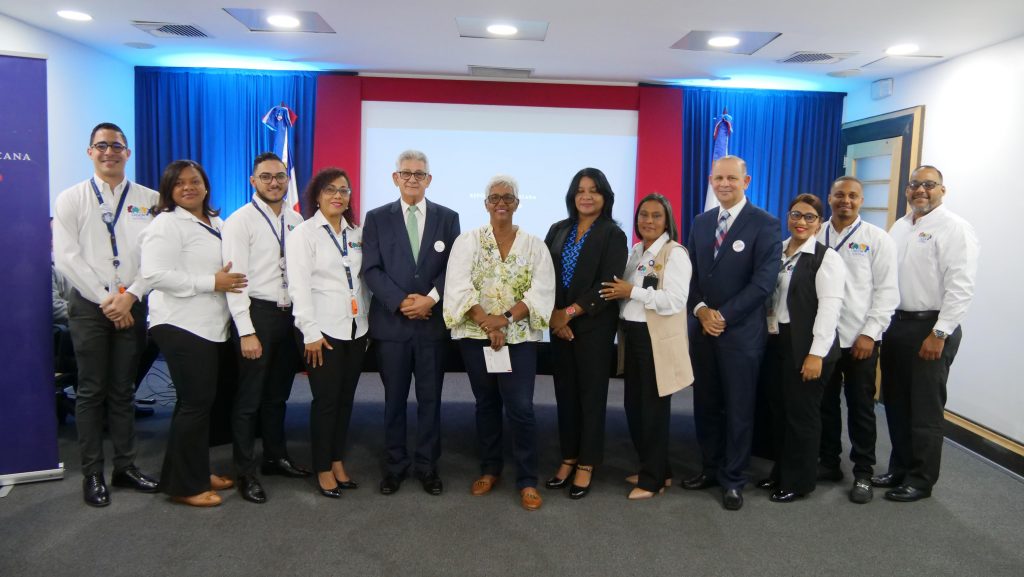
The prominent journalist shared the importance of ethics in regulating moral behavior, both personally and professionally. The General Directorate of Budget (Digepres) concluded "Ethics Week 2024: For a Culture of Integrity" with a meeting featuring renowned journalist Altagracia Salazar, coinciding with National Citizen Ethics Day on April 29. The week-long activities aimed to further promote an ethical culture among Budget Directorate staff. The closing event was led by the Director of the General Directorate of Budget, José Rijo Presbot, accompanied by Deputy Director Ivan Ramírez, Glenny Villanueva, head of the Public Ethics Department of the General Directorate of Ethics and Governmental Integrity (DIGEIG), representing Milagros Ortíz Bosch, as well as department heads, area supervisors, and Budget Directorate staff. The welcoming remarks were delivered by Soribel Medina Lagrange, general coordinator of the Governmental Integrity and Regulatory Compliance Commission (CIGCN) and Governmental Integrity Officer (OIG) of Digepres, who thanked those present for their participation and encouraged them to maintain a firm commitment to ethical values within and outside the institution. In his remarks, Budget Director José Rijo Presbot thanked Altagracia Salazar for her presence, highlighting her as a professional who dignifies journalism and serves as an ethical role model. “Altagracia is a dignified, honest, and hardworking woman, impervious to malice, degradation, irresponsibility, blackmail, bribery, or any of the corrupting influences displayed by some inferior beings who claim to practice ‘journalism,’” Rijo Presbot quoted, referring to an editorial by journalist Fausto Rosario about the reporter. Addressing the audience, Altagracia Salazar explained the situations she faced for practicing journalism ethically, which led her through difficult times. However, she understood that it was the right path if she wanted to practice her profession honestly, transparently, and fairly. “Ethical values never go out of style; the best way to make them visible is through consistency,” she said. “Ethical values make us different and prevent us from being bought,” explained the veteran journalist. Salazar also emphasized that consistency plays a very important role, and that values are not imposed, but rather result from the dedicated effort we put into cultivating them. As part of the closing program, the second episode of the documentary “The Budget in History,” which has six episodes, was released. This episode, titled “Beginnings of the Economy and the Budget in the Dominican Republic,” is an initiative of the Communications Department, contributing to the institutional record of this budget year. During Digepres Ethics Week, the importance of integrity and transparency in government management was promoted both internally and externally within the organization. Special guests and Budget Department staff participated. National Day of Civic Ethics and Institutional Commitment: Every year on April 29, the country celebrates “National Day of Civic Ethics,” and on this memorable day, Ulises Francisco Espaillat, one of the most prominent politicians, is honored. The democratic and honest institutions that the country enjoyed in the 19th century are a symbol of civic integrity and transparency. Digepres, under the leadership of the General Directorate of Ethics and Governmental Integrity (DIGEIG), established its Governmental Integrity and Regulatory Compliance Commission (CIGCN) in compliance with Decree No. 791-21, which declares the implementation and election of Governmental Integrity and Regulatory Compliance Commissions (CIGCN) in all public institutions a high national priority. This marks the first time the Integrity Commission has representatives from all organizational groups, ensuring the participation and commitment of employees at all levels. The event was held in the Juan Bosch Hall at Digepres.
Digepres receives representatives from the French Agency to discuss governance and climate action issues
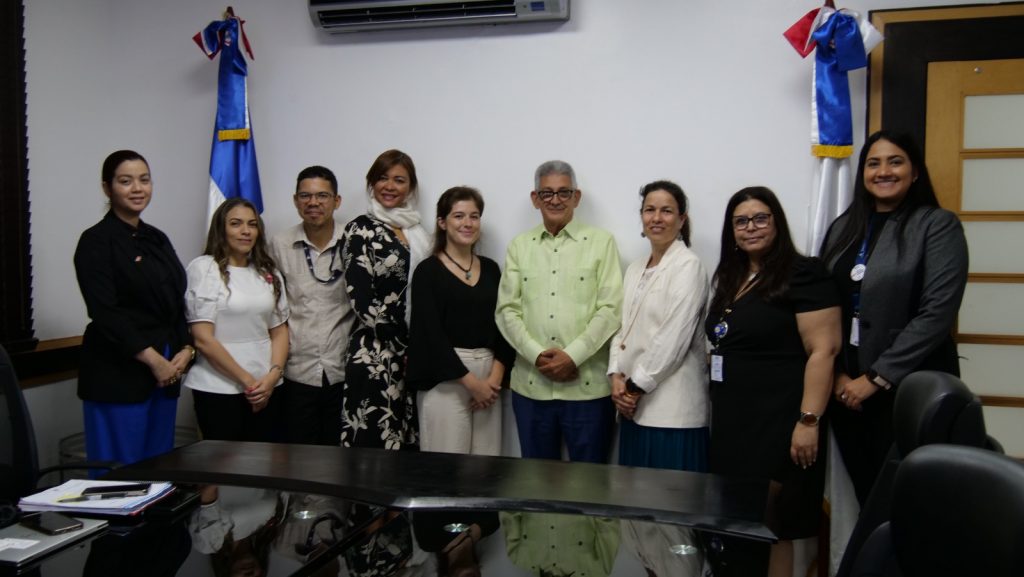
The meeting served to share initiatives and implement future green budgeting and gender mainstreaming actions. The Director of the General Directorate of Budget, José Rijo Presbot, received a mission from the French Development Agency (AFD) in a meeting that laid the groundwork for identifying and evaluating financing and technical cooperation needs for a green budget transition. The meeting also provided an opportunity to address aspects related to gender mainstreaming and progress, needs, and challenges linked to the climate change expenditure classification. The welcoming remarks were delivered by the Director of Budget, who thanked the mission for its visit and emphasized the importance of combating and adapting to climate change. Rijo Presbot was accompanied by Digepres directors, including Odilys Hidalgo, Head of the Budget Services Directorate; Griselda Gómez, Director of the Quality and Evaluation of Budget Management Directorate; Rafael Jovine, Director of Economic Studies; and Paola Chaljub, Head of the Communications Department. Ana Miguelina Terrero, head of the Performance Evaluation department; Jhannet Taveras, head of the Economic Services department; and the AFD mission, comprised of Varinia Tromben, a public finance expert, and Sara Davo Boza, head of energy, climate, and sustainable finance projects, were present. José Rijo Presbot explained to the mission the government's economic actions, outlined the importance and benefits of tax reform, and reiterated that the General Directorate of Budget supports joint climate initiatives. Varinia Tromben, in her presentation, explained the agency's interest in strengthening the dialogue on public policies between the French Development Agency (AFD) and the Budget Office regarding sustainability from various perspectives. She also outlined the mission's intention to forge agreements that will lead to technical assistance and service offerings for implementing the green budget transition and other related issues. "France has extensive experience in international cooperation on green budgeting, and the AFD provides financial and technical support for this topic," Tromben explained. She also listed the cross-cutting themes that the AFD defines to achieve this objective. For his part, Rafael Jovine, in his presentation, explained to the mission aspects and data from the Results-Based Budgeting Network meeting, which focused its agenda on environmental issues through the experiences of participating countries. He also outlined the actions that the Budget Office has been developing on this topic. Meanwhile, Griselda Gómez highlighted the work of the implementing units, the importance of gender mainstreaming to continue contributing to reducing inequality gaps in the country, and the need to strengthen technical capacities to carry out the processes and arguments presented. Regarding the Budget Directorate (Digepres) and environmental actions, it was noted that the Budget Directorate has a Conceptual Model System for Identifying and Classifying Public Spending on Climate Change and Disaster Risk Management and has developed actions to combat climate change in coordination with the Inter-American Development Bank (IDB), as well as sustainable initiatives to raise awareness and sensitivity to environmental issues among its staff. The event took place in the Budget Directorate's office.