


 EN
EN  ES
ES Digepres launches Ethics Week, for a culture of institutional integrity
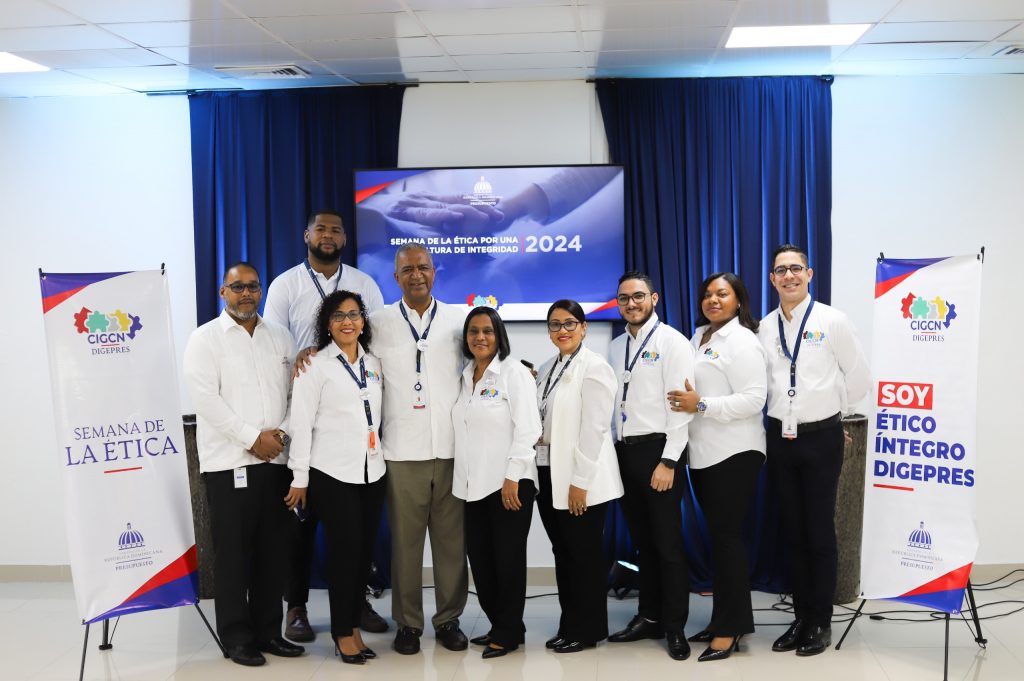
Las actividades incluyen charlas y talleres a llevarse a cabo desde el 22 al 30 de abril con el objetivo de seguir fomentando la cultura ética entre los colaboradores de Presupuesto La Dirección General de Presupuesto anunció la “Semana de la Ética por Una Cultura de Integridad” en su versión 2024, con el objetivo de promover las buenas prácticas y fortalecer la cultura de integridad dentro de Presupuesto. El anuncio fue hecho por la coordinadora general de la Comisión de Integridad Gubernamental y Cumplimiento Normativo (CIGCN) y Oficial de Integridad Gubernamental (OIG) de la Digepres, Soribel Medina Lagrange, a realizarse del 22 al 30 de abril. Medina en su intervención socializó el nuevo slogan institucional “Soy Ético, Soy Íntegro, Soy Digepres”, expresando su satisfacción por el trayecto y desafíos relacionados con la ética y la integridad, asumida por los colaboradores para desempeñar un mejor trabajo dentro la institución. De su lado, Francisco Abreu, encargado del departamento de Recursos Humanos y en representación del señor José Rijo Presbot, director de Presupuesto agradeció la participación de los colaboradores y valoró de manera positiva los encuentros y promoción de una cultura institucional basada en la ética. “Debemos apostar a la promoción de valores y medidas destinadas a fortalecer la defensa del interés común y el ejercicio ético de la función pública”, manifestó Abreu. El compendio de eventos socializados comprende apertura de la semana de la ética, ¿Conoces la CIGCN Digepres?, mensajes vinculados al tema, cinefórum y para el cierre, una charla conferencia a propósito de celebrarse el 29 de abril el Día Nacional de la Ética Ciudadana. Comisión de Integridad Gubernamental y Cumplimiento Normativo Digepres, bajo el liderazgo de la Dirección General de Ética e Integridad Gubernamental (DIGEIG), conformó su Comisión de Integridad Gubernamental y Cumplimiento Normativo (CIGCN) en cumplimiento con el Decreto No. 791-21, que declara de alta prioridad nacional el proceso de implementación y elección de las Comisiones de Integridad Gubernamental y Cumplimiento Normativo (CIGCN) en todas las instituciones públicas. Las comisiones de ética están reguladas por el Decreto no.143-17, instructivo no. 04- 2017 y resolución 1/2019 y son responsables de promover el buen funcionamiento de la administración pública a través del desarrollo de una cultura organizacional de ética y transparencia en las instituciones públicas donde operan. En la actualidad, se trata de la primera vez que la Comisión de Integridad cuenta con representantes de todos los grupos organizacionales, como una manera de asegurar la participación y el compromiso de los colaboradores en todos los niveles.
Budget Director: “Government maintains strict control over public spending”

De acuerdo con Rijo Presbot, variación interanual del gasto del primer trimestre del 2024 es 6.5 veces inferior a la del igual periodo del 2020 y 41.5 veces inferior a la del 2012. Por primera vez en dos décadas se reduce deuda pública El director general de Presupuesto, José Rijo Presbot, explicó que, en este año se experimentó un superávit de un 0.4%, que aún se mantiene, considerándolo como un indicador de salud financiera del país, que significa, que el Gobierno recaudó más dinero del gastado, en un hecho registrado por última vez en 1994. El director de Presupuesto durante una entrevista en el programa “El Despertador”, transmitido a través de Color Visión y conducido por Ana Mitila Lora, Esteban Delgado y Rosa Encarnación, expresó que la gestión del presidente Luis Abinader se caracteriza por un buen manejo de las finanzas públicas y sólido crecimiento económico, a pesar de que se instaló en medio de un mundo cerrado. Indicó Rijo Presbot que, el Gobierno realiza encomiables esfuerzos para eficientizar el gasto público y reorientarlo hacia más y mejores servicios de calidad para la ciudadanía. En su intervención en el programa matinal, Rijo Presbot explicó en materia de subsidio que, esta gerencia, ha destinado en lo que va de año RD$6,500 millones a los carburantes, para frenar el alza debido a las guerras entre Rusia y Ucrania e Israel y Hamas, y con ello evitar elevar el costo de la vida de los ciudadanos en el país. “Por ese subsidio a los carburantes, hoy manejamos una inflación de un 3.6% a un 3.7%, en este primer trimestre del año”, aseguró el director de Presupuesto. Rijo Presbot, hizo referencia a otros subsidios sociales a los que se destinan partidas específicas en el presupuesto nacional de cada año, para mejorar la calidad de vida de las familias más vulnerables. En tanto, señaló otros esfuerzos realizados por esta gestión, para dignificar la vida de la gente. Tras ofrecer detalles que demuestran la mejora en la calidad del gasto público del Estado dominicano dijo que, en cuanto a asignación de viáticos, que siempre han sido ampliamente criticados por algunos sectores, hubo una reducción. “Hay un control absoluto en representación de viáticos en este gobierno. Todo funcionario debe dar cuentas de cómo lo gastó y, si no tiene la factura que comprueben ese gasto, debe devolver el dinero”, destacó el director de Presupuesto. Con relación al Gobierno y los aumentos salariales, destacó los aplicados a los miembros de la Policía Nacional; conscriptos y rasos, que ahora es de RD$29,025.07 más los incentivos; un 30% a sueldos del personal de salud y el incremento salarial que favoreció a maestros jubilados y pensionados, un impacto significativo para dichos sectores. Gobierno registra el menor gasto público en año electoral Rijo Presbot, afirmó que, en este año electoral, el Gobierno del presidente Luis Abinader gasta solo el dinero presupuestado y que, además, se ejerce el gasto bajo el control y cumplimiento estricto de las normas, porque la prioridad de esta administración es la solución de los problemas fundamentales de la nación dominicana, lo que no sucedía en otras gestiones anteriores. “Ahora no hay autorización para malgastar recursos públicos en la campaña electoral”, estableció Rijo Presbot en su intervención en el programa matutino. En ese sentido, Rijo Presbot explicó que por primera vez en los últimos siete años electorales se ha registrado el menor gasto primario por parte del Gobierno, lo que refleja el control en el uso de los recursos del Estado. De acuerdo con Rijo, la variación interanual del gasto del primer trimestre del 2024 es 6.5 veces inferior a la del igual periodo del 2020 y 41.5 veces inferior a la del año 2012. “El 2012 fue el año del mayor desborde del gasto público del cual se guarde registro en las últimas décadas”, apuntó el director de Presupuesto. En cuanto a remuneraciones y contribuciones, se pasó de 1.12% a 0.98% del PIB; contratación de servicios, de 0.33% a 0.26%; materiales y suministros, de 0.22% a 0.10%; bienes muebles, inmuebles e intangibles, del 0.13% a 0.04% y obras del 0.33% a 0.18%. De igual forma, Rijo Presbot destacó que el 2024 se proyecta como el primer año electoral de las últimas dos décadas en el cual la deuda pública se reduce interanualmente con relación al PIB.
The Latin America and the Caribbean Results-Based Budgeting Network meeting proposes addressing climate change as a commitment of member countries.
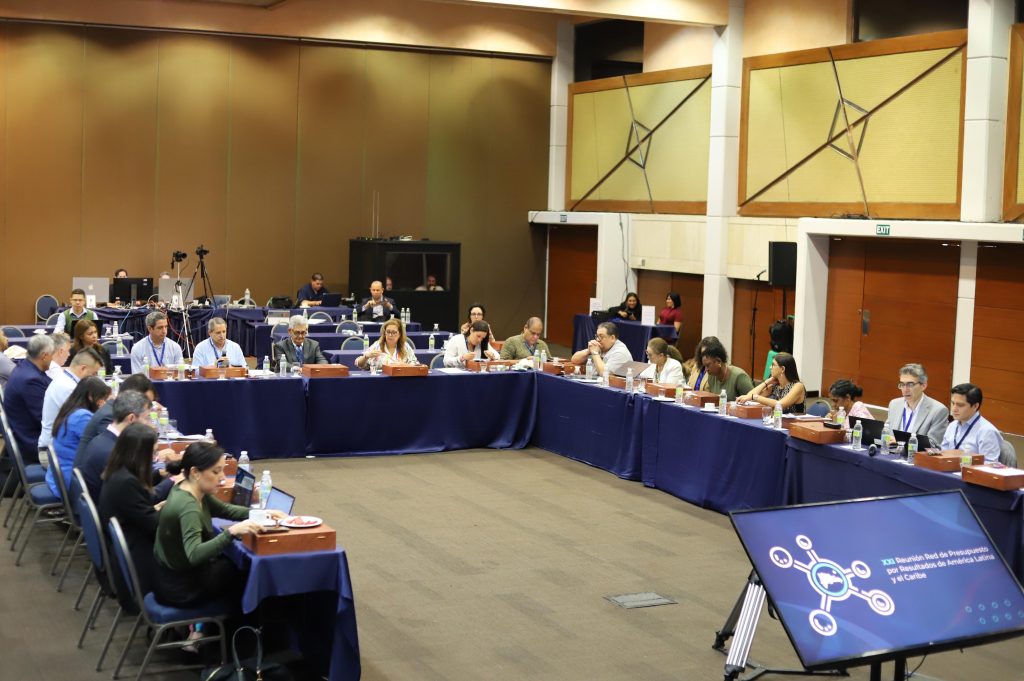
The Dominican Republic hosted this meeting, which brought together representatives from 17 countries and served as the venue for a plenary session and elections. Punta Cana, La Altagracia – The 21st Meeting of the Results-Based Budgeting Network of Latin America and the Caribbean concluded successfully. The meeting convened budget directors and representatives from 17 countries to exchange and leverage best practices, strengthen collaboration among the countries, and develop a work plan for the Network for the 2024-2025 period. The event, held from April 10-12, included the participation of representatives from Argentina, Brazil, Chile, Costa Rica, Colombia, Ecuador, El Salvador, Guatemala, Honduras, Panama, Peru, Paraguay, Uruguay, Barbados, Belize, and Guyana. Teodora Recalde, president of the Results-Based Budgeting Network, delivered the closing remarks, emphasizing the urgent need to address climate change as a commitment of the countries in the region. He also pointed out that “appropriate policies will depend on the individual challenges and circumstances of each country, and their determination always requires in-depth analysis.” Recalde praised the working sessions as a major step forward in the challenge of combating climate change and mitigating its effects. In this regard, he emphasized the creation of new sources of financing for global climate action, so that the budget reaches the people to improve and develop their countries. Finally, he reiterated the commitment of the Network's member countries to “continue investing in strengthening human capital through training, transparency, and accountability.” The presentations on the final day focused on governance in climate action, evaluation methodologies to improve governance by integrating finance ministries into inter-ministerial climate action, challenges and the work plan for the Latin America and the Caribbean Results-Based Budgeting Network for the 2024-2025 period, the Network's sustainability, and next steps. The meeting was attended by staff from the General Directorate of Budget, as the host institution, with the collaboration of the Inter-American Development Bank (IDB); In addition to the Ministry of Economy, Planning and Development (MEPYD), the Ministry of Environment and Natural Resources, the Ministry of Energy and Mines, the National Office for Seismic Evaluation and Vulnerability of Infrastructure and Buildings (ONESVIE), the Commission for the Promotion of Technological Upgrading of the National Irrigation System, the Technical Unit for the Execution of Agroforestry Development Projects (UTEPDA), the National Botanical Garden, and qualified technicians and personnel from the Latin American and Caribbean Results-Based Budgeting Network, the event program included topics related to fiscal challenges for Latin America and the Caribbean in the face of the global climate emergency and the role of results-based budgeting, transparency of climate public policy, progress in identifying climate public spending in Latin America and the Caribbean, how to leverage practices implemented in LAC to have a positive impact on the environment, monitoring and evaluation of climate-related spending and its potential to contribute to mitigating climate change, and the use of advanced information technology in budgeting. El Salvador, Presidency and Host Country. As part of the agenda of the XXI Meeting of the Latin American and Caribbean Results-Based Budgeting Network, held in the Dominican Republic, representatives of the member countries held a plenary session to address important issues related to country management. They also set the date and host country for the next meeting. As a result of the elections, Carlos Salazar was chosen as the new president of the Latin American and Caribbean Results-Based Budgeting Network, and El Salvador was selected as the host country for the next meeting of member countries. Brazil and Uruguay assumed the vice-presidency of the group. By unanimous decision, Teodora Recalde, the outgoing president, was declared president for life of the Network as a way to honor and recognize her work and contributions. The Latin American and Caribbean Results-Based Budgeting Network was created in 2003 to unite the efforts of its member countries, share best practices, and implement improvements in budget management through results-based methodology.
The Dominican Republic hosts the XXI Meeting of the Results-Based Budgeting Network of Latin America and the Caribbean: climate change and actions from the General State Budget are on the agenda
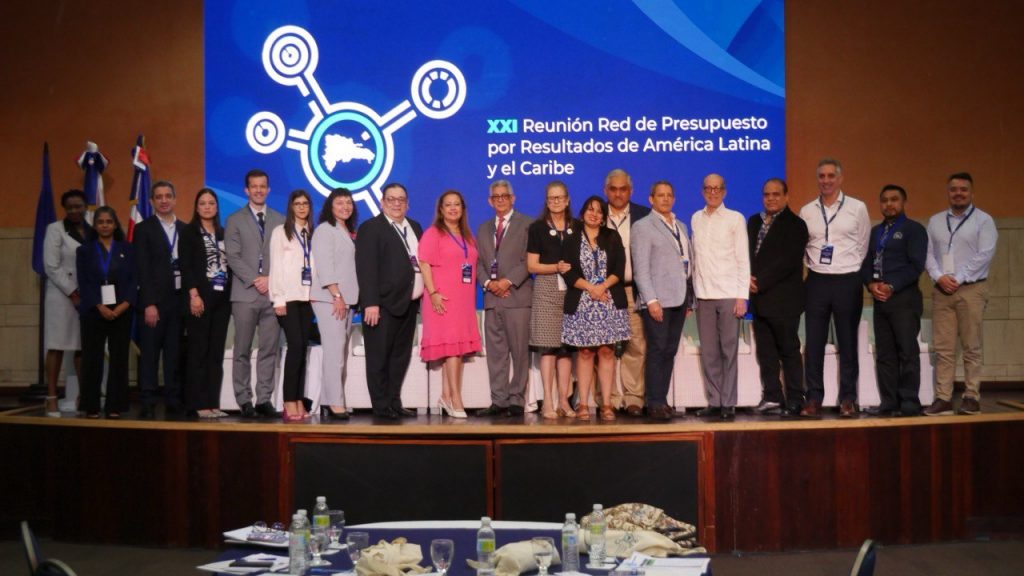
The event aims to leverage best practices and strengthen collaboration among the budget offices and departments of member countries for the 2024-2025 period. Punta Cana, La Altagracia Province – With the participation of budget directors from 17 countries, the Dominican Republic is hosting the 21st Meeting of the Results-Based Budgeting Network of Latin America and the Caribbean. This meeting aims to exchange and leverage best practices, strengthen collaboration among countries, and develop a work plan for the Network for the 2024-2025 period. The event, taking place from April 10-12 in La Altagracia Province, brings together budget directors and representatives from Argentina, Brazil, Chile, Costa Rica, Colombia, Ecuador, El Salvador, Guatemala, Honduras, Panama, Peru, Paraguay, Uruguay, Barbados, Belize, and Guyana. The welcoming remarks for the first working session were delivered by Derby de los Santos, Vice Minister of the Treasury, representing the Minister of Finance, José Manuel Vicente. Luis Madera Sued, Vice Minister of Planning and Public Investment, representing the Minister of Economy, Planning and Development, Pável Isa Contreras; Teodora Recalde, President of the Latin American Results-Based Budgeting Network; and Ariel Zaltsman, fiscal specialist from the Inter-American Development Bank (IDB), each spoke independently, emphasizing the environmental issue and climate change. Derby de los Santos, addressing the topic, highlighted the Dominican government's commitment to tackling climate change, noting the extensive work being done on resilience initiatives through the main instrument of public finance. "Meetings like this allow us to present our initiatives and learn about those employed by sister nations in adapting to and combating this phenomenon by sharing best practices and experiences," he emphasized. For his part, Luis Madera Sued, Vice Minister of the Ministry of Economy, Planning and Development, underscored the importance of results-based budgeting as one of the Dominican government's key priorities, aligned with the vision of linking planning to the budget. “Results-based management is one of the key principles of this new approach to policymaking, focusing not on what we do, but on what we achieve for our people. It must be said that the General Directorate of Budget has been the pioneering institution in this paradigm,” Madera pointed out. Similarly, Teodora Recalde, president of the Network, highlighted the fundamental challenges directly affecting societies, marked by the global climate emergency, and stated that budgets, fiscal responsibility, and efficiency can be active tools in the use of resources. Ariel Zaltsman of the IDB expressed his satisfaction with the event and with the Dominican Republic as the host country, given the initiatives it has been developing in both results-based budgeting and climate change adaptation and mitigation, supported by the IDB through both resources and technical cooperation. The three-day meeting addressed topics such as fiscal challenges for Latin America and the Caribbean in the face of the global climate emergency and the role of results-based budgeting, transparency in climate public policy, progress in identifying climate public spending in Latin America and the Caribbean, how to leverage practices implemented in LAC to have a positive environmental impact, monitoring and evaluation of climate-related spending and its potential to contribute to mitigating climate change, and the use of advanced information technology in budgeting. The event included the participation of staff from the General Directorate of Budget, the host institution, with the collaboration of the Inter-American Development Bank (IDB). In addition, representatives from the Ministry of Economy, Planning and Development (MEPYD), the Ministry of Environment and Natural Resources, the Ministry of Energy and Mines, the National Office for Seismic Evaluation and Vulnerability of Infrastructure and Buildings (ONESVIE), the Commission for the Promotion of Technological Upgrading of the National Irrigation System, the Technical Unit for the Execution of Agroforestry Development Projects (UTEPDA), the National Botanical Garden, and technical and qualified personnel from the participating institutions were present. Rijo Presbot: Climate Change as a National Priority. José Rijo Presbot, Director General of the Budget, was in charge of closing the first day of the Meeting of the Results-Based Budgeting Network of Latin America and the Caribbean. In his speech, Rijo thanked those present and the President of the Network for choosing the country to host the event. He also valued the exchange of experiences among the represented countries as a demonstration of the firm commitment to ensuring that expenditures related to climate change, biodiversity protection, and disaster risk management are properly identified and made transparent in the general budgets of each State. “Climate change prevention and risk mitigation are especially important issues for the Dominican Republic. Between 2000 and 2019, Puerto Rico and Haiti were among the countries most affected by extreme weather events; it is clear that the Dominican Republic's absence from the top 10 is purely a matter of luck,” explained Rijo Presbot. Regarding public finances and the budgetary framework in particular, Rijo noted how countries have been preparing and optimizing methodologies and techniques for identifying the full range of government actions, specifically those focused on climate. The Latin American and Caribbean Results-Based Budgeting Network Meeting has been held annually since 2003 to comparatively analyze the experiences of OECD countries in results-based management.
Digepres and MEPyD coordinate process to understand provincial demands with a view to the 2025 General State Budget
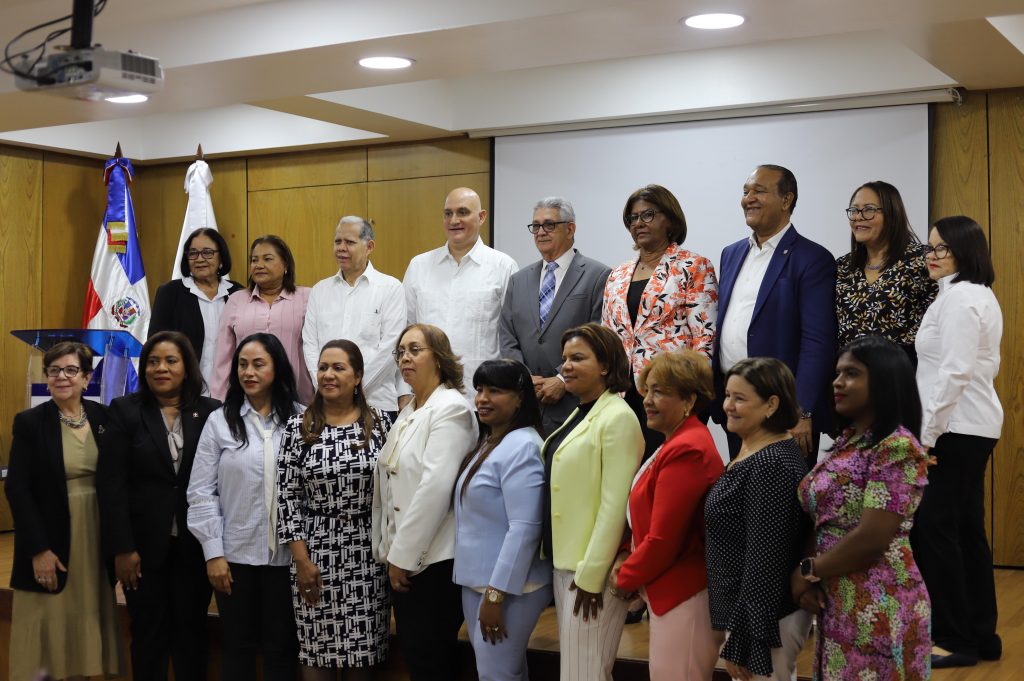
The activity provided guidance and highlighted the importance of local governments for the development and well-being of residents and the community. Representatives from the General Directorate of Budget participated in a meeting with Provincial Governors to coordinate the process of gathering citizen demands for the 2025 Budget, in an event organized by the Ministry of Economy, Planning and Development (MEPyD). The meeting also provided guidance and highlighted the importance of local governments for the development and well-being of residents and the community. The event was led by the Minister of Economy, Planning and Development (MEPyD), Pável Isa Contreras; José Rijo Presbot, Director of the General Directorate of Budget (Digepres); accompanied by the Vice Ministers Domingo Matías, of Territorial Planning and Regional Development (VIOTDR); Horacio Medrano, Head of Development Plans at the MEPyD; and Leomary Liriano, Head of the Planning Coordination Department. The welcoming remarks were delivered by the Minister of Economy, Planning and Development (MEPyD), Pável Isa Contreras, who, in thanking those present, emphasized that improving people's quality of life is the objective of public policies. "Having quality policies implies two things: planning and good resource management, territorializing the plan, establishing indicators, and coordinating actions," highlighted Pável Isa Contreras. For his part, José Rijo Presbot, in his address, pointed out the importance of the Geographic Classifier for identifying economic investments and types of public policies in a province or community, and also the responsibility of the regional governments to streamline the collection of this data. "The regional governments have the responsibility to unify information at the local level, through a sectoral cabinet in the communities, to have a single profile of the public policy implemented in the territory," emphasized Rijo Presbot. He also highlighted the projects the government has been carrying out in communities to improve people's lives, indicating that consultation and social participation are essential to minimize the possibility of errors when designing these projects or prioritizing them. Domingo Matías, from VIOTDR, stated that the current administration's program centers on citizen power, which should be the core of every state institution's actions. The program revolved around topics such as the presentation of the process for gathering territorial citizen demands as a mechanism of the Single Registry of Territorial Citizen Demands (RUDCT) system, the current state of management and the sectoral response to territorial demands, social oversight of the 2025 General State Budget (PGE) calendar, and changes in the programmatic structure, including transfers to provincial governments—the latter presented by Rafael Jovine, Director of Economic Studies at Digepres. Citizen Participation and the Budget Cycle: It is worth noting that the Budget Office has been implementing coordinated actions to strengthen and promote the transformation of local governments, aiming for more transparent and efficient budget execution in municipalities and fostering citizen participation in the budget cycle. The meeting with Provincial Governors to coordinate the process of gathering citizen demands for the 2025 budget was held in the Ascuasiati Room of the Ministry of Economy, Planning and Development (MEPyD), with the participation and representation of governors from various provinces across the country.
Government shows less variation in spending, greater control of the deficit and the first precedent of reduction of public debt stock in the last 7 election years.

The statement was made by the Director of the Budget Office, who highlighted the public's trust in the government and its positive assessment, attributing this to transparency in the management of public resources. The Director General of the Budget Office, José Rijo Presbot, affirmed that the current budget management's adherence to strict controls and rational spending has enabled the proper execution of public funds. In this regard, he indicated that salaries and contributions decreased from 1.121% of GDP in the first quarter of 2020 to 0.981% of GDP in 2024; contracted services decreased from 0.331% to 0.261%; materials and supplies decreased from 0.221% to 0.101%; and movable, immovable, and intangible assets decreased from 0.131% to 0.041% of GDP. Similarly, the central government deficit, as a percentage of GDP, in the first quarter of 2024 is practically half of that recorded in 2016, which stands at 1.1% of GDP, and 601% lower than that recorded in 2012, when it reached 1.31% of GDP. Rijo attributes this positive performance to the control and rationalization of spending, and the public's confidence in the government of President Luis Abinader, who, according to the Budget Director, “has demonstrated that what you pay for won't be stolen.” He also reiterated the government's constant commitment to investing resources in projects that address the needs of the population. He recalled that the largest deficit in the Dominican Republic's economy was recorded during the 2012 elections. “What caused that? It caused the economic package, when a 161% VAT was imposed on chocolate and cooking oil.” He also pointed out that, “it’s a shame that people who have served in Congress, who have participated in budget formulation, are now attacking what they never did.” According to data provided by the Budget Director, 2024 is projected to be the first election year in the last two decades in which public debt is decreasing year-on-year relative to GDP. Debate from the ground up: public investment and results. In an interview on the program “El Día,” hosted by Edith Febles and German Marte, Rijo Presbot indicated that the debate now transcends the political aspect and that, instead, to discuss the results of the government's management, it is necessary to go to the local level and speak with the people. “The debate today is territorial. For example, if you go to a town like Hato Mayor, you'll see an investment of 8 billion pesos in three and a half years, while in 14 years less than 1 billion pesos were invested,” he said, highlighting the construction of the campus of the Autonomous University of Santo Domingo and the Hato Mayor-Sabana de la Mar highway, among other projects. He also explained how investment at the national level has raised people's quality of life and attributed this to the implementation of current public policies in the territories: “That's why what happened in the municipal elections happened, because people understand that they have a transparent, honest government that uses resources to meet their needs, that there is no corruption, and that any corruption that does appear is combated. There is no impunity.”
Digepres presents second version of Citizen Commitment Charter
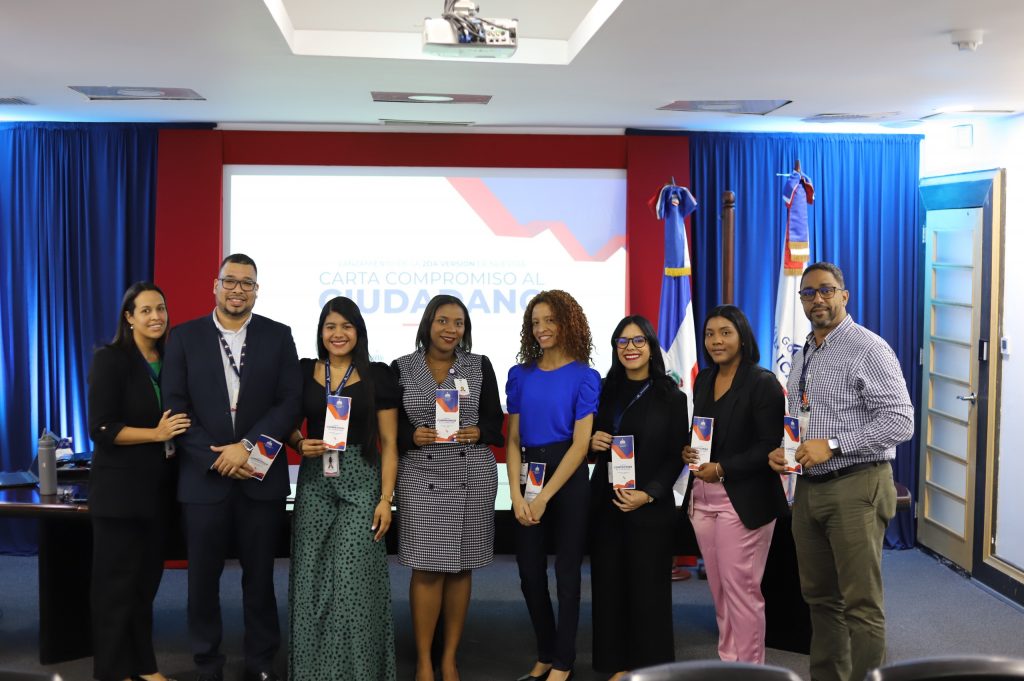
The document serves as a tool to strengthen ties between public entities and citizens. The General Directorate of Budget (Digepres) launched the second version of the Citizen Commitment Charter, a guide intended to inform the general public about the services the institution offers, as well as methods of communication and participation. This second version was developed and published to communicate the new statements it incorporates. The launch event was led by the Director General of Budget, José Rijo Presbot, along with the Deputy Director General of Budget, Iván Ramírez; accompanied by the Vice Minister of Public Services of the Ministry of Public Administration (MAP), Sheyla Del Alba Castillo; Perla Montero, Director of Planning and Development of the Comptroller General's Office; and Danelly Altagracia Hernández, Head of the Management Quality Department of the Ministry of Finance. The welcoming remarks were delivered by the Director of Budget, José Rijo Presbot, who thanked those who made the event possible and emphasized the importance of the document. “The Citizen Commitment Charter is a document that enables social oversight, participation, and auditing of public resources by society. This tool is essential for strengthening our relationship with citizens, who are the consumers of the services we offer,” said Rijo Presbot. In his presentation, the Budget Director added that upon arriving at the institution he leads, he understood it was fundamental to incorporate social oversight into the Institutional Strategic Plan as a core principle of the organization. Therefore, the Budget Office's work is aligned with transparency. “Today, journalists support their budget-related reporting by visiting our institutional website or social media,” Rijo Presbot concluded. For her part, Sheyla Del Alba of the Ministry of Public Administration stated that the citizen tool also seeks to contribute to improving the quality of public services offered by the State under conditions that allow for the shortest possible time and adherence to excellence. The document, prepared by the Planning and Budget Development Department, specifies new statements, commitments that add value, citizens' rights and responsibilities, and an accessibility menu for people with visual impairments. At the end of the event, the Director of Digepres symbolically presented the invited officials with the new version of the Citizen Commitment Charter. It was also distributed to Budget staff who attended the event. About the Citizen Commitment Charter: The Citizen Commitment Charter is a strategy developed by the Ministry of Public Administration (MAP) with the objective, according to Article 11 of Decree 211-10, of facilitating citizens' effective exercise of their rights, giving them more direct influence over administrative services, and promoting continuous quality improvement. It provides managers with the opportunity to understand, in a conscious, realistic, and objective way, how resources are used and the level of quality that can be achieved. Commitment letters are documents through which public institutions inform citizens about the services they manage, how to access and obtain those services, and the established quality commitments.
Digepres recibe misión internacional para evaluar logros y alcance programa presupuestario de atención a la tuberculosis
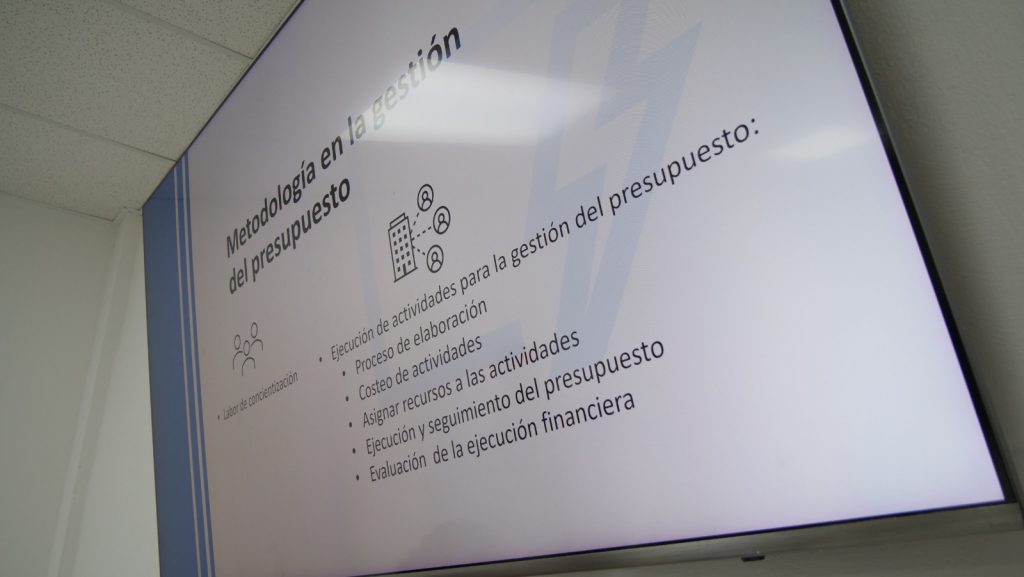
La agenda de la visita contempló encuentros de trabajo con órganos rectores, unidades ejecutoras de programas, grupos de interés y focales. Se trata de la primera vez que se evalúa el desempeño de un PPOR La Dirección General de Presupuesto (Digepres) recibió una misión internacional que forma parte del proyecto Desarrollo de Metodología de Evaluación de Resultados de Programas Presupuestarios de Prevención y Atención a la tuberculosis, que agotará una serie de encuentros con órganos rectores y equipos técnicos de la iniciativa. El proyecto de Desarrollo de Metodología de Evaluación de Resultados de Programas Presupuestarios de Prevención y Atención a la Tuberculosis, que cuenta con el auspicio de la Cooperación Alemana, GIZ, el Consejo de Ministros de Hacienda o Finanzas de Centroamérica, Panamá y República Dominicana (COSEFIN), a través de su programa de Buena Gobernanza, busca construir una metodología de evaluación de resultados adaptada a los Programas Presupuestarios Orientados a Resultados en República Dominicana, bajo el liderazgo del Ministerio de Hacienda y la Dirección General de Presupuesto. Durante la visita se llevó a cabo una agenda cargada de reuniones bajo la modalidad de investigación sobre terreno de manos de Rafael Gómez, consultor externo del proyecto, quien, junto a un equipo técnico de nuestro país, abordó particularidades vinculadas a las unidades ejecutoras del Programa de Prevención y Atención a la tuberculosis, grupos de interés focales, de servicio y órganos rectores de la presupuestación y planificación. Entre las organizaciones que participaron en dichos encuentros impulsados por la Digepres, se cuentan Ministerio de Economía, Planificación y Desarrollo (MEPyD); Ministerio de Salud Pública y Asistencia Social (MISPAS); Servicio Nacional de Salud (SNS); Programa Supérate; Gabinete de Políticas Sociales; Organización Panamericana de la Salud (OPS); Organizaciones de Sociedad Civil; Asociaciones Miembros del Observatorio Social de la Tuberculosis; direcciones Provinciales de Salud (DPS); direcciones de Área de Salud (DAS) y Servicios Regionales de Salud (SRS). En las reuniones, los participantes abordaron planes estratégicos, retos, logros, sistemas, mecanismos, transversalización del enfoque de género, grupos vulnerables, ejecución financiera, capacidad y principales avances en detección de tuberculosis, ejecución financiera entre otros aspectos. El equipo contraparte del proyecto radicado en el país que acompañó la misión estuvo integrado por Ana Miguelina Terrero, encargada de Evaluación del Desempeño Presupuestario, Gisselle Lisselotte Beras, coordinadora de Evaluación del Desempeño Presupuestario y técnicos del departamento de Evaluación de Digepres. Trabajo en terreno, fuente para la información Como parte de la visita de la misión, se destaca el encuentro del equipo con el Centro Médico Municipal Ralma, ubicado en Santo Domingo este, donde bajo el método de observación, recolección de datos de personas y el entorno, se rescató información sobre los procesos llevados a cabo por la entidad de salud dirigidos a pacientes en diferentes modalidades de servicios. Se recuerda que, esta es la primera vez que se miden resultados de uno de los Programas Presupuestarios Orientados a Resultados, lo que contribuirá a un uso aún más eficiente de los recursos públicos, identificar el abordaje a la perspectiva de género y atención a los sectores más vulnerables, precisar los efectos del programa y el impacto en la ciudadanía.
For the fourth consecutive year, Digepres delivers the Consolidated Budget Report and achieves historic coverage of 97% of institutions
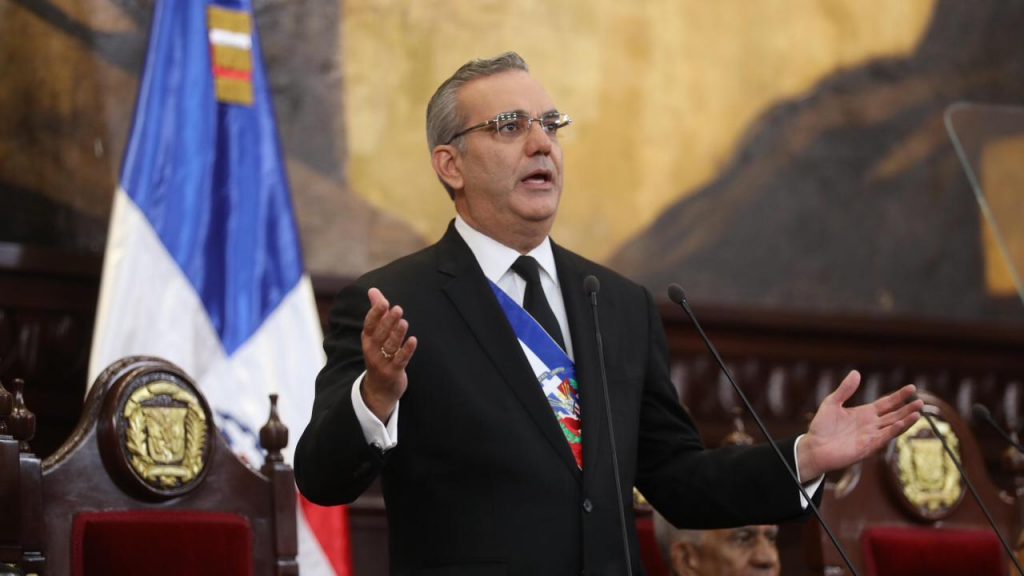
The document demonstrates results, full compliance, effort, efficiency, transparency, and accountability on the part of management and the Government. For the first time, the Report also covers public financial entities. In accordance with the mandate and deadline established by Organic Budget Law No. 423-06, and for the fourth consecutive year, the General Directorate of Budget (DIGEPRES) delivered the 2024 Consolidated Budget Report for the Non-Financial Public Sector to the President of the Republic, Luis Abinader, and the National Congress for presentation to the Congress of the Republic on Monday, February 26. The document outlines the initial budgetary position of each area comprising the public sector, the result of a meticulous planning process aimed at optimizing the efficiency of public resource use and the consolidated budgetary variables by economic, functional, institutional, geographic, and expenditure classifications. The presentation of the report demonstrates results, full compliance, effort, efficiency, transparency, and accountability on the part of management and the government. The 2024 Consolidated Budget Report for the Non-Financial Public Sector was submitted to the President of the Republic, as required by law, to be delivered to the Congress of the Republic before the accountability session on Tuesday, February 27. It was also delivered to the Legislative Branch through the Senate and the Chamber of Deputies. It is worth noting that, in 2024, for the first time, according to the document, Article 74 of Organic Budget Law No. 423-06 was fully complied with by incorporating the budgets of public financial entities into the consolidation process. This means that the report does not only cover the non-financial public sector (NFPS) as in previous editions. Another aspect highlighted in the report is that, with the inclusion of public financial institutions, institutional coverage reaches 971% of existing institutions. Comparatively, last year's report included 492 institutions, while this year's includes 509. The report's budget indicates that consolidated public sector spending will reach RD$1,811,395.9 million in 2024, while revenues are estimated at RD$1,612,824.3 million. Regarding the approach to the difference between revenues and expenditures, it concludes by indicating a financial deficit of RD$198,571.6 million, or 2.71% of GDP. With respect to budgeted public spending, it is worth noting that the consolidation raises capital expenditure to RD$263,807.2 million, or 3.61% of GDP, of which RD$105,367.0 million (1.41% of GDP) will be allocated to public investment projects. The aforementioned capital expenditure increases by RD$$53,324.5 million or 25.3% in relation to the consolidation of the National General Government, previously indicated in Law No. 80-23 of the 2024 General State Budget. Likewise, public investment will be focused mainly on Santo Domingo with RD$$39,389.5 million (37.4% of the total); Multiprovincial with RD$$8,543.5 million (8.1%); Santiago with RD$$7,680.5 million (7.3%); National District with RD$$7,338.3 million (7.0%); Montecristi with RD$$3,829.3 million (3.6%). Constant Accountability and Adherence to the Law. Regarding methodology, the Consolidated Budget Report for the Non-Financial Public Sector is based on the 2014 Government Finance Statistics Manual of the International Monetary Fund (IMF) and international best practices from countries in the region in terms of consolidating budget statistics. Organic Budget Law for the Public Sector No. 423-06, of November 17, 2006, establishes that the General Directorate of Budget (DIGEPRES) and the President of the Republic must submit this report to the President of Congress for informational purposes before February 27 of each year, when the President is expected to deliver their State of the Nation Address to the National Congress. The Consolidated Budget Report for the Non-Financial Public Sector is available for reading and consultation on the institutional website www.Digepres.gob.do.
Digepres conducts Gender Mainstreaming workshop in preparation for the National Development Strategy
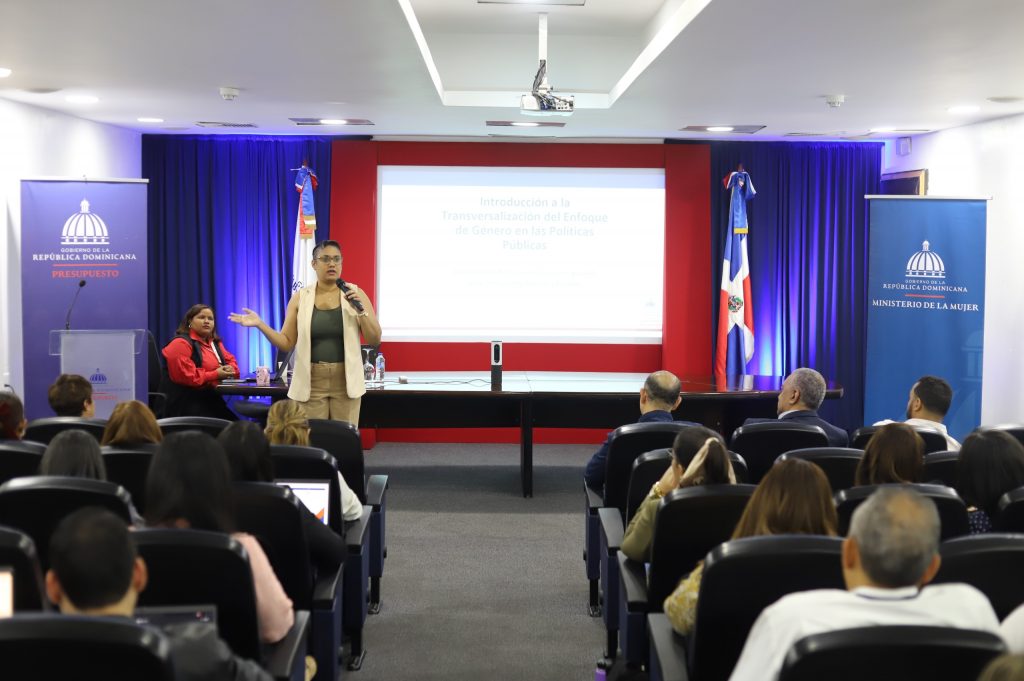
La iniciativa se suma a las acciones que buscan promover la igualdad de género, derechos y oportunidades entre hombres y mujeres dentro de Presupuesto La Dirección General de Presupuesto, con el apoyo del Ministerio de la Mujer, realizaron el taller de Sensibilización sobre Transversalización de Género, dirigido a directivos y mandos medios como parte de la implementación de las políticas transversales dentro de la institución. El taller estuvo encabezado por el subdirector general de Presupuesto, Iván Ramírez; acompañado de Francisco Abreu, encargado del departamento de Recursos Humanos, entre otros funcionarios de Presupuesto. Francisco Abreu, en las palabras de apertura destacó la importancia de la iniciativa, del enfoque de género y los esfuerzos que realiza DIGEPRES para promover la equidad e igualdad de género entre sus colaboradores. “Aquí somos 340 empleados, 158 son mujeres. En los puestos directivos 58 colaboradores, y de estos, 26 de género masculino y 32 femenino; es decir, tenemos una línea clara para garantizar que las mujeres participen plenamente y a todos los niveles dentro de Presupuesto”, dijo Abreu en su intervención. El taller estuvo liderado por Alba Polanco y Bismar Almonte del departamento de Transversalización de Igualdad en las instituciones públicas y privadas del Ministerio de la Mujer y como parte del contenido, explicaron los conceptos básicos de género, introducción a la transversalización del enfoque de género incluyendo el marco nacional y en líneas generales, herramientas para transversalizar en las políticas públicas. La facilitación implicó socializar ideas y abordajes vinculados a la igualdad, corresponsabilidad en el hogar, brecha salarial, identidad, empoderamiento femenino, datos estadísticos de la situación de la mujer y la responsabilidad del Estado de velar y cumplir con las leyes, políticas y programas en favor del sexo femenino en el país. “Los gobiernos deben respetar, proteger y cumplir los derechos humanos de todas las personas, con independencia de la orientación sexual, de la expresión de género y la identidad de género”, destacó Polanco. De igual forma, subrayó estadísticas para visibilizar en qué dimensiones se presentan las principales barreras que enfrentan las mujeres en dominicana. Polanco manifestó que aun cuando se reconoce que hombres y mujeres son iguales, las mujeres enfrentan situaciones históricas y estructurales, basadas en las diferencias biológicas, que desfavorecen el goce pleno de sus derechos. Implementación de las Políticas Transversales en Presupuesto La DIGEPRES se ha sumado a la implementación de la política de Igualdad de Género, que busca promover la igualdad de derechos y oportunidades entre los hombres y mujeres, conforme a lo establecido en la Estrategia Nacional de Desarrollo los planes, programas, proyectos y políticas públicas deberán incorporar los enfoques, criterios y dimensiones de Género, Derechos Humanos, Sostenibilidad Ambiental, Participación Social y Uso de las Tecnologías de la Información y Comunicación, por lo que la aplicación de estas políticas debe ser transversal a todas las instituciones del Estado, internamente y hacia los bienes o servicios que ofrezcan. La propuesta busca impulsar acciones de concientización a todos los niveles de la institución sobre la problemática, una política institucional que promueva la iniciativa, un comité que vele por el cumplimiento de cualquier disposición para esta política, de la mano de una arquitectura organizacional que robustezca internamente la institución, así como mejora de servicios externos vinculantes.