

 EN
EN  ES
ES 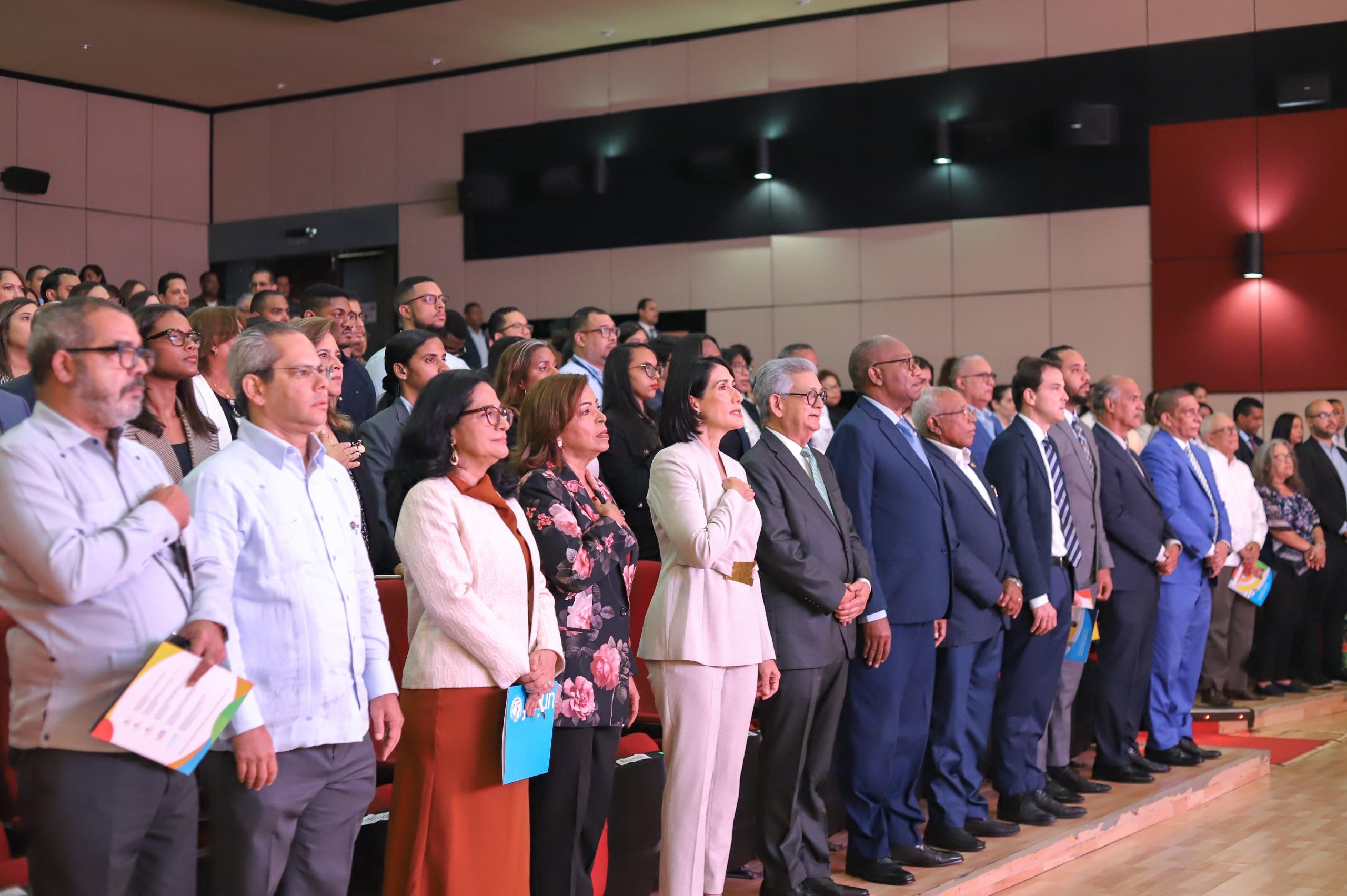
Following a joint effort between UNICEF, DIGEPRESThe Dominican Republic, through the Ministry of Finance and CONANI, reaffirms its commitment to protecting and guaranteeing the fundamental rights of children and adolescents through quality public investment.
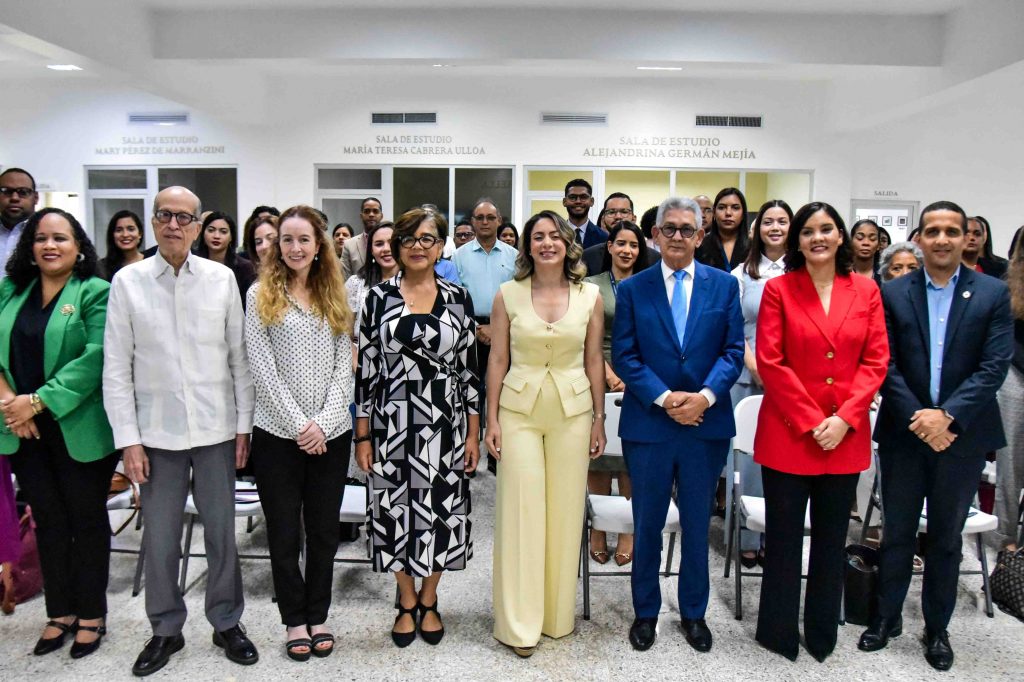
With the participation of the First Lady of the Republic, Raquel Arbaje, the General Directorate of Budget (DIGEPRES)The Ministry of Finance and Economy and the National Council for Children and Adolescents (CONANI), with the support of the United Nations Children's Fund (UNICEF)They presented the study “"Public investment directed at children and adolescents in the Dominican Republic 2022-2023", to continue previous measurements of public investment in children and adolescents in the country.
This collaboration sought to quantify the proportion of the public budget allocated to children and adolescents in the country during the years 2022 and 2023, using two categories of analysis: direct investment, which responds to specific programs to benefit children and adolescents; and indirect investment, on initiatives that, without having been specifically designed for this population group, have a visible impact on their well-being.

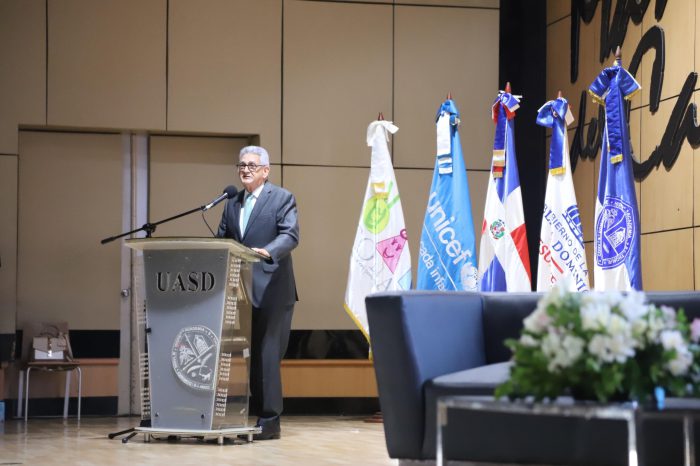
The opening ceremony was led by the director of the General Directorate of Budget, José Rijo Presbot; and the rector of the Autonomous University of Santo Domingo. (UASD)Editrudis Beltrán Crisóstomo; Anyoli Sanabria, interim representative of the United Nations Children's Fund (UNICEF)Ligia Pérez Peña, head of the National Council for Children and Adolescents (CONANI); the Deputy Minister of Planning and Investment of the Ministry of Finance and Economy, Martín Francos Rodríguez; the Director General of Government Accounting of the General Directorate of Government Accounting (DIGECOG)Rómulo Arias Moscat; among other personalities from the social and governmental sphere.
In her address, the First Lady of the Republic and Honorary President of the Cabinet for Children and Adolescents, Raquel Arbaje, stated that this report summarizes the joint work of the participating institutions and expressed the interest of President Luis Abinader and the institutions with authority on the subject in raising the quality of life and rights of children in the Dominican Republic.

“We are among the first countries to have a Cabinet for Children and Adolescents to promote, in a coordinated manner, policies and actions aimed at children and adolescents.” Arbaje said. He also thanked DIGEPRES in budgetary matters and the participating institutions, their commitment and performance in favor of this vulnerable population.
For his part, José Rijo Presbot, Budget Director, stated that his administration is committed to transparency, highlighting that the Budget Office is one of the few organizations in the region that has a component of citizen participation and social oversight.DIGEPRES It has become the fourth country in the world with the largest audience and first on the continent, thanks to the efforts made in that direction.” He also indicated that they seek to measure quality, promote transformations, and implement initiatives that improve public policies and human rights for the benefit of the people.
In this regard, Ligia Jeannette Pérez Peña, head of CONANI, explained that the report presented demonstrates the commitment, reflects the coherence and political will of the government to face the historical challenges and the social debt with the children and adolescents of the country. "Today, more than ever, this social debt is beginning to be paid off so that our children and young people can have a better life."
Anyoli Sanabria, interim representative of UNICEFShe stated that having accurate evidence on how much and how public resources are invested in children and adolescents is essential to ensuring that these resources effectively translate into concrete improvements in their lives. “Measuring this investment not only makes progress visible, but also allows us to identify gaps, prioritize policies, and ensure the fulfillment of their legal and justice-based rights,” said Sanabria de UNICEF.
The report also includes the consolidated budget execution of the National General Government (GGN), comprised of the central government, non-financial autonomous and decentralized agencies, and social security institutions. The estimate was based on accrued expenditures obtained from the Financial Management Information System (SIGEF), weighting the population aged 0 to 17 years relative to the total population, and disaggregating data by sex and life cycle.
The event featured a panel of experts to debate, share viewpoints, and issue collective judgments or specific recommendations on the presented report and approaches to the issue in the country. The panelists included Antonio Ciriaco, dean of the Faculty of Economic and Social Sciences at UASD; Tahira Vagas, social anthropologist; and economist Francisco Checo. The panel was moderated by Gavino Severino, social policy officer of [unspecified organization]. UNICEF and Felipe Díaz, monitoring and evaluation officer of UNICEF.
The Dominican nation, upon ratifying the Convention on the Rights of the Child (CRC) in 1991, assumed the commitment to safeguard the fundamental rights of children and adolescents through constitutional provisions and legal mandates of the Code for the System of Protection and Fundamental Rights of Children and Adolescents and the National Development Strategy 2030 (END 2030), with the objective of protecting children, adolescents and young people from early childhood to promote their integral development and social inclusion.
Findings on public investment aimed at children and adolescents in figures
According to the study, the main findings indicate that public investment in children and adolescents (IpNA) reached RD$306,077.0 million (US$5,550.4 million) in 2022, equivalent to 4.91% of GDP, and RD$342,671.4 million (US$6,100.9 million) in 2023, equivalent to 5.01% of GDP. These amounts represented almost a quarter of total public spending (23.61% in 2022 and 24.01% in 2023). Likewise, the annual per capita IpNA went from RD$95,564.1 in 2022 to RD$107,504.9 in 2023, reflecting a sustained growth of more than 10% annually.
The majority of the investment was allocated to education (65 %), health (12 %), and social protection (9 %). Investment across the life cycle was balanced, with 33 % for early childhood, 40 % for childhood, and 27 % for adolescence. 51.2 % was allocated to males and 48.8 % to females.
Gaps and challenges in investment in childhood and adolescence
In the document “Public investment directed towards children and adolescents in the Dominican Republic 2022-2023”, As part of its recommendations, the report highlights the importance of increasing and optimizing investment in key social sectors, especially health, education, and programs to protect children from violence, as well as strengthening the monitoring of commitments under the National Development Strategy 2030, incorporating a child-centered approach into all phases of the budget cycle. It also recommends the systematic use of results-based information to improve spending efficiency, reduce gaps, and ensure program sustainability, and the application of a territorial approach to resource allocation, prioritizing the most vulnerable communities.
The Dominican Republic, as a State party to the Convention on the Rights of the Child, jointly reaffirms its commitment to protect and guarantee the fundamental rights of children and adolescents, ensuring their comprehensive development.
The presentation of the report's results “Public investment directed towards children and adolescents in the Dominican Republic 2022-2023” It was held in the Manuel del Cabral auditorium, at the Library of the Autonomous University of Santo Domingo (UASD) with the participation of representatives from the Ministry of Education (MINERD)Ministry of Sports, Ministry of Women, Ministry of Public Health (MSP), Social Policy Coordination Cabinet, National Health Service (SNS), National Institute for Comprehensive Early Childhood Care (INAIPI), United Nations Population Fund (UNFPA), Ministry of the Presidency (MINPRE), Ministry of Culture, Ministry of Labor, Ministry of Youth, Attorney General's Office (PGR), National Health Service (SENASA), National Council for Disability (CONADIS), National Center for the Promotion and Development of Non-Profit Associations (CASFL) of the Ministry of Finance and Economy, Ministry of Higher Education, Science and Technology (MESCYT) and National Treasury.