EN
 ES
Budget Director: “The economic recovery in the Dominican Republic is a reality”
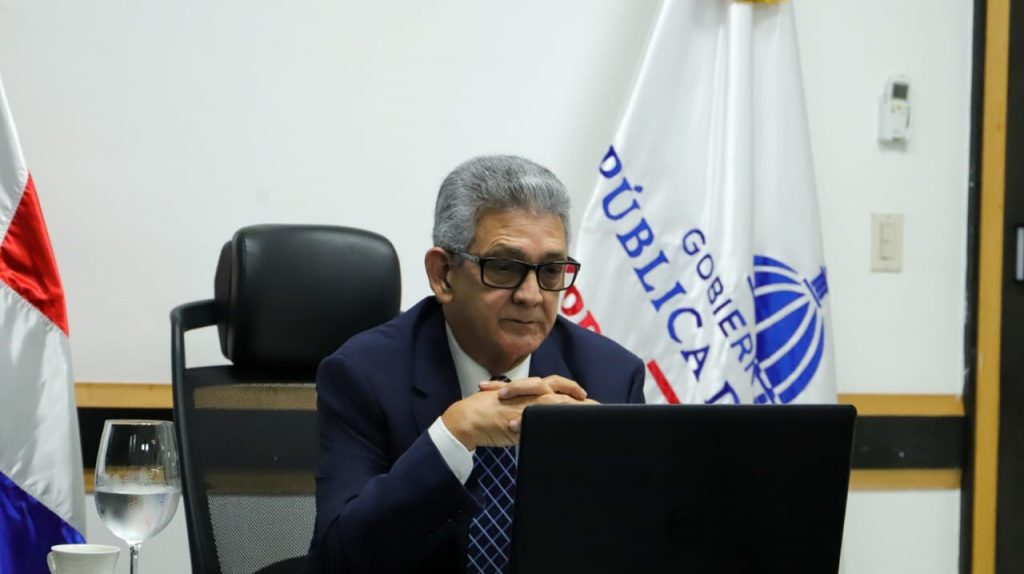
Rijo Presbot participated as a speaker at the International Public Budget Seminar and highlighted economic growth of 12.71% despite the Covid-19 pandemic. “Budgetary Effects of the Pandemic on Health Systems, the Economy, and Education” was the central theme of the 48th International Public Budget Seminar, in which the Director General of the Budget, José Rijo Presbot, participated as a guest speaker. During the virtual event, organized annually by the International Public Budget Association, Rijo Presbot emphasized the efforts of President Luis Abinader's administration to reactivate the Dominican economy and tourism, recover jobs, and boost productive sectors despite the pandemic. Rijo Presbot stated that the cost of the pandemic's effects was the most significant factor impacting the economy, amounting to approximately US$18 billion, equivalent to 23.41% of the Gross Domestic Product (GDP). He also stated that the GDP contracted by 6.71%, a situation that resulted in between 400,000 and 500,000 unemployed, with the productive sectors being the most affected. “With the pandemic, the effort we have had to make has truly been significant, but a comprehensive plan has been developed that, for us, represents the peak of recovery that the Dominican Republic has achieved,” he noted. He also praised the government's investment in healthcare, particularly in the National Vaccination Plan, the provision of supplies, the establishment of intensive care units and treatment centers, and the creation of a nationwide network of over a thousand centers staffed by volunteers. “The entire vaccination plan is what has allowed the Dominican Republic, as of October 30, to boast a tourism level of 4.8 million foreign visitors, and this investment in health has enabled approximately 621,000 people in the population to receive two doses of the vaccine, and of those, more than 201,000 have received three doses. This gives us a greater opportunity to reopen the Dominican economy,” stated Rijo Presbot. According to the Budget Director, and based on the latest study by the Ministry of Economy, Planning and Development (MEPyD), “as of September, the economy had registered an increase of 12.71% (TP3T). Furthermore, productive sectors such as hotels, bars, and restaurants have responded with a growth of 31.81% (TP3T) between January and September; construction has grown by 301% (TP3T); the free trade zone by 241% (TP3T); infrastructure by 311% (TP3T); and commerce by 111% (TP3T). In other words, the economic reactivation in the Dominican Republic is a reality.” Regarding education, Rijo Presbot highlighted the continuous and committed effort in support of education, noting that a virtual, hybrid, and distance learning strategy was designed to salvage the school year. This strategy included providing technological equipment to students and contracting media outlets to ensure wider reach. “The effort of the entire educational structure to try to salvage the school year has been continuous and committed, from teachers to parents and friends of the schools,” he emphasized. Regarding the Seminar: The 48th International Seminar on Public Budgeting, organized by the International Association of Public Budgeting (ASIP), also included speakers from Uruguay, Panama, Guatemala, Argentina, Paraguay, Costa Rica, and El Salvador. ASIP, headquartered in Buenos Aires, Argentina, held this seminar virtually with an audience of officials and specialized technicians working in the areas of public finance and budgeting. This year, the central theme was addressed by the speakers from the perspective of ASIP's member countries.
The government submits the 2022 General State Budget Bill to the National Congress for approval.
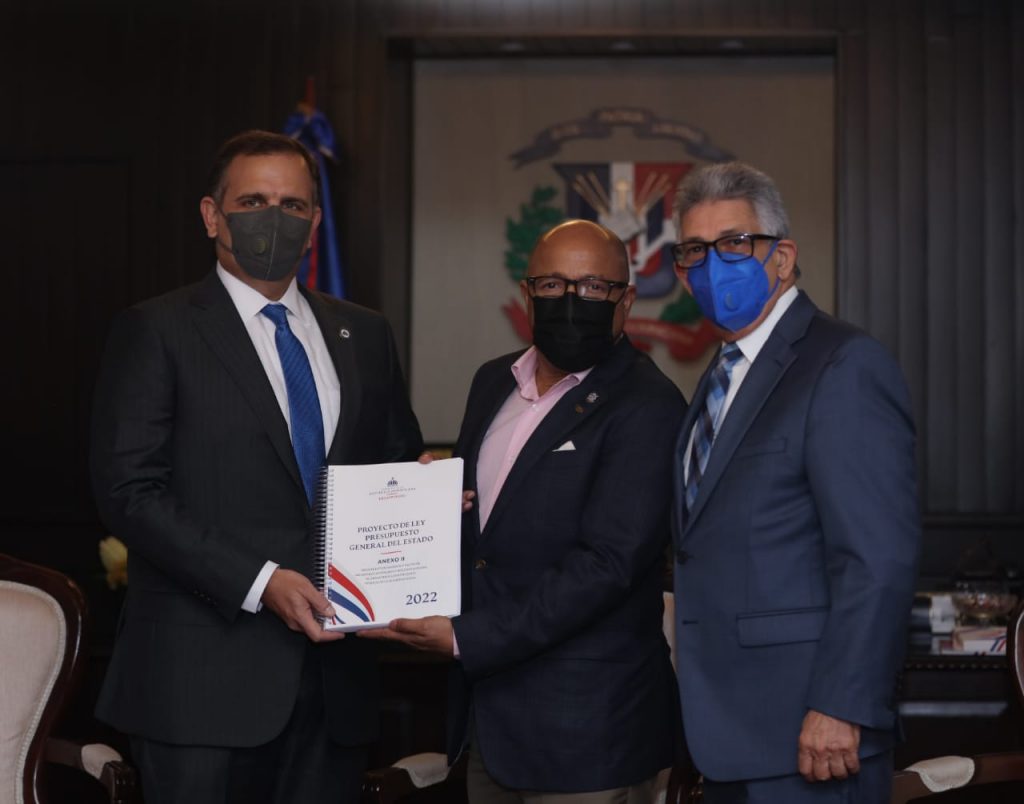
Twelve of the 22 ministries will see reductions in their budget allocations to create the necessary budgetary space to increase funding for priority programs in Santo Domingo. The Executive Branch today submitted to the National Congress, for its review and approval, the draft General State Budget Law for 2022, which contemplates total expenditures for the Central Government amounting to RD$1,155,565.3 million, of which total expenditures are projected at RD$1,046,280.7 million and financial applications at RD$109,284.6 million. The legislative bill was delivered by the Minister of Finance, Jochi Vicente, and the Director General of the Budget, José Rijo Presbot, to the President of the Chamber of Deputies, Alfredo Pacheco Osoria, in accordance with Article 233 of the Constitution of the Republic and Article 34 of the Organic Budget Law for the Public Sector No. 423-06. The bill includes a significant effort to prioritize public funds to support the recovery and relaunch of the national productive sector. Tax revenues for the Central Government in 2022 are projected at RD$1,871,485.9 million, equivalent to 14.9% of the estimated GDP for the year. During the ceremony, Vicente explained that this budget projects a deficit for the Central Government of 3.0% of GDP, in line with the consolidation of fiscal accounts undertaken by the current administration to maintain a sustainable debt trajectory. It is noteworthy that 12 of the 22 ministries will see reductions in their budget allocations compared to 2021. This will create the necessary budgetary space to increase funding for other programs defined as priorities, following the strategy of targeted spending to support the economy's recovery without generating additional financing needs. The Minister of Finance also stated that there are other urgent priorities for the country in the areas of health, social protection, citizen security, and infrastructure projects. These are part of the fiscal reorganization proposal that the Government will present in October for public review and discussion, before its subsequent submission to Congress. The Director General of the Budget explained that the expenditure programming for the 2022 fiscal year has the fundamental purpose of ensuring the country's inclusive and sustainable development, prioritizing the main needs of its citizens. Salary Increase for Police and Military Personnel: The bill includes increases in the budget allocations of the Ministries of the Interior and Police and of Defense, reaching amounts of RD$1,509,182.2 million and RD$1,821.3 million, respectively. This is primarily due to the salary increases for police and military personnel and to provide resources to strengthen the Citizen Security Plan by modernizing the infrastructure, equipment, and technology of national defense institutions. Social Protection and Security: The bill allocates RD$1,500,939.6 million for the universalization of social security through the National Health Insurance (SENASA). This initiative aims to increase enrollment to over 5.8 million Dominicans in the subsidized family health insurance program and 1.2 million in the contributory program. Similarly, it proposes the continuation of the "Supérate" program, which doubles the per capita funding provided by assistance programs prior to the COVID-19 pandemic. Within this framework, the "Aliméntate" program, which replaces "Comer es Primero," has a planned allocation of RD$1,446,730 million to provide conditional cash transfers to eligible households. Investment Projects: The planned capital expenditure includes the execution of high-social-return projects such as the construction of aqueducts and wastewater treatment plants, expansion of electrical grids, construction and expansion of educational facilities, repair and remodeling of hospitals and childcare centers, and the plan for repairing and constructing new homes to reduce the housing deficit. The largest proportion of investment project spending will be concentrated on improving the intra- and interprovincial road network to facilitate the transportation of people and goods, which is essential to catalyzing private investment. RD$16 billion will be allocated for the development program of the physical infrastructure of streets and avenues and another RD$5,600 million for the increase of transport capacity and the construction of sections in the lines of the Santo Domingo Metro.
DIGEPRES provides training on how to formulate a Multi-Year Budget for the first time and presents improvements to SIGEF
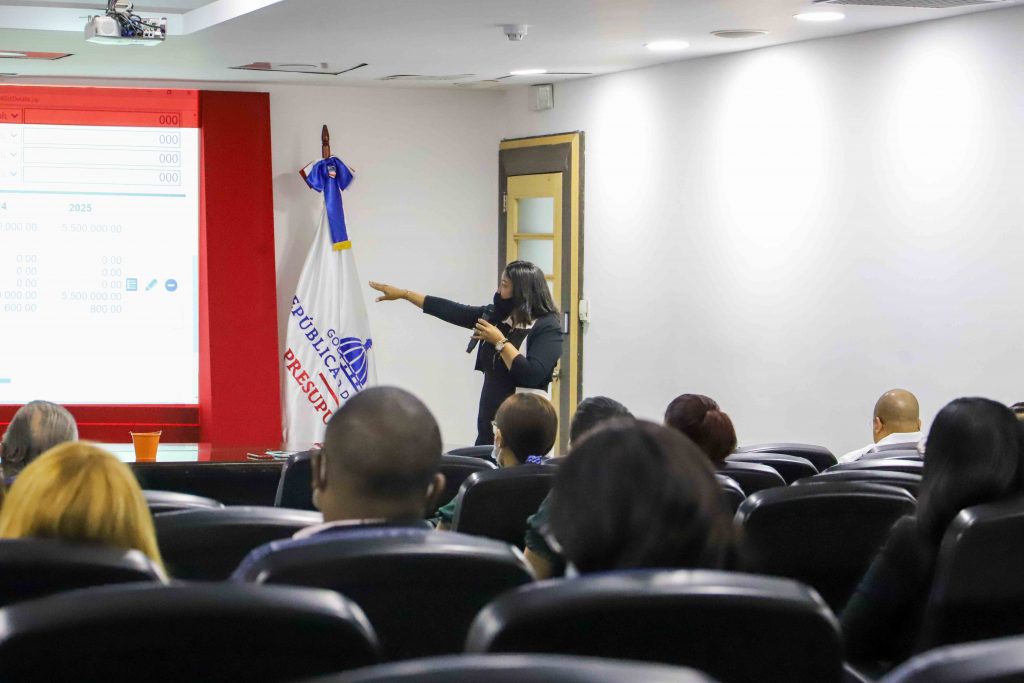
Improvements to the Financial Management Information System (SIGEF) include modules for formulating revenue estimates and expenditure projections. The General Directorate of Budget, through the Standards and Methodologies Department of the Directorate of Quality and Evaluation of Budget Management, conducted training sessions on the “Formulation of the 2022-2024 Physical-Financial Preliminary Budget,” with the objective of providing assistance and support for the annual and multi-year formulation of the preliminary drafts that comprise the General State Budget. This is the first time that DIGEPRES has provided training to comply with the provisions of Article 13 of Law No. 423-06, which establishes the preparation of the Multi-Year Public Sector Budget. DIGEPRES, as the governing body that regulates and manages the administration of the State Budget, is disseminating the general guidelines for each government entity to prepare its preliminary budget. Improvements were also made to the formulation module of the Financial Management Information System (SIGEF) to include the ability to register revenue estimates and expenditure projections with a multi-year horizon. The training sessions were held over five days at the DIGEPRES facilities and were attended by more than 600 employees from 155 entities and agencies of the Non-Financial Public Sector, as a way to ensure compliance with budgetary policy and the proper use and management of public resources. These sessions are conducted with the objective of achieving continuous improvement in the transfer of budgetary knowledge so that each government agency prepares a draft budget that is realistic and aligned with sound planning, thus reducing the number of modifications required during the execution of the 2022 fiscal year. According to the budgetary policy, approved by President Luis Abinader and the Council of Ministers, the deadline for registering draft budgets from state entities and agencies is September 3. The Executive Branch will present the General State Budget Bill to the National Congress on October 1st.
INAP recognizes the career of José Rijo Presbot as a public servant

The National Institute of Public Administration (INAP) recognized the career of the Director General of the Budget (DIGEPRES), José Rijo Presbot, as an exemplary public servant who has dedicated time and effort to serving the country. Throughout his various roles in both the public and private sectors, Rijo Presbot has consistently advocated for transparency and the efficient and appropriate use of public resources, promoting best practices to foster sustained growth and development in the Dominican Republic. Through INAP Resolution No. 002-2021, the public servant's exemplary career is honored for his long and dedicated service to the State, characterized by integrity, competence, and commitment. January 25th has been designated as Public Servant's Day in the Dominican Republic, an occasion used to recognize public servants whose career, actions, and example have positively impacted the institutions they have led or are currently leading. Law No. 41-08 on Public Service establishes that the INAP (National Institute of Public Administration) is committed to transparency and compliance with the legal regulations established by the competent bodies. Therefore, it recognizes the employees and public officials who have served the State with dedication and integrity, highlighting their commitment to best practices in government transparency and efficiency. INAP officials presented the award to Director Rijo Presbot in the meeting room of the DIGEPRES (General Directorate of Public Administration) office.
DIGEPRES receives gold medal at National Public Sector Quality Award
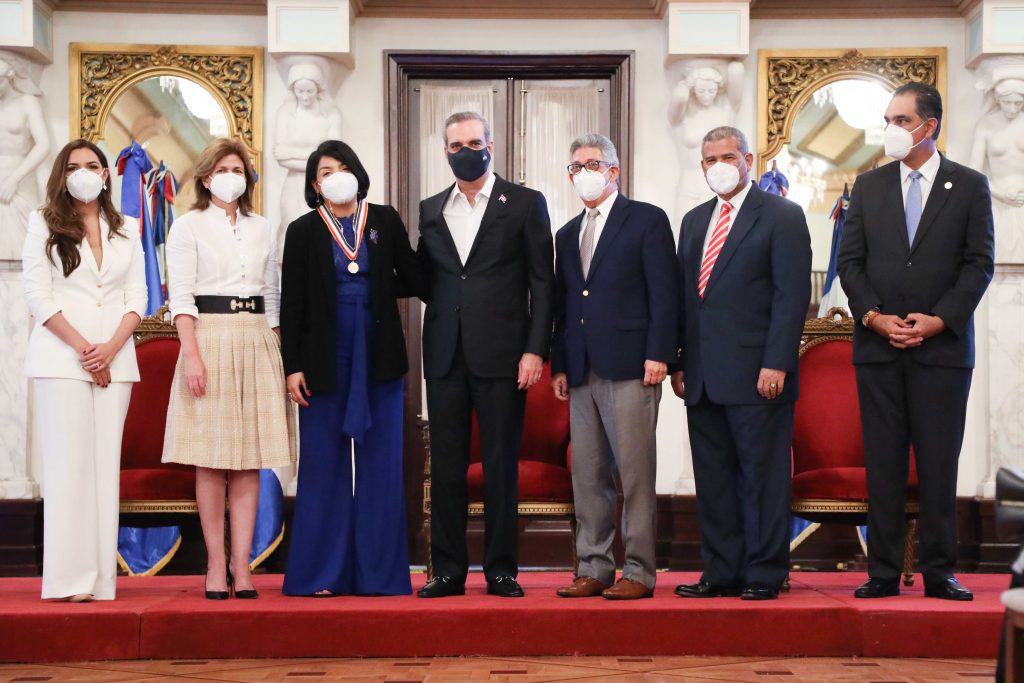
The General Directorate of Budget (DIGEPRES) has been awarded the gold medal at the National Award for Quality and Promising Practices in the Public Sector, for having reached the quality standards, according to the parameters used to measure the services that the institution offers to citizens.
The best way to commemorate the birth of the patriot Juan Pablo Duarte is by acting with transparency.

The Director General of the Budget, economist José Rijo Presbot, stated today that the best way to commemorate the birth of the patriot Juan Pablo Duarte is by acting with transparency, as demonstrated in his historic accountability report upon his return from his trip to Sabana Buey, Baní, where General Pedro Santana was camped.
DIGEPRES AGREES WITH SENASA TO EXPAND HEALTH COVERAGE FOR EMPLOYEES WITH SUPPLEMENTARY PLANS

Santo Domingo. With the purpose of benefiting the employees of the General Directorate of Budget (DIGEPRES) affiliated with the Contributory Regime of the National Health Insurance (SeNaSa), both institutions signed an insurance contract that seeks to expand the basic coverage of medical services through the complementary and optional coverages offered by the State ARS.
José Rijo Presbot takes office as Director General of Budget

El viceministro de Presupuesto, Patrimonio y Contabilidad, licenciado José Rijo Presbot, tomó posesión la mañana de este lunes como nuevo director general de Presupuesto en un acto que encabezó el ministro de Hacienda, Jochi Vicente.