EN
 ES
Citizen Meeting: Rijo Presbot explains the social impact of the General State Budget to academics and students of UTECO

El director de Presupuesto indicó que el Presupuesto General del Estado responde a las necesidades sociales para elevar el nivel de vida de los ciudadanos Cotuí, Sánchez Ramírez. – José Rijo Presbot, director general de Presupuesto, realizó un conversatorio abierto para abordar aspectos básicos del Presupuesto General del Estado (PGE) y su impacto a nivel social en la Universidad Tecnológica del Cibao Oriental (UTECO), en el marco de la iniciativa institucional Encuentro Ciudadano. La actividad, además, visibilizó el impacto que tiene el Presupuesto en la economía, desarrollo y nivel de vida de los ciudadanos para mejorar las necesidades básicas de la población y desarrollo de los territorios. Las palabras de bienvenida estuvieron a cargo de la rectora de la UTECO, ingeniera Marilyn Díaz Ferreira, quien indicó que la iniciativa busca sumar aliados a la institución, contribuir con el proceso de alineación con el marco normativo del estado dominicano y desarrollo de la academia de estudios. José Rijo Presbot inició su intervención indicando que la Dirección General de Presupuesto tiene como ejes estratégicos cumplir con el compromiso de garantizar una gestión presupuestaria eficaz, eficiente y transparente donde prevalezca el control social, y recalcó los esfuerzos que realiza la institución que preside para ampliar el nivel de información que se brinda a la sociedad. El director de Presupuesto explicó el desafío que debió asumir el Gobierno a su llegada producto de la pandemia por el Covid-19, la guerra entre Rusia y Ucrania, los fenómenos naturales que impactaron al territorio nacional, que obligaron a una modificación de la Ley de Presupuesto vigente para enfrentar el contexto y responder a las necesidades sociales. El director de Presupuesto declaró que, para hacer frente a la crisis mundial el Gobierno del presidente Luis Abinader elaboró un plan centrado en las necesidades más urgentes entendiendo que la función del Estado es proteger la vida de la gente. “Debido a la crisis exportada aumentamos los subsidios a los combustibles y tomamos medidas para apoyar a sectores vulnerables evitando con ello el impacto de la inflación en su dinámica familiar”, indicó Rijo Presbot, al tiempo de recordar que parte de este esfuerzo permitió que los ciudadanos no pasaran debajo de la línea de pobreza general. En su presentación, José Rijo Presbot, destacó aspectos vinculados a la formulación y distribución del Presupuesto, del Sistema de Información de la Gestión Financiera (SIGEF), función y estructura del Estado, aspectos económicos y los retos que tenemos como sociedad. En el Encuentro que se llevó a cabo en UTECO participaron, además, decanos y vicedecanos de la universidad, funcionarios públicos, políticos, estudiantes, medios de comunicación, organizaciones de la sociedad civil y representantes de juntas de vecinos. Encuentro Ciudadano Recordamos que Encuentro Ciudadano es una iniciativa de la Digepres que tiene como objetivo propiciar un acercamiento con la sociedad, fortalecer la transparencia y el control social a través del Presupuesto, como una forma de garantizar el diseño de políticas públicas acertadas y orientadas a mejor la calidad de vida de la gente.
Budget Director holds Citizen Meeting with editors and journalists in the economic field

The activity took place during a public finance course coordinated by the Ministry of Finance, aimed at media representatives and focused on basic economic and budgetary concepts. The Director General of the Budget, José Rijo Presbot, held a public forum as part of the second Public Finance course for journalists and communicators specializing in economics, organized by the Ministry of Finance. The training session addressed basic principles, concepts, and the structure of the national budget. During his presentation, Rijo Presbot praised the forum because it allows editors and economic journalists to learn more about the social and economic interactions, execution, and planning of the General State Budget (PGE). In his presentation, Rijo Presbot explained that the essential function of the State is the effective protection of individual rights and that the budget seeks to fulfill this mandate. "The budget is structured under principles of justice and equality, seeking to cover the basic needs of the population and the development of the territories," he stated. He also explained the legal aspects of the budget and discussed the changes implemented to address the old administrative debt. “No official can make expenditures that are not properly documented; that is, they cannot execute any expenditure without the appropriation certification,” the Budget Director emphasized. Rijo Presbot presented to journalists the General State Budget's (PGE) aspects and its connection to the 2030 National Development Strategy, intervention areas, interaction with economic and social factors, the budget's redistributive effect, internal controls, and the budget formulation schedule. Citizen Meetings and Training Sessions: It is worth noting that the General Budget Directorate holds Citizen Meetings to reaffirm its commitment to transparency, closeness to the public, and to guarantee, for the first time under the government, social participation in the formulation of the General State Budget. The event was held in the meeting room of the Ministry of Finance.
Rijo Presbot: The first half of 2023 is a time for observation, prudence, and control of the General State Budget.
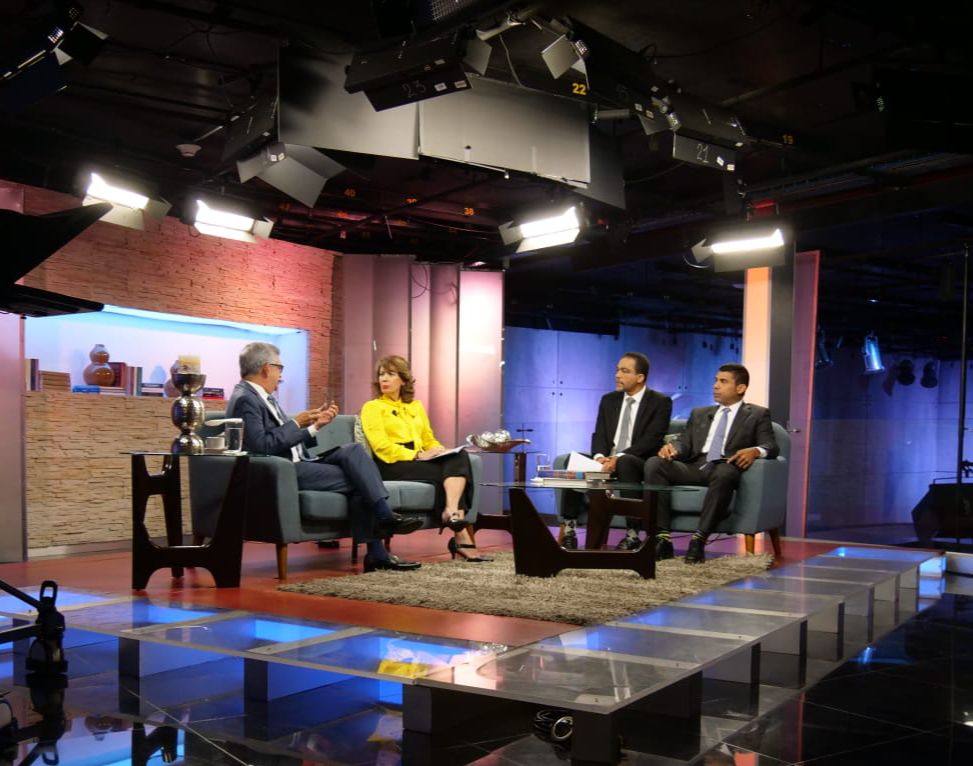
For the first time in history, the submission of the Consolidated Budget for the first six months of 2023 is being considered. The Director General of the Budget, José Rijo Presbot, ruled out any modification to Law 366-22, the 2023 General State Budget, before July 1st, the date established by Law 423-06 for amending the legislation. He also stated that "this first semester is for observation, prudence, and continuing to restrict non-priority spending." In this regard, Rijo Presbot reiterated that the Budget is a law that establishes the maximum limit that authorities can spend; however, if revenues decrease, so do expenditures, because programming is based on revenues. He assured that the Government remains firm in its compliance with the Law and in exhausting each of the established processes for the rational and transparent management of State resources, and reiterated that no expenditure can be executed without the corresponding appropriation certification. “We have ensured that the transactional procurement portal, where tenders are uploaded, is read by the SIGEF system in such a way that when a project, good, or service is awarded, the money is already reserved in advance, preventing the generation of administrative debt,” added Rijo Presbot. He highlighted the elimination of administrative debt as a key achievement of this administration and contrasted the current situation with the practices of past governments. “In 2018, 2019, and 2020, we had to borrow over 150 billion pesos in administrative debt, representing 241% of the total debt incurred during those years. Last year, administrative debt only represented 11% of the total debt.” He also asserted that, despite the global economic crisis, the implementation of fuel subsidies since March of last year has mitigated the effects of inflation in the Dominican Republic. “If we hadn't invested RD$1,443,800 million in fuel subsidies, inflation would have been around 181% and ended up at 7.8%,” and pointed to the collapse of banks like Silicon Valley Bank as a clear indicator of a war economy. Regarding the Consolidated Budget, Rijo Presbot highlighted the work of the General Directorate of Budget, which for the third consecutive year delivered the Consolidated General State Budget for the current year to the National Congress before February 27th. He also announced that the Digepres team of economists is considering the possibility of, for the first time in history, delivering a Consolidated Report in July covering the first half of the year. Similarly, he reported that work is underway on creating a new Programmatic Structure for Local Governments that will allow for understanding the actions taken by municipalities, the resources they use, and the impact on people's quality of life. “People need to know how much is being invested in each town, because they only see investment from the perspective of physical infrastructure, but what about, for example, the cost to the country of the number of teachers, doctors, and public safety in a given area?” explained the Budget Director. José Rijo Presbot made these statements during an interview on the morning program “El Despertador,” which airs on Noticias SIN and is hosted by journalists Ana Mitila Lora, Esteban Delgado, and Diógenes Pina.