EN
 ES
Budget highlights achievements in integrity and transparency management
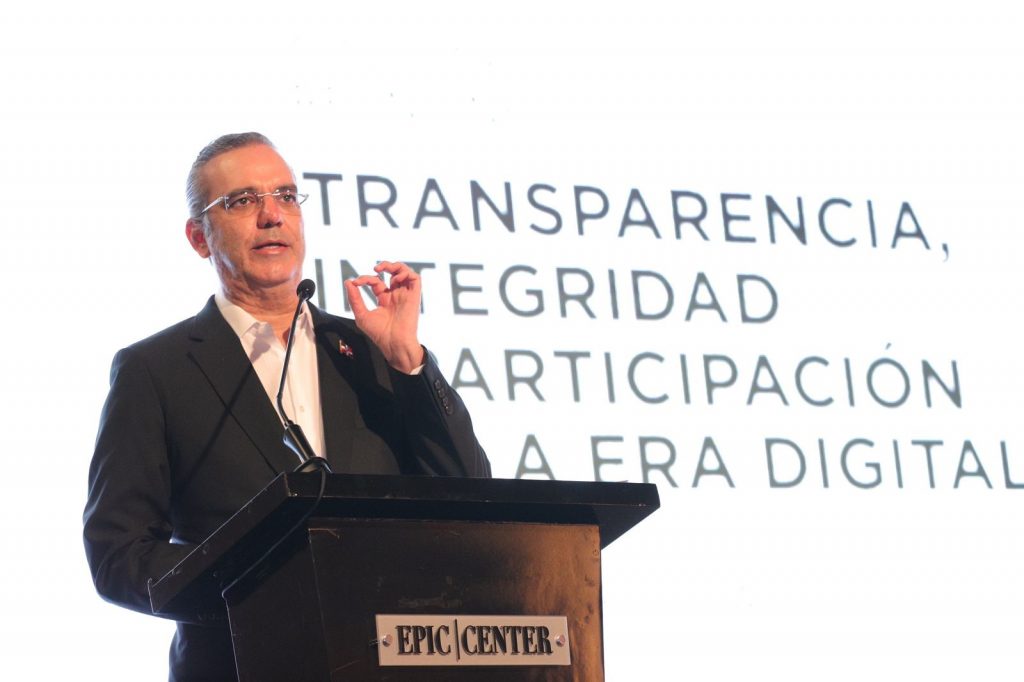
International Dialogue on Transparency and Integrity of the Public Network: President Abinader Reaffirms Government's Commitment to Principles, Ethics, and Integrity. In an event led by the President of the Dominican Republic, Luis Abinader, the 5th International Dialogue on Transparency and Integrity of the Public Integrity Network of Latin America and the Caribbean took place. This year, the Dominican Republic hosted this event, which, together with the General Directorate of Ethics and Governmental Integrity (DIGEIG), is organized by the Inter-American Development Bank (IDB) and the Organisation for Economic Co-operation and Development (OECD). This series of meetings provided a platform to highlight and publicize the tools and reforms implemented by the Dominican government to consolidate transparency and integrity and promote citizen participation. In this regard, President Abinader stated that, “there is no transformative action without principles, ethics, and integrity in the exercise of power.” During his address, the president also highlighted the various projects and ten-point codes of best practices that link all levels of his government. “A good example of this is our transparency portal, where anyone can access information on public contracts, tenders, salaries, and plans. Everything is there because there is nothing to hide,” the head of state emphasized in his speech. Meanwhile, the Director General of the Budget, José Rijo Presbot, joined the second day of public sessions with the topic “Modernizing the Integrity and Transparency System of the Dominican Republic.” Also participating were Catalino Correa, Comptroller General of the Republic; Milagros Ortíz Bosch, Director General of Ethics and Governmental Integrity; and Carlos Pimentel, Director General of Procurement and Contracting. Rijo Presbot stated that the General Directorate of Budget (DIGEPRES) has implemented significant budget controls aimed at controlling public spending, ensuring transparency, and aligning the plan and the budget to achieve positive results. “For the first time, we have drafted a Budget Bill for 2022 that links the National Development Strategy 2030 with the strategic axes for producing the General State Budget.” As a fundamental aspect of the Budget reforms, Rijo Presbot highlighted the consolidation of the process for preparing medium-term fiscal frameworks through a methodological guide and the improvements introduced in the State Financial Management Information System (SIGEF), which now allows institutions to formulate their budgets on a multi-year basis. “In 2017, only 831% of institutions based their budgets on service targets. Today, we can say that 991% of institutions do so,” added the Budget Director. Greater Spending Control and Reduction of Accounts Payable Regarding spending control, Rijo Presbot spoke about improvements to the Budget programming module and highlighted as a significant achievement the prohibition of transactional agreements by incumbents and institutions, which, according to Rijo, represented one of the most corrupt mechanisms in the Dominican Republic. “Accounts payable were reduced by 174 million pesos in 2010. Last year, from January to August 14, 62 billion pesos were paid, of which approximately 32 billion did not go through the regular channels, not even through the Comptroller General's Office, and we have eliminated this,” stated the Budget Director. He affirmed that an article has been added to the Budget Law prohibiting this practice and stipulating that any official who incurs administrative debt due to a lack of resources will be liable for it with their personal assets. Updated and Available Budget Execution: Rijo Presbot pointed out that never before has the execution of state resources been made so readily and up-to-date to the public through this information. “We have positioned ourselves at the forefront of international best practices and now publish the Budget execution report weekly on the institutional website,” he affirmed. He stated that DIGEPRES has encouraged citizen participation and social oversight with initiatives such as Citizen Budget, which offers a more streamlined explanation of the General State Budget (PGE), and Citizen Encounters, which facilitate engagement with organized civil society. Regarding the event: The International Dialogue on Transparency and Integrity of the OECD-IDB Public Network of Latin America and the Caribbean is an annual meeting held to share best practices in transparency, ethics, and integrity. The forum brings together high-level international experts who seek to promote better public policies, economic growth, and the prevention and control of corruption.
Budget Director: “The economic recovery in the Dominican Republic is a reality”
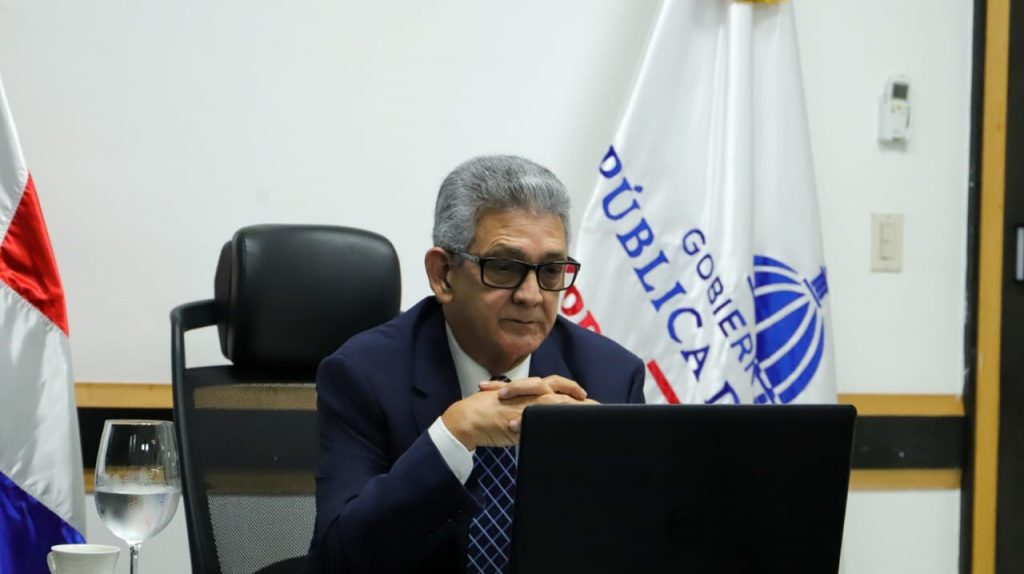
Rijo Presbot participated as a speaker at the International Public Budget Seminar and highlighted economic growth of 12.71% despite the Covid-19 pandemic. “Budgetary Effects of the Pandemic on Health Systems, the Economy, and Education” was the central theme of the 48th International Public Budget Seminar, in which the Director General of the Budget, José Rijo Presbot, participated as a guest speaker. During the virtual event, organized annually by the International Public Budget Association, Rijo Presbot emphasized the efforts of President Luis Abinader's administration to reactivate the Dominican economy and tourism, recover jobs, and boost productive sectors despite the pandemic. Rijo Presbot stated that the cost of the pandemic's effects was the most significant factor impacting the economy, amounting to approximately US$18 billion, equivalent to 23.41% of the Gross Domestic Product (GDP). He also stated that the GDP contracted by 6.71%, a situation that resulted in between 400,000 and 500,000 unemployed, with the productive sectors being the most affected. “With the pandemic, the effort we have had to make has truly been significant, but a comprehensive plan has been developed that, for us, represents the peak of recovery that the Dominican Republic has achieved,” he noted. He also praised the government's investment in healthcare, particularly in the National Vaccination Plan, the provision of supplies, the establishment of intensive care units and treatment centers, and the creation of a nationwide network of over a thousand centers staffed by volunteers. “The entire vaccination plan is what has allowed the Dominican Republic, as of October 30, to boast a tourism level of 4.8 million foreign visitors, and this investment in health has enabled approximately 621,000 people in the population to receive two doses of the vaccine, and of those, more than 201,000 have received three doses. This gives us a greater opportunity to reopen the Dominican economy,” stated Rijo Presbot. According to the Budget Director, and based on the latest study by the Ministry of Economy, Planning and Development (MEPyD), “as of September, the economy had registered an increase of 12.71% (TP3T). Furthermore, productive sectors such as hotels, bars, and restaurants have responded with a growth of 31.81% (TP3T) between January and September; construction has grown by 301% (TP3T); the free trade zone by 241% (TP3T); infrastructure by 311% (TP3T); and commerce by 111% (TP3T). In other words, the economic reactivation in the Dominican Republic is a reality.” Regarding education, Rijo Presbot highlighted the continuous and committed effort in support of education, noting that a virtual, hybrid, and distance learning strategy was designed to salvage the school year. This strategy included providing technological equipment to students and contracting media outlets to ensure wider reach. “The effort of the entire educational structure to try to salvage the school year has been continuous and committed, from teachers to parents and friends of the schools,” he emphasized. Regarding the Seminar: The 48th International Seminar on Public Budgeting, organized by the International Association of Public Budgeting (ASIP), also included speakers from Uruguay, Panama, Guatemala, Argentina, Paraguay, Costa Rica, and El Salvador. ASIP, headquartered in Buenos Aires, Argentina, held this seminar virtually with an audience of officials and specialized technicians working in the areas of public finance and budgeting. This year, the central theme was addressed by the speakers from the perspective of ASIP's member countries.
The government submits the 2022 General State Budget Bill to the National Congress for approval.
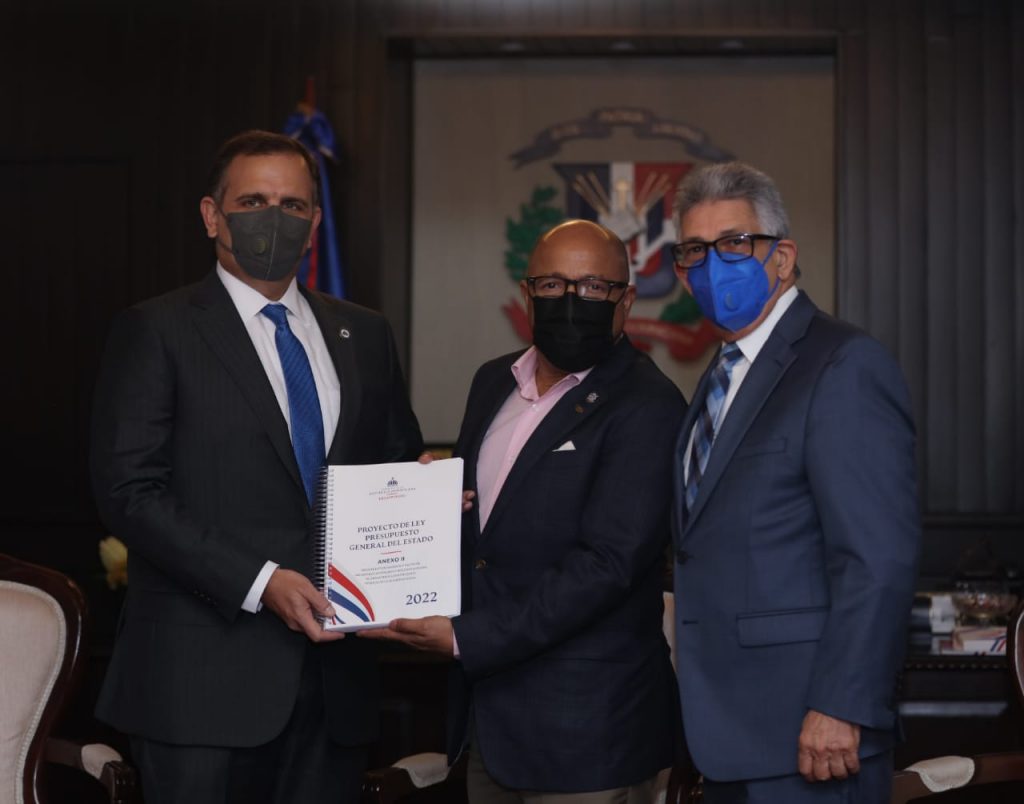
Twelve of the 22 ministries will see reductions in their budget allocations to create the necessary budgetary space to increase funding for priority programs in Santo Domingo. The Executive Branch today submitted to the National Congress, for its review and approval, the draft General State Budget Law for 2022, which contemplates total expenditures for the Central Government amounting to RD$1,155,565.3 million, of which total expenditures are projected at RD$1,046,280.7 million and financial applications at RD$109,284.6 million. The legislative bill was delivered by the Minister of Finance, Jochi Vicente, and the Director General of the Budget, José Rijo Presbot, to the President of the Chamber of Deputies, Alfredo Pacheco Osoria, in accordance with Article 233 of the Constitution of the Republic and Article 34 of the Organic Budget Law for the Public Sector No. 423-06. The bill includes a significant effort to prioritize public funds to support the recovery and relaunch of the national productive sector. Tax revenues for the Central Government in 2022 are projected at RD$1,871,485.9 million, equivalent to 14.9% of the estimated GDP for the year. During the ceremony, Vicente explained that this budget projects a deficit for the Central Government of 3.0% of GDP, in line with the consolidation of fiscal accounts undertaken by the current administration to maintain a sustainable debt trajectory. It is noteworthy that 12 of the 22 ministries will see reductions in their budget allocations compared to 2021. This will create the necessary budgetary space to increase funding for other programs defined as priorities, following the strategy of targeted spending to support the economy's recovery without generating additional financing needs. The Minister of Finance also stated that there are other urgent priorities for the country in the areas of health, social protection, citizen security, and infrastructure projects. These are part of the fiscal reorganization proposal that the Government will present in October for public review and discussion, before its subsequent submission to Congress. The Director General of the Budget explained that the expenditure programming for the 2022 fiscal year has the fundamental purpose of ensuring the country's inclusive and sustainable development, prioritizing the main needs of its citizens. Salary Increase for Police and Military Personnel: The bill includes increases in the budget allocations of the Ministries of the Interior and Police and of Defense, reaching amounts of RD$1,509,182.2 million and RD$1,821.3 million, respectively. This is primarily due to the salary increases for police and military personnel and to provide resources to strengthen the Citizen Security Plan by modernizing the infrastructure, equipment, and technology of national defense institutions. Social Protection and Security: The bill allocates RD$1,500,939.6 million for the universalization of social security through the National Health Insurance (SENASA). This initiative aims to increase enrollment to over 5.8 million Dominicans in the subsidized family health insurance program and 1.2 million in the contributory program. Similarly, it proposes the continuation of the "Supérate" program, which doubles the per capita funding provided by assistance programs prior to the COVID-19 pandemic. Within this framework, the "Aliméntate" program, which replaces "Comer es Primero," has a planned allocation of RD$1,446,730 million to provide conditional cash transfers to eligible households. Investment Projects: The planned capital expenditure includes the execution of high-social-return projects such as the construction of aqueducts and wastewater treatment plants, expansion of electrical grids, construction and expansion of educational facilities, repair and remodeling of hospitals and childcare centers, and the plan for repairing and constructing new homes to reduce the housing deficit. The largest proportion of investment project spending will be concentrated on improving the intra- and interprovincial road network to facilitate the transportation of people and goods, which is essential to catalyzing private investment. RD$16 billion will be allocated for the development program of the physical infrastructure of streets and avenues and another RD$5,600 million for the increase of transport capacity and the construction of sections in the lines of the Santo Domingo Metro.