EN
 ES
Budget continues training session for local governments to strengthen programmatic structure

Since 2022, DIGEPRES has been conducting extensive workshops and training sessions for municipalities and municipal boards in various provinces across the country to link planning and budget execution. The General Directorate of Budget (DIGEPRES), through its Local Governments department, trained representatives from various municipalities and municipal boards nationwide to further promote the understanding and application of the New Programmatic Structure, which links planning with budgeting and results-oriented management. At the opening ceremony, the Director General of Budget, José Rijo Presbot, delivered the welcoming remarks, thanking the attendees for their participation and explaining the Government's commitment to promoting a results-oriented management model where the quality of services provided to citizens is the primary performance indicator for municipalities. During the meeting with representatives from the municipalities, Rijo Presbot indicated that the budget is not only a financial instrument, but also a management tool that allows for a clear understanding of how resources are invested, their allocation, and the resulting benefits for the population. “Local governments will not be evaluated by the amount of money they spend, but by the quality of the services they provide to each of their communities,” said Rijo Presbot during his remarks. He also emphasized that transparency and planning are fundamental to strengthening public trust. In his speech, Rijo stated that efficient administration translates into better services for the population and greater public appreciation of their authorities, which strengthens municipal institutions. Similarly, the Budget Director acknowledged the challenges municipalities face in responding to citizen demands while stressing the importance of strengthening the planning and investment priorities they must offer their constituents. Finally, Rijo Presbot reiterated DIGEPRES' commitment to providing ongoing technical support to local governments and offered specialized tools and assistance for budget planning and results-oriented management. The meeting was also attended by the Local Governments team, led by Norvin Berges, Manuel Burgos, Johnny Ciprian, and Wáscar Ventura, as well as department analysts responsible for promoting the progress made in implementing and improving the municipalities' Programmatic Structure. The activity was attended by approximately 32 representatives from municipalities and municipal boards across the country, including mayors, financial managers, accountants, planning and development managers, treasurers, purchasing managers, payroll managers, and municipal treasury staff from the towns of Villa Altagracia, Yaguate, Palmarejo Villa Linda, Medina, Hato Viejo, San Gregorio de Nigua, La Cuaba, Hato Damas, Los Cacaos, San José del Puerto, Haina, Cambita, El Pueblecito, La Victoria, Pantoja, La Cuchilla, La Caleta, El Carril, La Guáyiga, Hatillo, and Sabana Grande de Palenque. Strengthening the Programmatic Structure: It is worth noting that since 2022, DIGEPRES has been conducting extensive workshops and training sessions for municipalities and municipal boards in various provinces to update their Programmatic Structure, which links planning with budget execution. With these actions, the Budget Department reaffirms its commitment to fostering community participation in local decisions and in the design of development policies, effectively linking municipal actions with the needs of the community. The event took place in the Juan Bosch Hall at DIGEPRES.
Rijo Presbot highlights the importance of an efficient state to guarantee the quality of public spending

En el Foro de Revisión Funcional y Reestructuración del Estado del MAP, con el apoyo del BID, el director de Presupuesto abogó por una administración pública más eficiente y alineada a las prioridades nacionales El director general de Presupuesto, José Rijo Presbot, al participar en el Foro Revisión Funcional y Reestructuración del Estado: evidencia, metodología y sostenibilidad institucional, afirmó que una estructura institucional eficiente y claramente definida es la base que permite un gasto público de calidad y en beneficio de la ciudadanía. En la actividad impulsada por el Ministerio de Administración Pública (MAP), a través del programa del Fortalecimiento de Gestión del Servicio Civil, con el apoyo del Banco Interamericano de Desarrollo (BID), Rijo Presbot indicó que la principal responsabilidad de las instituciones del Estado es administrar de forma correcta los recursos públicos y cumplir con los resultados y meta misional. Las palabras de bienvenida al panel estuvieron a cargo de Sigmund Freund Mena, ministro de Administración Pública, quien manifestó que la presencia de las autoridades refleja el compromiso y voluntad firme de impulsar las transformacionespara alcanzar mejoras funcional y estructural en el organigrama gubernamental. En la actividad, Rijo Presbot explicó que la estructura organizativa del Gobierno tiene una incidencia directa en la eficiencia del gasto público y cualquier acción que se lleve a cabo debe responder a criterios técnicos, financiero y optimización de los recursos del Estado. “El reto es garantizar ahorros derivados de estos procesos y establecer mecanismos de seguimiento y evaluación que permitan comprobar los resultados de dichas reformas administrativas”, apuntó Rijo Presbot al exponer su punto de vista a los presentes. El director de Presupuesto precisó que el verdadero debate sobre la eficiencia gubernamental no debe centrarse en el número de instituciones existentes, sino en la capacidad de estas para producir resultados concretos en beneficio de la población. “La pregunta para ser eficientes no es cuántas instituciones del Estado tenemos, sino cuántas oficinas logran resultados y permiten un cambio que se traduzca en una mejor calidad de vida para la gente”, dijo Rijo Presbot mientras transcurría su participación en el panel. Además, resaltó la importancia de comunicar de manera transparente los resultados de las reformas y uso responsable de los recursos. El panel contó con las intervenciones también de José Ignacio Paliza, ministro de la Presidencia, y Darío Castillo, Comisionado para las Reformas del Estado, quienes de manera indistinta abordaron temas vinculados con el proceso de integración institucional impulsado por el Gobierno y laperspectiva organizacional de las reformas, enfocándose en criterios técnicos utilizados para identificar duplicidad institucional, evaluar procesos de fusión o supresión de entidades y gestionar resistencia al cambio dentro de la administración pública. El Foro Revisión Funcional y Reestructuración del Estado tuvo como propósito, analizar, desde una perspectiva estratégica, jurídica, organizacional y fiscal, las lecciones derivadas de los procesos de racionalización y modernización institucional emprendidos por el Estado dominicano, con el objetivo de fortalecer el diseño de futuras reformas que promuevan una administración pública más eficiente, transparente y orientada a resultados. En el evento participaron representantes de órganos y entes del Poder Ejecutivo, directores de recursos humanos, de planificación y desarrollo, jurídicos, financieros, representantes del Congreso Nacional, organismos internacionales, academias y centros de investigación y organizaciones de la sociedad civil.
DIGEIG recognizes DIGEPRES for its work in strengthening budget transparency and social participation

El reconocimiento resalta el compromiso de Presupuesto con la publicación oportuna y comprensible de los datos fiscales y la rendición de cuenta presupuestaria en el país, a propósito de los resultados de la Encuesta de Presupuesto Abierto 2025 que colocan a RD como líder en transparencia La Dirección General de Presupuesto (DIGEPRES) recibió un reconocimiento de la Dirección General de Ética e Integridad Gubernamental (DIGEIG) por su contribución al fortalecimiento de la transparencia, creación de mecanismos de participación ciudadana y social en el proceso presupuestario que contribuyeron a que la República Dominicana alcanzara un posicionamiento histórico en la Encuesta de Presupuesto Abierto 2025 (Open Budget Survey, OBS). La República Dominicana obtuvo 82 puntos sobre 100 en transparencia presupuestaria, convirtiéndose en el segundo país con la puntuación más alta a nivel mundial, solo detrás de Brasil, y alcanzó el primer lugar en Hispanoamérica, Centroamérica y el Caribe. Asimismo, el país se posicionó en el tercer lugar mundial en participación pública, reflejando los avances sostenidos en materia de apertura gubernamental y rendición de cuentas. El reconocimiento fue recibido por el director de la Dirección General de Presupuesto, José Rijo Presbot, de manos de Milagros Ortiz Bosch, directora general de Ética e Integridad Gubernamental (DIGEIG), en el marco de la entrega de los resultados oficiales de la Encuesta de Presupuesto Abierto 2025. EL director de Presupuesto, José Rijo Presbot, al recibir el reconocimiento destacó que el trabajo que realiza la institución es producto del trabajo del esfuerzo coordinado, compromiso, dedicación y profesionalismo de los servidores públicos que le acompañan. “Este trabajo conjunto ha permitido fortalecer los procesos de planificación, formulación, seguimiento y rendición de cuentas del presupuesto público que genera valor para la ciudadanía y el desarrollo del país”, dijo Rijo Presbot al recibir el reconocimiento en compañía de los encargados departamentales de DIGEPRES. Ortíz Bosch al momento de entregar la insignia a DIGEPRES destacó la trayectoria ejemplar de Rijo Presbot considerándolo referente ético, al tiempo de destacar el trabajo que desarrolla la institución que dirige para garantizar que la ciudadanía conozca y de seguimiento a la ejecución del presupuesto mediante herramientas accesibles, información pública oportuna y mecanismos efectivos de rendición de cuentas que deja en el pasado desafíos superados en esa materia por el esfuerzo institucional y trabajo coordinado entre entidades públicas del país. “Ahora tenemos un nuevo modelo de trabajo que integra múltiples instituciones y sectores. El objetivo del Gobierno es fortalecer una gestión basada en la ética, la integridad, la transparencia y la vinculación activa de la ciudadanía en las políticas públicas”, dijo Ortíz Bosch, al entregar el galardón al director de Presupuesto. La directora de la DIGEIG destacó que el reconocimiento a DIGEPRES es producto de una gestión que busca la construcción de una administración pública más abierta, moderna y cercana a la población, donde la transparencia deja de ser un ejercicio de cumplimiento para convertirse en una herramienta de fortalecimiento democrático y de confianza ciudadana. La DIGEIG reiteró la importancia de continuar fortaleciendo las alianzas interinstitucionales y promoviendo la participación social como un elemento esencial para la toma de decisiones, la vigilancia ciudadana y la construcción de políticas públicas más inclusivas. La entrega del reconocimiento por parte de la DIGEIG se dio en el marco del acto de entrega de resultados país de la Encuesta de Presupuesto Abierto (Open Budget Survey, OBS), que realiza la International Budget Partnership (IBP), que en su edición 2025 coloca a República Dominicana como líder en transparencia presupuestaria en Hispanoamérica, Centroamérica y el Caribe.
The Dominican Republic consolidates its position as a global leader in open budgeting, according to the OBS 2025 survey.

El país obtuvo 82 puntos en transparencia presupuestaria, la segunda puntuación más alta entre países evaluados, y alcanzó el tercer lugar mundial en participación pública Santo Domingo. – La Dirección General de Presupuesto (DIGEPRES) recibió formalmente los resultados país de la Encuesta de Presupuesto Abierto 2025 (Open Budget Survey, OBS), en la cual la República Dominicana alcanzó 82 puntos sobre 100 en transparencia presupuestaria, ubicándose en el segundo lugar global, detrás de Brasil, y en el primer lugar de toda Hispanoamérica, incluyendo Centroamérica y El Caribe. Los resultados país del informe de OBS 2025 fueron entregados por el director ejecutivo de la Fundación Solidaridad, Juan Castillo al director general de Presupuesto, José Rijo Presbot, junto al ministro Administrativo de la Presidencia, Andrés Bautista García, Iván Ramírez, subdirector de Presupuesto y Rafael Jovine, director de Estudios Económicos en presencia de autoridades del Poder Ejecutivo, representantes del Congreso Nacional, órganos de control, organismos internacionales, organizaciones de la sociedad civil y equipos técnicos vinculados al ciclo presupuestario. La OBS es el único instrumento internacional de investigación independiente, comparativo y basado en evidencia que evalúa el acceso público a información presupuestaria del Gobierno Central, las oportunidades formales de participación ciudadana y la supervisión ejercida por Congreso Nacional y Cámara de Cuentas. Su décima edición abarcó 82 países y consideró documentos, actividades y evidencias disponibles hasta el 31 de diciembre de 2024. Trayectoria de progreso sostenido El informe global de la International Budget Partnership (IBP) reconoce a la República Dominicana como el caso más claro de progreso sostenido a nivel global en transparencia presupuestaria. Entre 2008 y 2025, el país pasó de aproximadamente 12 a 82 puntos en transparencia, para una mejora acumulada de 70 puntos, el mayor incremento registrado entre los países comparables durante ese período. Este avance se relaciona con la publicación continua de los ocho documentos presupuestarios fundamentales, el fortalecimiento de las capacidades técnicas dentro de DIGEPRES, la institucionalización de mecanismos de participación y la colaboración sostenida con organizaciones de la sociedad civil. “Estos resultados representan un reconocimiento al trabajo realizado por el país, pero también una responsabilidad. La transparencia presupuestaria no consiste únicamente en publicar información, sino en ponerla al servicio de la ciudadanía, fortalecer la confianza pública y mejorar la calidad del debate sobre el uso de los recursos del Estado”, expresó Rijo Presbot. El director de Presupuesto agregó que este esfuerzo responde a la visión del Programa de Gobierno del presidente Luis Abinader de fortalecer la transparencia y la rendición de cuentas, ampliar la participación ciudadana y asegurar que el gasto púbico genere resultados y valor para la gente. Rijo destacó que el presupuesto abierto constituye una agenda país, que requiere la participación del Poder Ejecutivo, el Congreso Nacional, la Cámara de Cuentas, los órganos rectores, la sociedad civil y la ciudadanía. Presentación y entrega de resultados Los resultados país de la OBS 2025 fueron presentados por Juan Castillo, director ejecutivo de Fundación Solidaridad, organización responsable de la investigación nacional, quien entregó formalmente el informe al director general de Presupuesto. “Por esta razón, IBP identifica a la República Dominicana como el caso más claro de progreso sostenido a escala global en transparencia presupuestaria”, dijo Juan Castillo, durante su intervención. De su lado, Rafael Jovine, director de Estudios Económicos indicó que iniciativas como el Presupuesto Ciudadano, Presupuesto en las Aulas, los Encuentros Ciudadanos y las Plataformas digitales son una apuesta clave para que los ciudadanos accedan a información y supervisar los fondos públicos. Durante el acto se proyectó además un mensaje institucional de Ana Patricia Muñoz, directora ejecutiva de IBP. Por DIGEPRES participaron Iván Ramírez, subdirector de Presupuesto; Odilys Hidalgo, directora de Servicios Presupuestarios; Rafael Jovine, director de Estudios Económicos y Seguimiento Financiero, a cargo de las palabras iniciales; y Paola Chaljub, encargada del Departamento de Comunicaciones y maestra de ceremonia. La actividad fue realizada en el Ministerio de la Vivienda, Hábitat y Edificaciones (MIVHED) y reunió a representantes de instituciones públicas, órganos de control, Congreso Nacional, organismos internacionales, sociedad civil y equipos técnicos del sistema presupuestario nacional.
DIGEPRES trains students in Azua on transparency and use of public resources with Budget in the Classrooms

Students from the Los Toros Polytechnic Institute learned about the impact of the General State Budget on their daily lives and explored citizen oversight tools. Los Toros, Azua – With the goal of bringing the workings of the State closer to new generations and fostering a culture of transparency, the General Directorate of Budget (DIGEPRES) brought its “Budget in the Classroom” program to the Los Toros Polytechnic Educational Center, located in the Los Toros Municipal District, Azua province. The activity included the participation of Robert Lara Segura, director of the polytechnic; Alba Iris Rodríguez De La Paz, pedagogical coordinator; and Eladio Marte, mayor, who accompanied the educational community throughout the event. The educational session was led by Rafael Jovine, director of Economic Studies and Financial Monitoring, who delivered the keynote address, “Understanding and Participating in the General State Budget.” During her presentation, Jovine explained to the students what the General State Budget (PGE) is, how decisions are made regarding the use of public funds, and why it directly impacts their daily lives. The practical and technological component of the activity was led by Airon Fernández, a specialist in Economic Studies and Financial Monitoring, who guided students and teachers on a virtual tour of the institutional portal Digepres.gob.do. Through this demonstration, Fernández showed how to navigate the platform effectively and explore the information resources available for public consultation. Similarly, analyst Yeimi Brown presented the Weekly Budget Execution Report in an engaging way. This essential tool, published every Tuesday on the portal, allows citizens to understand, monitor, and oversee the allocation of public resources in real time. For his part, Melvin Rodríguez, Coordinator of Standards and Methodologies, focused his presentation on explaining the budget according to the criteria of the budget classification systems, with a special emphasis on the management of local governments. During this session, the results of the Los Toros Municipal District Board in the Ranking of Indicators of the Municipal Public Administration Monitoring System (SISMAP Municipal) were presented, highlighting the local progress in institutional management. A practical exercise was also conducted to identify the public investment projects planned for the province of Azua, allowing attendees to visualize the specific works and initiatives destined for their community. With the premise that "Understanding the budget is exercising your Right to Know," the visit to the Los Toros Polytechnic reaffirmed the commitment to empowering youth as active monitors of national development. About Budget in the Classroom: This is an educational program of the General Directorate of Budget (DIGEPRES) aimed at secondary and university students. Through a dynamic and participatory format, this initiative seeks to develop a critical understanding of the use of public resources and their impact on society. It is part of the sustained efforts of the Government of the Dominican Republic, through the General Directorate of Budget (DIGEPRES), to consolidate its international leadership in fiscal transparency and accountability. According to the results of the 2025 Open Budget Survey (OBS), presented by the International Budget Partnership (IBP), the country achieved a record score of 82 out of 100 in the transparency pillar, solidifying its position as a leader in Central America and the Caribbean. Likewise, in the public participation pillar, the Dominican Republic made significant progress, surpassing the average of previous assessments and reaffirming the effectiveness of its programs for direct contact with citizens and its social openness tools.
DIGEPRES and representatives of the Inclusive Societies program share aspects that promote sustainable mobility in the country
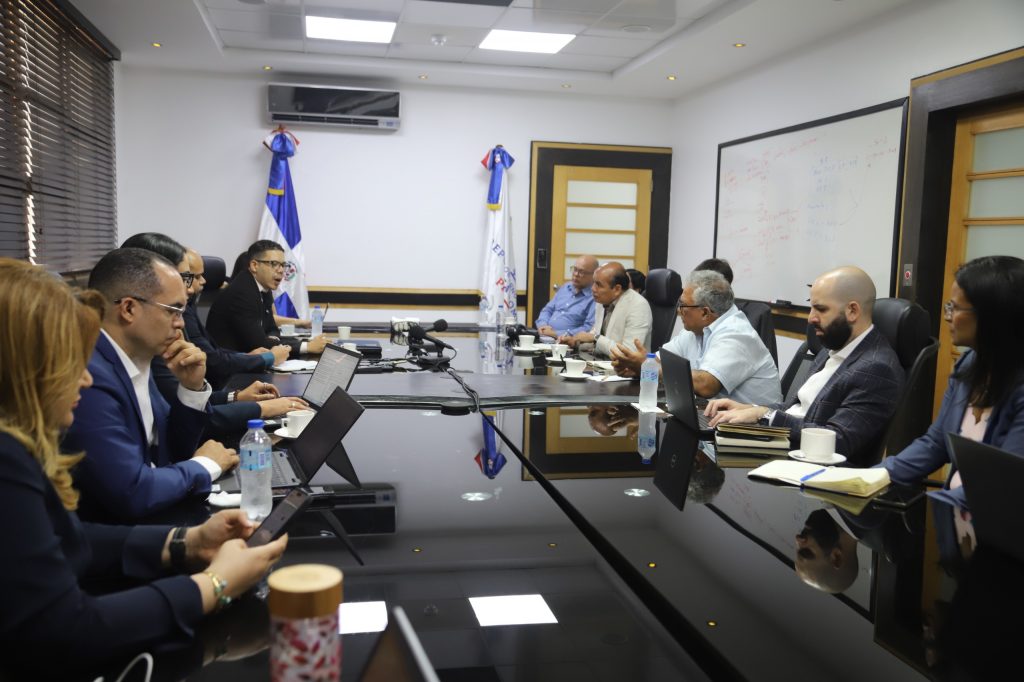
Representatives from the Budget Office and the European Union exchanged views on the program and the mission that DIGEPRES (General Directorate of Budget) carries out in the country's economic sphere. The General Directorate of Budget (DIGEPRES) and representatives of the European Union's Inclusive Societies program technical mission held a meeting to discuss sustainable mobility in public transportation in the Dominican Republic, addressing its structure, services, and social aspects. The meeting allowed mission representatives and Budget Office staff to share their impressions of the European program and DIGEPRES's mission in the country's economic sphere. The event was led by Rafael Jovine, Director of Economic Studies; Odilys Hidalgo, Director of Budget Services; Juan Portalatín, Head of Financial Management for Formulation and Execution; María Victoria Ortiz, Head of Standards and Methodologies; and Yeimi Brown Mendieta, Budget Planning and Gender Equality Analyst. As part of the mission, Bárbara Gómez Valcárcel, a technical specialist in the Governance and Citizenship component of the Inclusive Societies program; Galia Meléndez, a technical specialist in Gender and Women's Empowerment; Ana Pérez, an expert in Gender, Social Law, and Social Protection for Inclusive Societies; and Páscuale Tórtola, from the Just Transitions component of the same initiative, representing the ITILA organization, participated. In presenting the program, Bárbara Gómez indicated that it seeks to prioritize the country in the area of sustainable mobility, recognized as fundamental for the development of the Dominican Republic and key to citizen well-being. She also stated that the European Union in Latin American countries works alongside other European institutions in these territories, paying special attention to women, youth, and the poorest segments of the population to ensure they are not left out of the improvement processes. During the mission's presentation on their work promoting a gender perspective, María Victoria Ortíz, from DIGEPRES (General Directorate of Budget and Public Finance), outlined the actions taken within the framework of the 2026 General State Budget and the work carried out in coordination with international organizations based in the country. "At DIGEPRES, we work on gender labeling and thematic classification, a methodology that identifies and classifies data related to gender equality and estimates statistical units," Ortíz stated. She also noted that the Budget Office is a leader in this type of methodology and provided a general overview of the regulations, monitoring, and budget evaluation within the process. Rafael Jovine, during the meeting, explained DIGEPRES's role in the budget cycle, the institutional starting point for linking transportation, inclusion, and the budget. He also discussed public investment projects and tools for transparency and social participation, noting that the Dominican Republic has received significant international recognition in the latter, solidifying its position as a leader in the Central American and Caribbean region. For his part, Norvin Berges highlighted the work carried out by the Budget Office in the area of local government and presented images of the dashboard that centralizes, organizes, and displays key indicators, metrics, and data from the municipality that could serve as future input for the Inclusive Societies program. Finally, the representatives of the European Union program's technical mission praised the data provided by the Budget Office. They also outlined the agenda of activities and future meetings with government institutions. The Inclusive Societies program is being developed within the framework of a Global Strategy launched in 2021, which establishes an investment agenda and partnerships between the European organization and various countries worldwide, utilizing tools such as development cooperation under the 360-degree approach, to guarantee the social dimension and inclusion policies for vulnerable populations within their borders and in other regions.
The Budget Office concludes Ethics Week by promoting good practices in public service
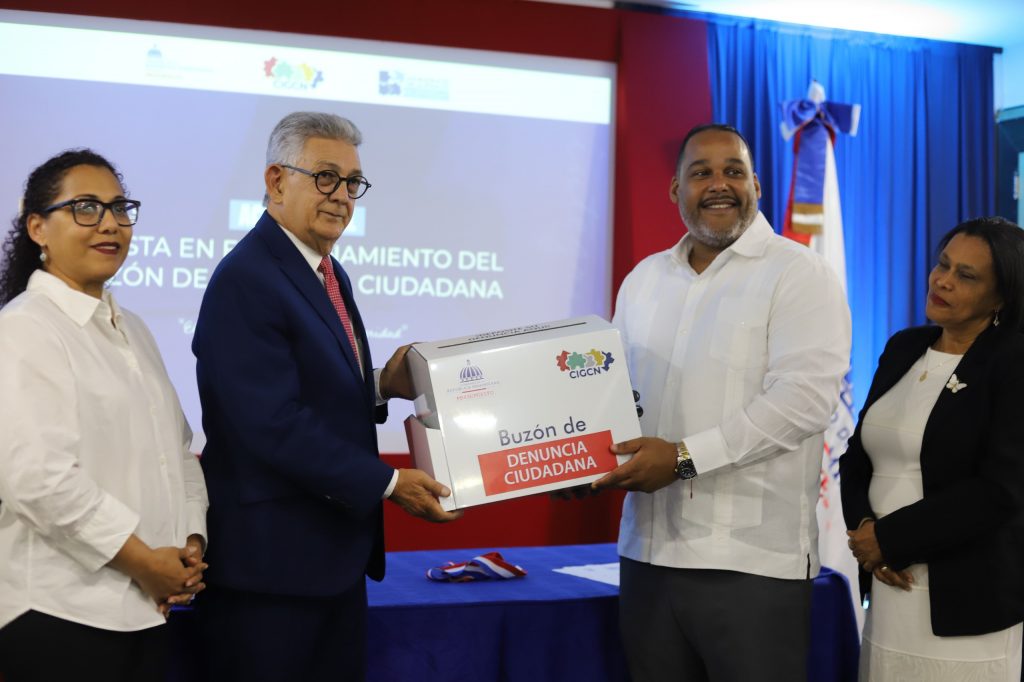
The Governmental Integrity and Regulatory Compliance Commission of DIGEPRES reaffirms each year the importance of strengthening integrity, transparency, values, and a culture of institutional responsibility. Under the motto "Development Lies in Integrity," the Governmental Integrity and Regulatory Compliance Commission (CIGCN) of the General Directorate of Budget successfully concluded DIGEPRES Ethics Week, which aimed to promote and strengthen values and ethics within the budgetary institution. At the opening of DIGEPRES Ethics Week, the welcoming remarks were delivered by Lidia Castillo, representative of the occasional staff of occupational group V, and Paola Chaljub, head of the Communications Department. Both emphasized the importance of the event and encouraged employees to continue complying with all regulations and to support the initiatives within the framework of the commemoration of National Civic Ethics Day. The CIGCN celebrated Ethics Week, including in its extensive program the installation of the "Values Swap," the launch of the Citizen Complaint Box, the "Every Decision Counts" workshop for staff in Occupational Groups I and II, and concluding with a film forum. The activities promoted by the CIGCN address key issues such as corruption prevention, strengthening regulatory compliance, and promoting best practices in public service, all within an inclusive and participatory approach. Each year, DIGEPRES Ethics Week is becoming a firmly established forum that strengthens integrity, transparency, values, a culture of responsibility, the common good, the fight against corruption, and improves trust in the institution. With this initiative, the Budget Office reaffirms its commitment to continue promoting actions and policies that strengthen public ethics and the construction of a more just society, institutional strengthening, and civic engagement. DIGEPRES, under the leadership of the General Directorate of Ethics and Governmental Integrity (DIGEIG), established its Governmental Integrity and Regulatory Compliance Commission (CIGCN) in compliance with Decree No. 791-21, which declares the implementation and election of Governmental Integrity and Regulatory Compliance Commissions (CIGCN) in all public institutions a high national priority. DIGEPRES Ethics Week was held with the participation of the Director of the General Directorate of Budget, José Rijo Presbot; the Deputy Director, Iván Ramírez; and Budget staff, technicians, and collaborators. The deployment of activities promoted by the CIGCN of the DIGEPRES, within the framework of the National Day of Citizen Ethics, also seeks to join the actions promoted by the General Directorate of Ethics and Governmental Integrity (DIGEIG) and honor the historical memory and legacy of Ulises Francisco Espaillat, Dominican statesman, nineteenth president of the country, symbol of the common good and citizen ethics.
Rijo Presbot: “The government’s plan in the face of the international situation seeks to contain inflation and protect vulnerable sectors”
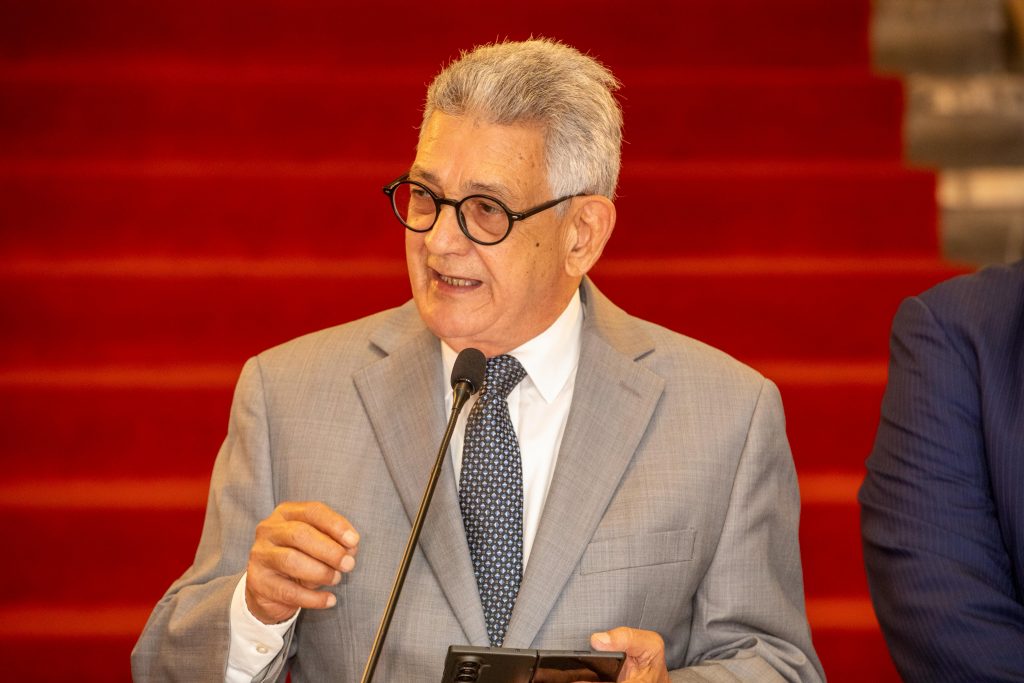
The Director General of the Budget Office highlights that for every 10 gallons of gasoline consumed by a citizen, the Government covers 500 pesos, preventing a greater impact on the basic food basket. José Rijo Presbot, Director General of the Budget Office, reported that President Luis Abinader's administration has a budget adjustment plan that seeks to prioritize fiscal discipline and protect vulnerable sectors affected by the crisis in the Middle East and the instability in oil prices. Rijo Presbot explained that the 2026 General State Budget was formulated under assumptions that did not anticipate such high oil prices, ranging from $90 to $105 per barrel, a scenario that requires the Government to make additional efforts to mitigate the impact on citizens. During an interview on the program “No se Diga Más,” hosted by journalists Alexander Barrios, Jorge Chaljub, Laura de la Nuez, Vianmarie Santana, and Miralba Ruiz, Rijo Presbot emphasized that the country is experiencing an extraordinary situation, which is why Dominican authorities are allocating between RD$1.2 billion and RD$1.6 billion weekly to fuel subsidies. He added that if these subsidies continue, they would have to allocate up to RD$2 billion per week for this purpose. “These increases have a significant impact on public spending, so the proposal seeks to maintain economic stability and growth without neglecting the social protection to which we are committed,” he stated. The Budget Director also indicated that the measure addresses the impact that fuel subsidies have on households. “For every 10 gallons of gasoline consumed by a citizen, the government is absorbing approximately 500 pesos, preventing a greater impact on the basic food basket,” he emphasized. Budget Director Rijo Presbot assured that the measures adopted are the result of a rigorous analysis of spending patterns, identifying areas where responsible adjustments can be made. During his remarks, the Budget Director explained that the measure stems from the need for internal adjustments, prioritizing efficiency and the responsible use of public resources. Finally, Rijo Presbot reiterated President Luis Abinader's government's commitment to fiscal responsibility, adopting timely measures to address the effects of the adverse international environment while ensuring the continuity of essential public policies. Details of the Government's Plan: It is worth noting that the set of measures taken by the Government broadly anticipates savings of RD$1,400,000 million in non-priority spending. This will allow for maintaining economic stability, based on the principle of honoring all commitments already formalized in contracts. Budgetary appropriations not yet committed will be reviewed, adjusted, or reduced according to national priorities. The measures were announced by the Director General of the Budget, José Rijo Presbot, following a Cabinet meeting chaired by the President of the Republic. He detailed that these actions include reducing operating expenses, curbing vehicle acquisitions (except for priority areas such as social assistance and food security), decreasing minor repairs and maintenance, streamlining services and contracts, limiting events to minimal costs, and adjusting spending on textiles, clothing, travel allowances, airfare, fuel, and advertising, among others. In addition, a verifiable reduction in current transfers to autonomous, decentralized bodies and public companies with the capacity to generate their own resources.
Milagros Ortiz: “Public ethics are achieved through the correct management of principles, norms, and collective commitment.”

The Director General of Ethics and Governmental Integrity made her remarks on the podcast “Let’s Talk About the Budget” as part of DIGEPRES’ Citizen Ethics Week. Milagros Ortiz Bosch, Director General of Ethics and Governmental Integrity (DIGEIG), reiterated that the Dominican Republic continues to consolidate its position in transparency, social oversight, and compliance with regulations, ranking among the top-rated countries. Ortiz Bosch indicated that the correct application of established principles and norms in public administration is essential for achieving transparency. She emphasized that this administration is working step by step to strengthen institutions, focusing on rigorous process monitoring and compliance with current regulations. “Public ethics are achieved when public servants make correct use of established principles and norms,” she stated. During her appearance on the podcast “Let’s Talk About the Budget,” hosted by Paola Chaljub, head of the Communications Department at the General Directorate of Budget (DIGEPRES), the director of DIGEIG emphasized that ethical values and transparency are fundamental to this administration. In her remarks, she noted that the country has positioned itself among the top countries in Latin America in matters related to budget control, achieving global recognition, which demonstrates a substantial improvement in the quality of spending and citizen accountability. Milagros Ortiz also indicated that, compared to previous years, no process is carried out without due process, and mechanisms are currently in place to guarantee greater transparency and institutional order. Among the measures implemented as part of these controls are the rejection of appointments without prior verification of funds, contracts without corresponding budget validation, and auditing processes. “These advances reflect the Dominican State’s commitment to more efficient and responsible public management, aligned with international best practices,” she stated. Milagros Ortiz Bosch concluded her remarks by highlighting that this approach allows the Dominican Republic to evolve toward a more organized management model, where compliance with regulations and constant oversight of public affairs are the fundamental pillars for achieving sustainable results and greater public trust. The podcast “Let’s Talk About the Budget” complements DIGEPRES’ efforts to continue promoting the right to know, transparency, and social participation as strategic axes of this budget management. CITIZEN ETHICS WEEK: DIGEIG mobilizes more than 100 public institutions with activities promoting integrity and transparency. This initiative unites state institutions around the values of transparency, regulatory compliance, and a culture of integrity. In commemoration of April 29, National Citizen Ethics Day, participating institutions hold talks, conferences, interviews, film screenings and discussions, contests, digital campaigns, exhibitions, murals, and reflection sessions, reaffirming the government’s commitment to integrity in public administration.
The Dominican Republic achieves a historic score of 82/100 in budget transparency and consolidates its leadership in Central America and the Caribbean in the 2025 Open Budget Survey

The country surpasses the Latin American and Caribbean average by 25 points, consolidating its place among the select group of nations with "Sufficient" levels of fiscal transparency according to the International Budget Partnership (IBP). The Dominican Republic has achieved its best historical score in the 2025 Open Budget Survey (OBS), reaching an outstanding score of 82 out of 100 in the Transparency pillar. This result positions the country, along with Brazil, as a regional leader in the timely and detailed publication of how the government manages and makes public resources transparent, far exceeding the Latin American and Caribbean average of 57 points. The General Directorate of Budget (DIGEPRES) views this milestone as validation of its institutional commitment to accountability and the Right to Know. The country has maintained sustained growth since 2015, when it scored only 51 points, reflecting a state policy focused on the complete opening of fiscal data. The OBS 2025 report highlights that the Dominican Republic publishes all eight key budget documents evaluated. In particular, the country achieved excellent scores in documents critical for social oversight, including the Pre-Budget Statement with a perfect score of 100/100, thanks to the expanded data on debt, revenue, and macroeconomic forecasts; the In-Year Reports, scoring 96/100, ensuring real-time monitoring of spending; and the Enacted Budget, reaching 95/100. Furthermore, the OBS 2025 report emphasizes the Dominican Republic's regional leadership in social participation and the timely publication of the Citizen's Budget, achieving a score of 84/100 and reaffirming its commitment to simplifying technical information for the entire population. In the area of Public Participation, the Dominican Republic scored 50 out of 100, nearly doubling the regional average of only 26. The International Budget Partnership (IBP) positively recognizes the creation of formal consultation spaces, such as the Municipal and Provincial Development Councils, which allow citizens to influence the budget process from the very beginning. Historic progress in social participation and sustained growth: Examining the historical evolution of social participation within the budget cycle reveals a paradigm shift in Dominican budget management over the last decade. After a period of fluctuations, with scores of 23 in 2015 and 17 in 2017, the country has achieved sustained and significant progress since 2021. The exceptional leap from a score of 22 in 2021 to the current 50 points in 2025 represents the consolidation of new channels for social dialogue and the strengthening of the development councils. This uninterrupted growth over the last two cycles not only doubles the regional average but also reaffirms DIGEPRES' commitment to transforming the budget into a tool for collective construction and effective social oversight. With this milestone, DIGEPRES reaffirms its commitment to working alongside the National Congress and the Chamber of Accounts to implement the recommendations of the Open Budget Survey (OBS) on Budget Oversight, which received a score of 56, as well as to fostering citizen participation in the discussion and approval phase of the General State Budget Bill. A Shared Achievement This result is the fruit of ongoing technical collaboration between the Government, international organizations, and civil society. DIGEPRES especially appreciates the support of the Solidarity Foundation and the commitment of the technical team at the Ministry of Finance and Economy, whose joint work has made the Dominican Republic a model of fiscal transparency for the world. The full report is available at internationalbudget.org.