


 EN
EN  ES
ES Budget Director reiterates Government has control measures in place to prevent wasteful spending
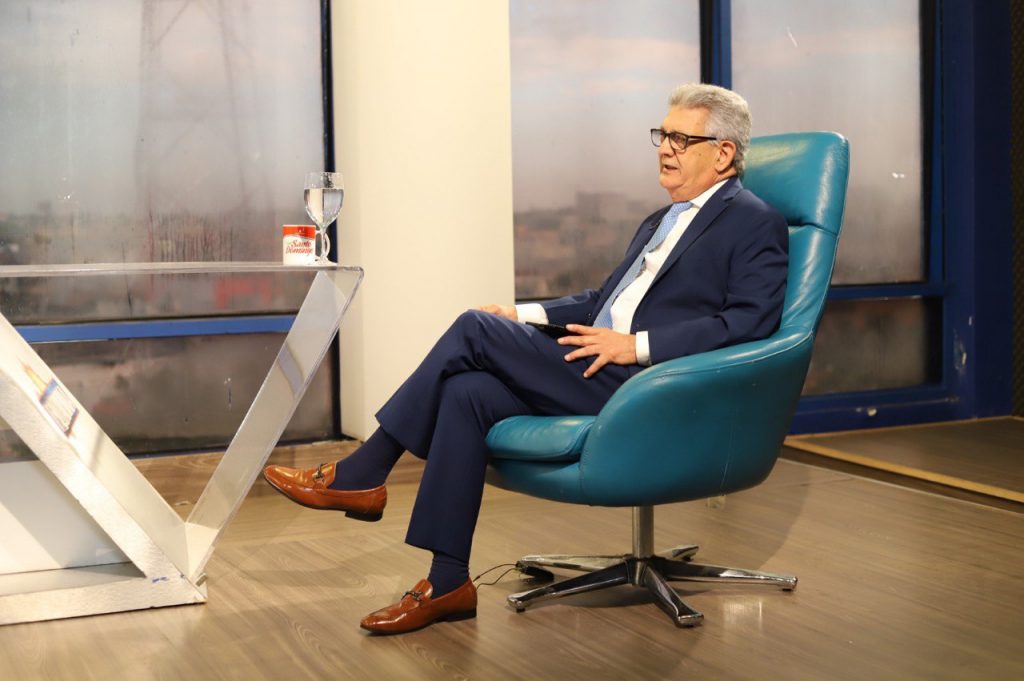
Rijo Presbot attributes the increase in capital spending for infrastructure to contractors' confidence in payment processes and transparency. The Director General of the Budget, José Rijo Presbot, confirmed that the amendment to the 2023 General State Budget has been enacted with Law No. 52-23 and announced that, in this revised budget, expenditures are increasing by 61 billion pesos, of which 38 billion pesos are for investment in projects already underway. He emphasized that "the Government has maintained a firm policy that no official can generate administrative debt; that is, they cannot transfer expenditures to the following year without the proper budgetary appropriation." According to Rijo Presbot, this transparent management and efficiency in fulfilling payments has generated trust among suppliers and contractors who have been committed to moving forward, which has translated into the need to increase capital expenditures and, consequently, further energize the Dominican economy. The Budget Director explained how tax revenues generated through the General Directorate of Internal Taxes (DGII) and the General Directorate of Customs (DGA) are committed to major areas such as education, subsidies, and debt repayment, and the significant challenge of responding to social demands. “Last September, we projected that 980 billion pesos would be collected in taxes by the DGII and DGA, and when it came time to distribute those resources, they were all committed. 275 billion pesos were earmarked for fulfilling the 4% education program; 225 billion pesos for interest on the previous debt; 200 billion for social subsidies, fuel, and the electricity sector; 125 billion for health; plus 155 billion for the old debt. That's where the 980 billion pesos went, and none has been distributed to local governments, branches of government, the environment, security, or defense, to name just a few,” Rijo Presbot explained. He pointed out that despite the deficit increasing by more than 14 billion pesos, there was no need to increase borrowing. “We had 363 billion pesos approved by Congress for borrowing this year, and we will end up with 330 billion pesos, meaning we have reduced our financing needs by more than 30 billion,” he explained. Budget Formulation for 2024. During an interview on the morning program Matinal 5, alongside journalists Persio Maldonado, Laura Castellanos, and Alberto Caminero, Rijo Presbot highlighted that, for the third consecutive year, and in compliance with the law, the Council of Ministers met to review the budget policy for 2024, which is part of the formulation process carried out by the General Directorate of Budgets (Digepres) in conjunction with central government institutions. “In that regard, we sent the guidelines on July 14th, the budget ceilings were delivered on the 17th, and now, on the 31st, all the institutions submitted their preliminary drafts. We are currently working on consolidating all of these drafts so that the Council of Ministers can be convened again by mid-September to review the bill that must be submitted to the National Congress before October 1st,” he added. Regarding the controls implemented to eliminate wasteful spending, the Budget Director emphasized that “the system has a series of safeguards in place so that any expenditure requires authorization. These controls apply to travel allowances, representation expenses, fuel, building renovations, and these are the safeguards we have been implementing over the years to ensure that our money goes further.” He added that President Luis Abinader's administration is focused on closing out 2023 and that the key point is that this year, as in previous years, the need for financing has decreased and the deficit has been managed. “Our concerns now are not those that the new authorities will have to face starting in 2024; what we are aware of are the great strides we have made,” among which he highlighted the Dominican Republic's ranking among the top 10 countries in the world for budget transparency and the improvement granted by risk rating agencies such as Standard & Poor's, Fish Rating, and Moody's. “In June 2020, the country was in a negative position, meaning that, according to the risk rating agencies, we were in negative territory, and now they have placed us on a stable level. Moody's has placed us beyond positive, on the path to investment grade, highlighting the efficient and proactive management of public debt, the effectiveness of fiscal policy, revenue management, economic strength, and resilience to external shocks,” Rijo Presbot explained. The Director General of Budget reminded everyone that the Government is committed to ensuring that every resource is used appropriately.