EN
 ES
Rijo Presbot: “The Budget seeks to fulfill the mandate of guaranteeing the general well-being of the people”
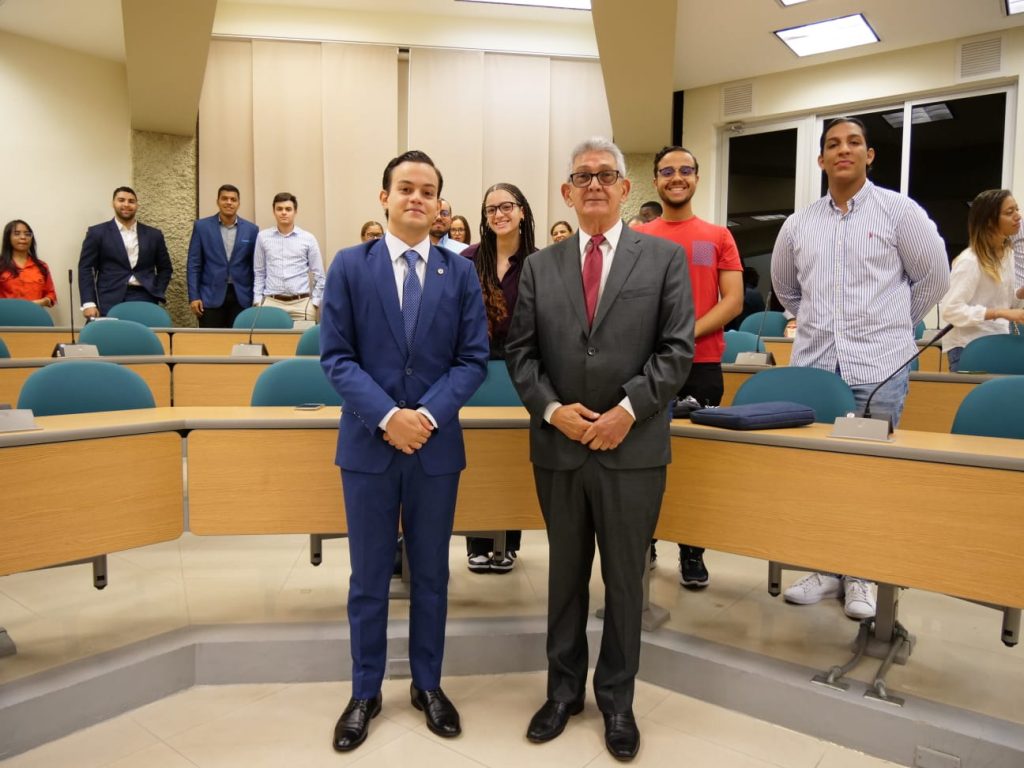
The Director General of the Budget presented the General State Budget at a Citizen Forum with the Political Ideas Association of the Pontifical Catholic University Madre y Maestra (PUCMM) in Santiago. – The Director General of the Budget, José Rijo Presbot, gave a presentation to members of the Political Ideas Association of the Pontifical Catholic University Madre y Maestra (PUCMM) in Santiago, addressing the “Budget as an instrument of public policy,” within the framework of a Citizen Forum on the Budget. This Citizen Forum was coordinated by the Political Ideas Association, made up of law students from PUCMM and created as a space for the free discussion of different ideologies and the resolution of conflicts. In his introduction, Rijo Presbot explained the legal framework of the Budget and its connection to Law No. 01-12, on the National Development Strategy 2030, the Sustainable Development Goals, and its interaction with economic and social factors. “The budget, as defined by state policy, encompasses economic, operational, and social aspects, because it must respond to these needs, address the problems society demands, and contribute to its human development,” stated Rijo Presbot. The Budget Director, in his presentation, indicated that the essential function of the State is the effective protection of individual rights, and therefore, the General State Budget (PGE) seeks to fulfill this mandate by aiming for the general welfare of the people. He also discussed the changes being implemented in the Integrated State Financial Management System (SIAFE), the multi-year budget, and the elimination of administrative debt. “No official, during 2021, contracted, executed, or accrued expenses without proper budgetary protection, and we included a provision stipulating that anyone who did so would be personally liable for it,” Presbot stated. He affirmed that the efficient and rational use of public spending allows President Luis Abinader's government to carry out projects, control imported inflation, and has prevented a decline in people's quality of life despite existing international conflicts. Economic and Social Impact of the Budget. Budget Director José Rijo Presbot emphasized that the General State Budget (PGE) has an impact on the economy, development, and standard of living of citizens, and that this is reflected in social spending, which is nothing more than the distribution of wealth, with the aim of promoting and facilitating the satisfaction of the population's basic needs and the development of the territories. "In this country, we were led to believe that we had to solve individually what should be solved collectively, stripping us of the concept of rights," Rijo Presbot stated. He asserted that, for a proper redistribution, public spending must provide all of society with quality goods and services. Benefits of Wealth Distribution: Rijo Presbot explained that social investment increases a country's progressive development, and if tax collection systems are fair, the necessary funds can be collected efficiently and sustainably to provide more goods and services to the population. "The State and governments, as part of their primary function, must promote income redistribution and the fight against poverty, where the public budget plays a fundamental role," the budget director emphasized. He was accompanied by Ana Miguelina Terrero, head of the Performance Evaluation Department, and Airon Fernández, Economic Studies and Financial Monitoring Specialist at Digepres. The event was moderated by Marcos Guzmán, president of AIP, and held at PUCMM in Santiago.
Budget Director presents budget execution progress to university economics academics
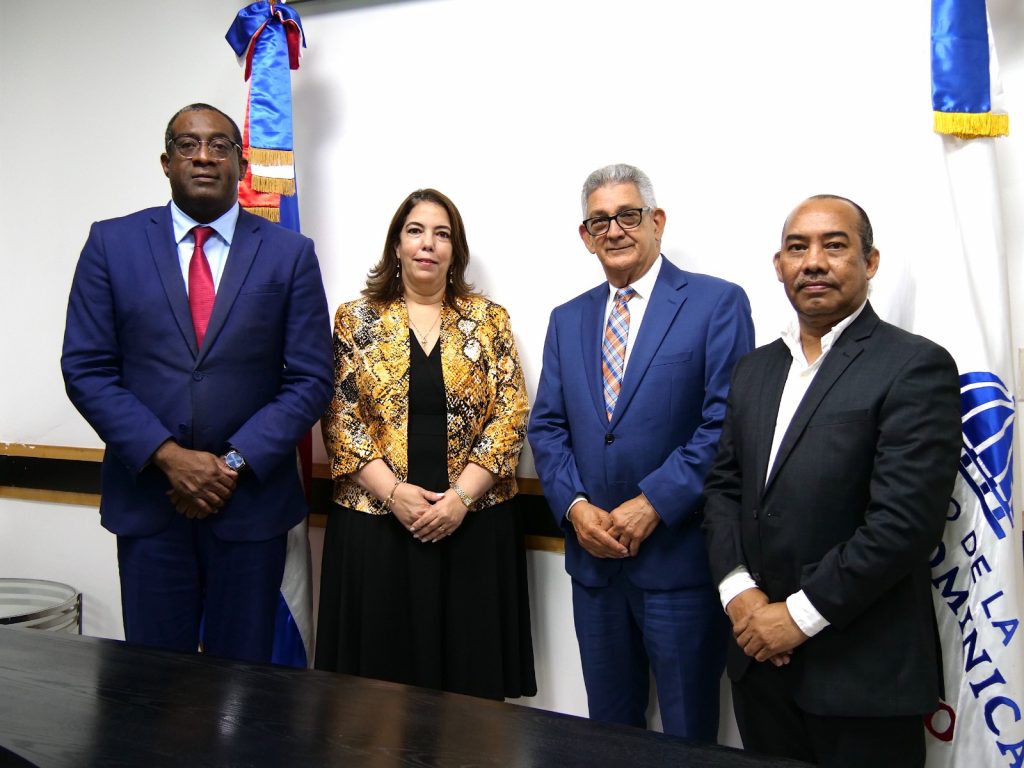
The activity promotes a strategic alliance to bring Economics students closer to the execution of the General State Budget. The General Directorate of Budget (Digepres) held a Citizen Meeting with academics from Economics faculties to discuss the central government's budget execution for the first quarter of 2023. The event also aimed to establish the foundations and strategic alliances to bring university Economics students closer to the execution of the General State Budget. The presentation was given by the Director General of Budget, José Rijo Presbot, during the Citizen Meeting, where he emphasized the institution's interest in promoting citizen participation in public budget management. "To improve the quality of public policies, it is crucial that citizen participation be early and timely, that is, that it involves monitoring the design and formulation, planning, execution, follow-up, and evaluation," stated Rijo Presbot. The Budget Director, while explaining the budget execution for the first three months of 2023, also highlighted the progress made by President Luis Abinader's administration. “The government eliminated the practice of administrative debt. Expenditures that are not properly documented cannot be executed without appropriation certification.” Among other actions, he mentioned substantial improvements to the police, health, and pension sectors. Those present at the meeting included Antonio Ciriaco Cruz, Dean of the Faculty of Economic and Social Sciences at the Autonomous University of Santo Domingo (UASD); Rita Mena, Director of the School of Economics at the Pontifical Catholic University Madre y Maestra (PUCMM); and Manuel Santana, Finance Coordinator at the Technological Institute of Santo Domingo (INTEC). Rijo Presbot explained to the professors the budget variables, tax revenues, functional distribution of spending, debt behavior and interest rates, the budget allocation established by law, and budget results. The Budget Director also addressed the impact of the international crisis stemming from the war between Russia and Ukraine on the Dominican economy, explaining that the government has resorted to subsidies as an effective transitional tool to alleviate the effects of imported inflation following the conflict. Rijo Presbot provided details on the central government's public investment in the provinces during the first quarter of the year. "Approximately RD$20,343 million has been invested in Santo Domingo, Santiago de los Caballeros, Duarte, the National District, and Azua." He also highlighted ongoing initiatives to meet the public's social demands in the areas of water, infrastructure, social programs, and subsidies for the electricity and fuel sectors. Furthermore, he encouraged those present to monitor the weekly Budget Execution report published by Digepres, which details even the smallest level of government spending, as a key factor in assessing transparency. Finally, participants had the opportunity to express their concerns regarding improvements related to the quality of spending, public policies, and tax reforms. The Budget Director was accompanied by a team of collaborators including Jenny Batista from the Social Services Department; Juan Portalatin, Sorangel González, and Airon Fernández from the Economic Studies Department; Ana Miguelina Terrero from Budget Performance Evaluation; and Odilys Hidalgo from the Budget Services Directorate. Citizen Encounter is an initiative of the Budget Directorate (Digepres) to reaffirm its commitment to transparency and, for the first time by the government, guarantee public participation in the budget formulation process.