


 EN
EN  ES
ES Budget Director assures availability of resources for the Attorney General's Office and Justice Department
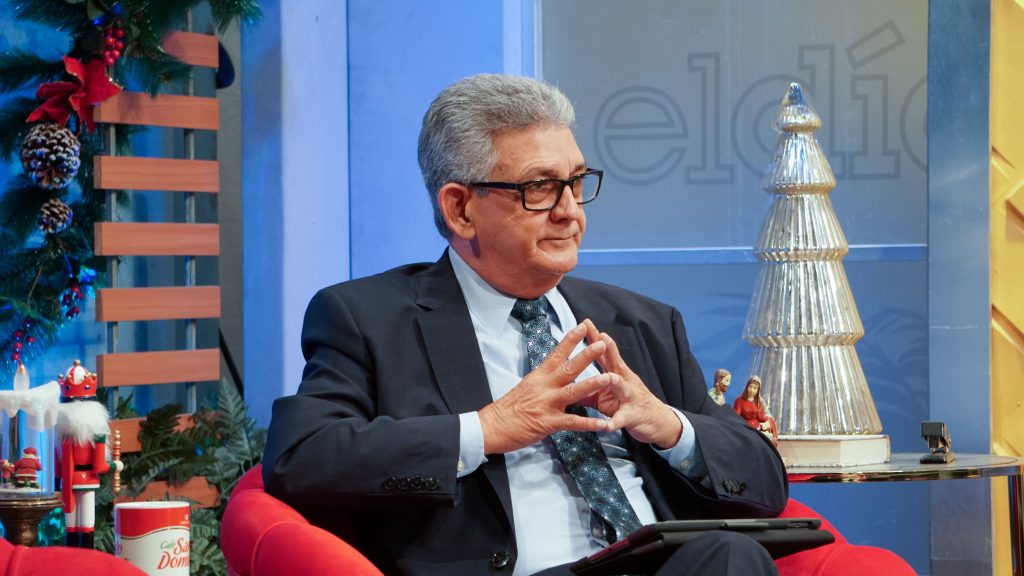
Reformulado dispone 1,500 millones adicionales. Proyecto de Ley asigna más de 1,300 millones para 2022 El director general de Presupuesto, José Rijo Presbot, aseguró la disponibilidad de recursos para los trabajos del Ministerio Público y la justicia dominicana. Así se expresó sobre el incremento al monto asignado en el Proyecto de Ley de Presupuesto General del Estado para 2022, a la Procuraduría General de la República. En ese orden, expresó que lejos de una disminución al mejoramiento del trabajo de ese órgano judicial, “para el Ministerio Público y la justicia, habrá siempre disponibilidad de recursos para hacer los aportes que ellos requieran.” Rijo Presbot reiteró que “el presupuesto de la PGR estaba afectado anteriormente por todo el programa de construcción de las cárceles del sistema penitenciario, al quitarse esa partida importante, el presupuesto se reduce de unos 10,500 millones a 5,800 millones de pesos.” Señaló que este año, el presupuesto para la Procuraduría, originalmente era de 7,005 millones de pesos y que, en el reformulado, sometido al Congreso en el mes de julio, se elevó esa partida a 8,912 millones de pesos. “Para el año 2022, el presupuesto es de 8,399 millones, un incremento con relación al presupuesto inicial de 1,393 millones de pesos. Ese total, esos 8,399 millones de pesos, es lo que está presupuestado en el Proyecto de Ley que esperamos que sea aprobado en estos días en el Congreso Nacional”, expresó. En ese mismo orden, Rijo explicó que, como una medida para poder habilitar recursos a determinadas instituciones, se elaboró un reformulado que permitirá disponer el año próximo de los fondos que no hayan sido ejecutados al 31 de diciembre. “A la Procuraduría, además de los 8,912 millones de pesos de este año, se le ha hecho un aporte adicional de 1,500 millones de pesos, y que lo que no se ejecute de ese monto, se queda para el año próximo”. No así, aclaró, las otras instituciones, que tal como establece la ley, su periodo termina el 31 de diciembre y el gasto que no se ejecuta, no existió. “Con eso, la Procuraduría podría tener alrededor de unos casi 9,900 millones de pesos para el 2022. Y seguiríamos aportando en la medida de nuestras posibilidades”. Agregó que, en este reformulado también se hizo un incremento de 2,500 millones de pesos al Poder Judicial y 750 millones a la Junta Central Electoral, para que cubran el déficit de este año. Igualmente, a la Cámara de Cuentas y al Tribunal Superior Electoral. La lucha contra la corrupción es una realidad Rijo Presbot destacó el esfuerzo que se ha hecho desde el Gobierno para reducir el gasto y el déficit en más de un 60%, a partir del año pasado que, de 7.5% del PIB se ha llevado por debajo del 3%. Aseguró que las medidas de eficientización y transparencia, implementadas por esta Administración, han permitido mejorar y redistribuir el gasto. “La lucha contra la corrupción desde el Gobierno no es una pose, es un hecho, es una realidad. Porque nosotros creemos que de esa manera es que podemos dedicar más dinero a la salud, a la educación, a la seguridad ciudadana y empleos dignos”, enfatizó. Mejora calificación de riesgo El director general de Presupuesto, resaltó como uno de los logros, la mejora en la calificación de riesgo otorgada por dos calificadoras, que elevan de negativa a estable, la perspectiva económica de la República Dominicana. En ese sentido, expresó que, “a pesar de la pandemia y todas sus consecuencias, República Dominicana es el único país que este año, las dos calificadoras de riesgo más importantes, Standard & Pool y Fitch, nos hayan mejorado la calificación de negativa a estable, por la robustez, el compromiso de la disminución del déficit y el manejo responsable de la deuda”. Agregó que la deuda se ha logrado disminuir de un 58.2% a 51% y que se espera terminar por debajo del 50%. José Rijo Presbot, ofreció estas declaraciones durante una entrevista en el programa “El Día”, conducido por Huchi Lora y Carolina Santana y transmitido por Telesistema Canal 11.
Budget Director values efficient spending and private sector support for economic growth in the Dominican Republic
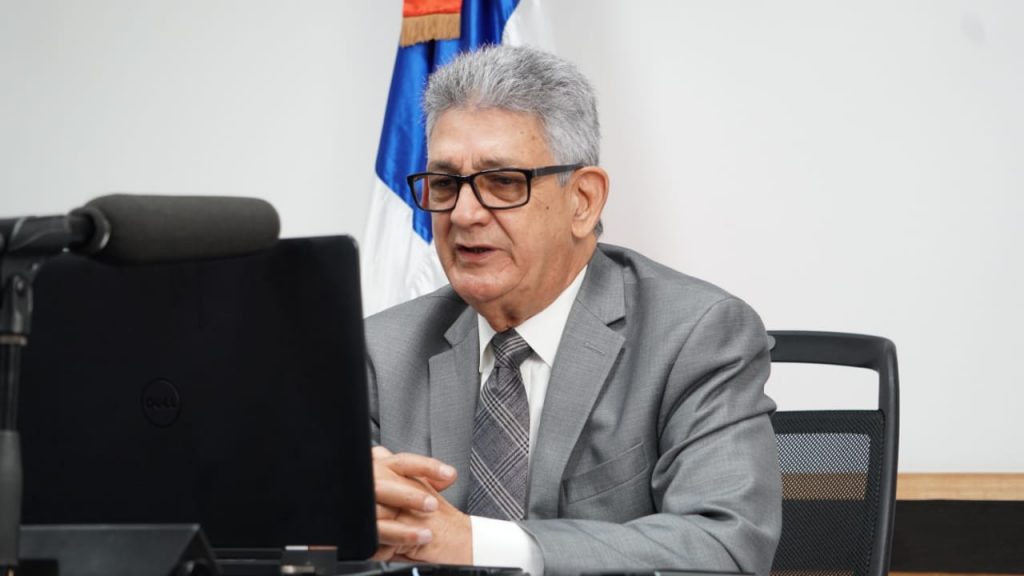
Rijo Presbot ofreció una conferencia magistral para Universidad de Puerto Rico a través del CAPGEFI del Ministerio de Hacienda El Centro de Capacitación en Política y Gestión Fiscal (CAPGEFI) junto a la Universidad de Puerto Rico, Recinto Río Piedras, realizó la VI Conferencia Internacional titulada “El Rol de la Hacienda Pública Ante la Pandemia versus sus Políticas Contributivas y el Gasto Público en Puerto Rico y República Dominicana”. El viceministro de Presupuesto, Patrimonio y Contabilidad y director general de Presupuesto de República Dominicana, José Rijo Presbot, tuvo a su cargo la ponencia central del evento, que estuvo dirigido a autoridades académicas, decanos, directores, docentes, estudiantes de las instituciones de educación superior y público en general. Para entrar en contexto, Rijo Presbot hizo un breve recuento de la situación política, social y económica de la República Dominicana en el año 2020, a partir del primer caso detectado de Covid y el cierre de todas las actividades económicas. “Ante esa realidad, teníamos que hacer esfuerzos para que en el 2021 las cosas comenzaran a cambiar y una de las previsiones al final del año pasado fue reducir todo gasto superfluo y tratar de ahorrar para que nosotros pudiéramos tener disponibilidades suficientes para impulsar la económica”, En ese mismo orden, resaltó que “pasamos de un PIB inicial este 2021 de US$78,689 millones a US$92,987 millones, es decir que, se maneja una etapa de mucha prosperidad y de cierto establecimiento de mejoramiento de la RD y con mejores proyecciones para el 2022”. Sector privado como gran aliado Al ser abordado sobre el crecimiento económico que exhibe República Dominicana, Rijo Presbot lo atribuyó, entre otros factores, al apoyo del sector privado que ha recibido la confianza del presidente, la independencia de la justicia y la seguridad jurídica para invertir. “Además, la certeza de que toda acción que pueda señalarse de desviación, de corrupción, es sancionada por este Gobierno”, enfatizó. “Si analizamos que es lo que explica este crecimiento tan robusto en la RD con bajo déficit y baja inversión pública en términos de proyectos, indudablemente que el sector privado ha sido la gran respuesta”, dijo el director de Presupuesto y valoró el esfuerzo que ha empeñado ese sector junto al Gobierno en la recuperación de empleos. Costo de pandemia “De acuerdo con estudios realizados por el Ministerio de Economía, Planificación y Desarrollo, la pandemia Covid le costó al país 18 mil 459 millones de dólares, lo que representa el 23.4% de nuestro Producto Interno Bruto, con una caída de la actividad de 6.7% y generó entre 400-500 mil desempleados”, afirmó Rijo Presbot. Sin embargo, aseguró que, a pesar del gran costo y los efectos de la pandemia, logramos recuperar los empleos perdidos y alcanzar los niveles prepandemia. En cuanto al gasto, Rijo Presbot, dijo que los esfuerzos realizados por el Gobierno del presidente Luis Abinader para contener y superar la pandemia, nos han colocado a nivel regional entre los países que han dedicado mayor aporte a subsidios y transferencias corrientes. Sobre la conferencia Esta actividad, celebrada en modalidad virtual, se enmarca en el convenio de colaboración firmado entre el CAPGEFI del Ministerio de Hacienda de la República Dominicana, la Facultad de Administración de Empresas (FAE) y la Escuela Graduada de Administración Pública de la Facultad de Ciencias Sociales, de la Universidad de Puerto Rico, Recinto de Río Piedras. Por su parte, Francisco Parés Alicea, secretario del departamento de Hacienda de Puerto Rico y docente de la Escuela Graduada de Administración de Empresas de la UPRRP, fue la contraparte de Rijo Presbot en la segunda jornada de la conferencia.
Budget Director: “Now we have a budget model highly dedicated to the well-being of the people.”
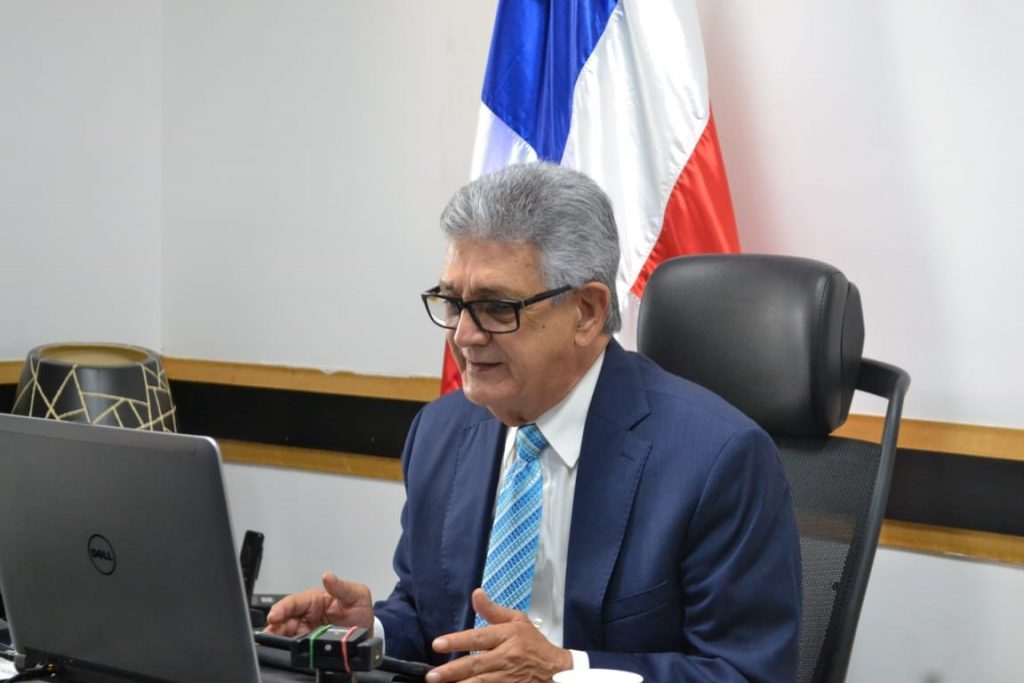
Rijo Presbot presenta avances de la política presupuestaria dominicana a misión técnica del Fondo Monetario Internacional El director general de Presupuesto, José Rijo Presbot, sostuvo una reunión con representantes del Fondo Monetario Internacional (FMI), para pasar revista al desempeño reciente y las perspectivas de la economía dominicana. El encuentro, se suma a una serie de reuniones de la misión del FMI, liderada por el economista Esteban Vesperoni, con organismos del Gobierno del presidente Luis Abinader. La reunión, que se realizó en modalidad virtual con los técnicos desde Washington, estuvo moderada por Pamela Madrid y Hassan Adan, economistas del FMI. Rijo Presbot presentó la situación del país desde agosto del 2020, cuando inició esta gestión, en plena pandemia y con una caída de todas las actividades económicas que, según apuntó, obligó al Gobierno a tener un control de gasto no prioritario en el Presupuesto y un incremento de cerca de 40 mil millones de pesos, destinados a salud y necesidades de la población. Dijo también que, desde el Gobierno se aplicaron ajustes para reducir gastos y priorizar la salud y la educación. “Ese esfuerzo nos ha llevado a tener un programa de vacunación y brindar seguridad, porque hay una concepción clara de que nuestro Gobierno tiene un compromiso de cumplimiento con la ética, transparencia e integridad. Lo que ha propiciado una confianza que ha permitido que ya este año estemos exhibiendo números muy halagadores, con un crecimiento a septiembre, de 12.7% del PIB”, expresó. Gasto orientado al bienestar de la gente El director de Presupuesto apuntó que se han ajustado algunas áreas y se ha hecho una reingeniería del gasto orientado a elevar el bienestar de la gente. “Todo lo que no vaya en esa línea, lo hemos reducido para transferirlo a subsidios, a mejoramientos, al apoyo del sector agrícola, a productores de alimentos significativos y eso ha permitido que la canasta básica no se haya alterado tanto”. Aseguró también que uno de los objetivos fundamentales del Gobierno es ir disminuyendo los déficits. “Pensábamos, originalmente antes de pandemia, que nosotros en tres años íbamos a tener déficit cero, pero la pandemia nos ha obligado a tener que seguir un modelo presupuestario deficitario que antes era altamente clientelar y ahora es altamente dedicado a la calidad de vida de la gente”. Resaltó que el Proyecto de Ley de PGE para el 2022, que se encuentra en discusión en el Congreso Nacional, establece ejes fundamentales enfocados al bienestar de los ciudadanos a través de la salud, seguridad social, educación de calidad, protección social, reactivación económica y recuperación de empleos dignos. Igualmente, justicia, orden público, seguridad ciudadana, acceso al agua y una mayor inversión en vivienda digna. “No encontramos un proyecto nuevo de acueducto y ahora mismo tenemos 65 proyectos nuevos de pequeños acueductos que van a estar incorporados en el Presupuesto del 2022, como prioridad”, haciendo referencia al acceso al agua como un derecho de las familias. Rediseño de los subsidios Durante la reunión, Rijo Presbot destacó el interés del Gobierno en atender las necesidades de la población más vulnerable y de crear oportunidades verdaderas de desarrollo humano. Afirmó que, “la idea no es crecer en número de beneficiados, sino contribuir para que menos personas se vean en la necesidad de asistencia monetaria condicionada”. En ese sentido, resaltó que para lograr que haya menos impacto en la población necesitada, el Gobierno ha aumentado los subsidios. “El antiguo programa Comer es Primero, que antes tenía una asignación de 850 pesos por familia, ahora lo duplicamos y elevamos a 1,650 pesos. Sumado esto, a que antes de pandemia, alcanzaba a 830 mil beneficiados y ahora tenemos 1 millon 350 mil”. Eliminar malas prácticas El director de Presupuesto recordó que este año se han eliminado una serie de acciones que antes se hacían. “Por ejemplo, había ejecuciones de gasto de capital que no se registraban en el PGE del año corriente. Esos gastos, que no se registraban, no transparentaban el déficit real. Entonces, ese monto ejecutado, pero no registrado, se pasaba al año siguiente como disminución de cuentas por pagar. Esto generaba lo que llamamos una deuda administrativa de años anteriores. Nosotros hemos eliminado esa práctica”. Reveló que dicha práctica, representó de enero al 14 de agosto de 2020, 62 mil millones de pesos. “Es decir que más de 1,000 millones de dólares fueron ejecutados fuera del sistema presupuestario. Eso nosotros lo hemos eliminado por completo. Y todo aquel funcionario que lo haga, lo paga con su patrimonio”, puntualizó. Suma histórica en gasto de capital Rijo Presbot reveló que en el mes de octubre se invirtieron 9,090 millones de pesos, “la mayor inversión de toda la historia dominicana en el mes de octubre fue la de este año 2021 y así esperamos que siga incrementando el gasto de capital en los meses finales”. En ese orden, Pamela Madrid, economista del FMI, preguntó sobre las expectativas desde Presupuesto en cuanto al ritmo de inversión para los próximos meses, a lo que Rijo Presbot aseguró que se mantendrán cerca del nivel de octubre. A modo de aporte, Rafael Jovine, director de Estudios Económicos de DIGEPRES, presentó el informe de Ejecución Presupuestaria hasta el mes de octubre, que incluye el gasto de capital y que refleja la evolución de los últimos 5 años. Finalmente, los economistas del FMI plantearon la posibilidad de brindar cooperación y asistencia. De su lado, Rijo Presbot agradeció la disposición y reiteró el interés del Gobierno del presidente Abinader en fortalecer la institucionalidad democrática para una mejor gobernanza. Junto al director general de Presupuesto, estuvieron presentes Odilys Hidalgo, directora de Servicios Presupuestarios; Griselda Gómez, directora de Calidad y Evaluación de la Gestión Presupuestaria; David Canaán, encargado de Recursos Humanos; Patricia Castillo, encargada de Planificación y Desarrollo; María Mariñas, encargada de Análisis y Estudios Económicos; Airon Fernández y Aris Balbuena, especialistas de Programas Presupuestarios de la DIGEPRES.
Presupuesto: gobiernos locales disponen de RD$625.5 MM para sueldo 13, sin tomar prestado
Gobierno logró acuerdo con ayuntamientos y alcaldías y entierra vieja práctica de endeudamiento La práctica común de tomar préstamos a fin de año para garantizar el salario 13 o doble sueldo, de los servidores públicos municipales, ha quedado en el pasado. Así se ha reiterado desde la Dirección General de Presupuesto (DIGEPRES), que, por segundo año consecutivo, ha logrado evitar que los ayuntamientos y alcaldías, que conforman los gobiernos locales, tengan que solicitar préstamos al Banco de Reservas. La iniciativa es fruto de un acuerdo interinstitucional entre Gobierno central y gobiernos locales, que busca garantizar la apropiación total de recursos para cumplir con los derechos laborales de trabajadores de los ayuntamientos. Mediante acuerdo, desde inicio del 2021, el Gobierno del presidente Luis Abinader procedió a reservar la doceava parte de las transferencias a remuneraciones, a los fines de disponer de esas partidas en diciembre y pagar efectivamente el salario 13. Para diciembre 2021, un total de 393 gobiernos locales dispondrán de la totalidad de los recursos, ascendentes a RD$ 625.5 millones, para así cumplir, sin necesidad de endeudarse, con las remuneraciones al personal municipal, de acuerdo con datos ofrecidos por el Departamento de Estudios Económicos de la DIGEPRES. Con esta iniciativa, la presente Administración gubernamental desmonta una práctica nociva que se remonta a, por lo menos, 15 años de vigencia. Se deja atrás, además, las constantes declaratorias de emergencia en el Congreso Nacional para el conocimiento y aprobación de estos préstamos, que incluían también el pago de intereses y la retención por parte del Banco de Reservas de las respectivas cuotas mensualmente. Fondo de cohesión territorial para 2022 Para el 2022, el Proyecto de Ley de Presupuesto General del Estado establece la transferencia de RD$ 22,522.8 millones al conjunto de los gobiernos locales, lo que representa un incremento del 8.9% en función al año 2021 y RD$1,833.7 millones adicionales, aparte de un Fondo de Cohesión Territorial de RD$410.9 millones que beneficiará a las 40 municipalidades más vulnerables del país.
Rijo Presbot: “Public policies arise from local priorities”
The Director of the Budget Office held a meeting with representatives of the Citizen Forum. As a way to bring the budget closer to civil society and promote more participatory management, the General Directorate of the Budget Office held a Citizen Meeting with the Social Policy Committee of the Citizen Forum social movement. The meeting, attended by more than 30 representatives from different organizations, was led by the Director General of the Budget Office, José Rijo Presbot, and moderated by Juan Luis Corporán, Technical Deputy Director of Ciudad Alternativa. Rijo Presbot presented the group with the new structure of the 2022 General State Budget Bill and the progress made in the formulation and execution of the current General State Budget, especially regarding housing, territorial development, health, education, and social security. In his presentation, he emphasized that the General Directorate of the Budget Office is giving the budget a new vision, directly linking it to the goals, results, and needs of the population. “We have identified priorities within each of the general objectives of the National Development Strategy. For example, 31 billion pesos were allocated for efficient and targeted public administration, and 223 billion pesos for quality education for all. We are currently assessing each general objective to determine what can be achieved with these resources,” Rijo emphasized. Territorial Cohesion During the Citizen Meeting, the topic of territoriality within the Budget was addressed, and Rijo highlighted that, “regarding territorial cohesion, there is a concept stemming from the Government of Change program, led by the President, and the design of public policies with the clear understanding that investment must be made where people live. Territory is fundamental.” In this regard, he emphasized the connection between the Budget, investment projects, and the demands addressed that have emerged from the provincial and municipal development councils. “It is important to develop a strategic plan for localities so that public policies directed toward those municipalities can then be developed from there,” the Budget Minister stressed. Over RD$1,446 billion allocated solely for housing. When asked about social housing construction, Rijo Presbot affirmed that this is a priority issue. “For next year, in the new Ministry of Housing and Construction, we have an allocation of over 6 billion pesos exclusively for housing.” He also stated that 15,000 homes have been built through the “Dominicana se Construye” (Dominican Republic Builds) program and highlighted the government's commitment to helping those who aspire to buy a home by contributing to a percentage of the interest rate. Citizen Budget. Rijo Presbot took advantage of the meeting to discuss initiatives aimed at making the General State Budget (PGE) more accessible to the public. “We have just published the Citizen Budget, a more streamlined and simplified version of the PGE Bill,” he said, encouraging the representatives of the Social Policy Committee to offer any suggestions. For his part, Aris Balbuena, Budget Programs Specialist at DIGEPRES, pointed out that the goal is to strengthen social oversight, transparency, and citizen participation. “As part of this commitment, we schedule these Citizen Meetings systematically and interactively to enrich our work through exchange,” he added. Also participating in this Citizen Meeting were Jenny Torres, Guadalupe Valdez, Pepe Castro, Ricardo González, Gregory Sena, Patricia Gómez, Virginia Pastor, Eulalia Jiménez, Fabián Mejía, and other representatives from the Social Policy Roundtable. The Citizen Forum brings together approximately 400 organizations that address social issues through committees and working groups.
Budget highlights achievements in integrity and transparency management
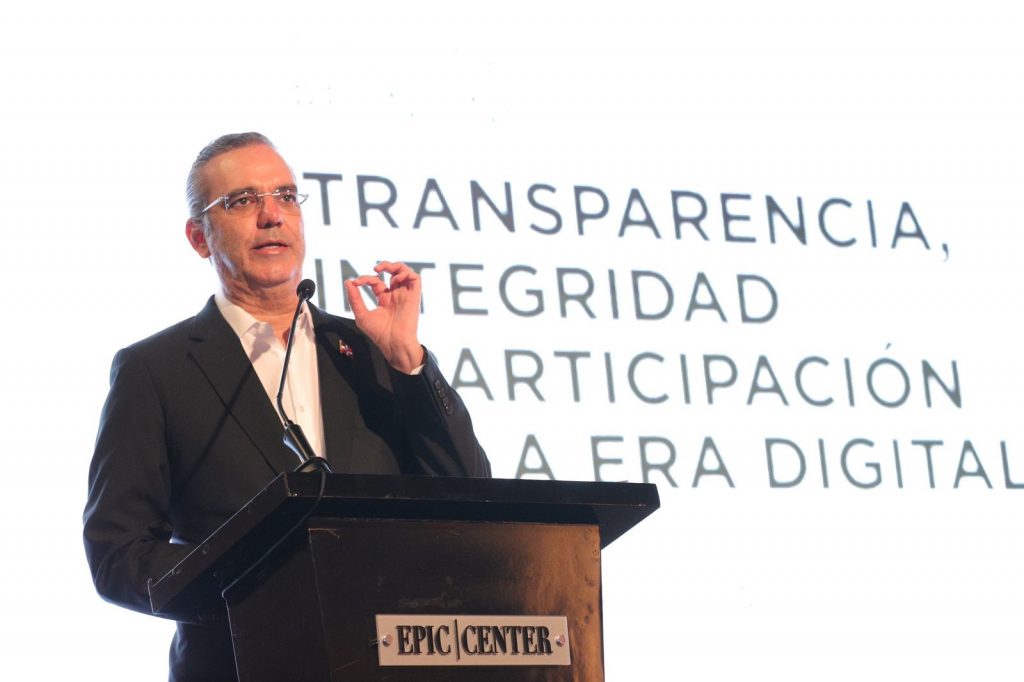
International Dialogue on Transparency and Integrity of the Public Network: President Abinader Reaffirms Government's Commitment to Principles, Ethics, and Integrity. In an event led by the President of the Dominican Republic, Luis Abinader, the 5th International Dialogue on Transparency and Integrity of the Public Integrity Network of Latin America and the Caribbean took place. This year, the Dominican Republic hosted this event, which, together with the General Directorate of Ethics and Governmental Integrity (DIGEIG), is organized by the Inter-American Development Bank (IDB) and the Organisation for Economic Co-operation and Development (OECD). This series of meetings provided a platform to highlight and publicize the tools and reforms implemented by the Dominican government to consolidate transparency and integrity and promote citizen participation. In this regard, President Abinader stated that, “there is no transformative action without principles, ethics, and integrity in the exercise of power.” During his address, the president also highlighted the various projects and ten-point codes of best practices that link all levels of his government. “A good example of this is our transparency portal, where anyone can access information on public contracts, tenders, salaries, and plans. Everything is there because there is nothing to hide,” the head of state emphasized in his speech. Meanwhile, the Director General of the Budget, José Rijo Presbot, joined the second day of public sessions with the topic “Modernizing the Integrity and Transparency System of the Dominican Republic.” Also participating were Catalino Correa, Comptroller General of the Republic; Milagros Ortíz Bosch, Director General of Ethics and Governmental Integrity; and Carlos Pimentel, Director General of Procurement and Contracting. Rijo Presbot stated that the General Directorate of Budget (DIGEPRES) has implemented significant budget controls aimed at controlling public spending, ensuring transparency, and aligning the plan and the budget to achieve positive results. “For the first time, we have drafted a Budget Bill for 2022 that links the National Development Strategy 2030 with the strategic axes for producing the General State Budget.” As a fundamental aspect of the Budget reforms, Rijo Presbot highlighted the consolidation of the process for preparing medium-term fiscal frameworks through a methodological guide and the improvements introduced in the State Financial Management Information System (SIGEF), which now allows institutions to formulate their budgets on a multi-year basis. “In 2017, only 831% of institutions based their budgets on service targets. Today, we can say that 991% of institutions do so,” added the Budget Director. Greater Spending Control and Reduction of Accounts Payable Regarding spending control, Rijo Presbot spoke about improvements to the Budget programming module and highlighted as a significant achievement the prohibition of transactional agreements by incumbents and institutions, which, according to Rijo, represented one of the most corrupt mechanisms in the Dominican Republic. “Accounts payable were reduced by 174 million pesos in 2010. Last year, from January to August 14, 62 billion pesos were paid, of which approximately 32 billion did not go through the regular channels, not even through the Comptroller General's Office, and we have eliminated this,” stated the Budget Director. He affirmed that an article has been added to the Budget Law prohibiting this practice and stipulating that any official who incurs administrative debt due to a lack of resources will be liable for it with their personal assets. Updated and Available Budget Execution: Rijo Presbot pointed out that never before has the execution of state resources been made so readily and up-to-date to the public through this information. “We have positioned ourselves at the forefront of international best practices and now publish the Budget execution report weekly on the institutional website,” he affirmed. He stated that DIGEPRES has encouraged citizen participation and social oversight with initiatives such as Citizen Budget, which offers a more streamlined explanation of the General State Budget (PGE), and Citizen Encounters, which facilitate engagement with organized civil society. Regarding the event: The International Dialogue on Transparency and Integrity of the OECD-IDB Public Network of Latin America and the Caribbean is an annual meeting held to share best practices in transparency, ethics, and integrity. The forum brings together high-level international experts who seek to promote better public policies, economic growth, and the prevention and control of corruption.
Budget Director: “The economic recovery in the Dominican Republic is a reality”
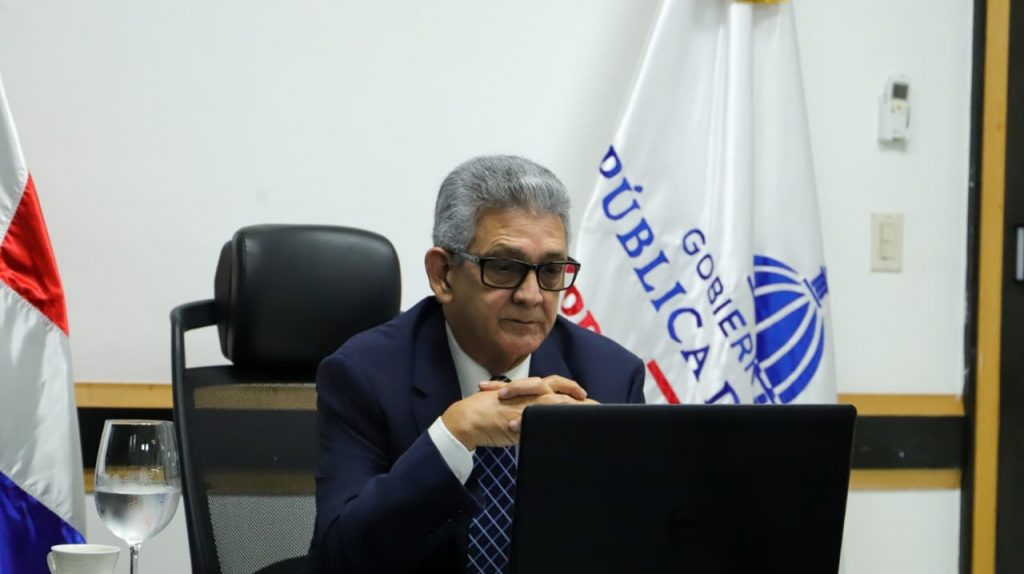
Rijo Presbot participated as a speaker at the International Public Budget Seminar and highlighted economic growth of 12.71% despite the Covid-19 pandemic. “Budgetary Effects of the Pandemic on Health Systems, the Economy, and Education” was the central theme of the 48th International Public Budget Seminar, in which the Director General of the Budget, José Rijo Presbot, participated as a guest speaker. During the virtual event, organized annually by the International Public Budget Association, Rijo Presbot emphasized the efforts of President Luis Abinader's administration to reactivate the Dominican economy and tourism, recover jobs, and boost productive sectors despite the pandemic. Rijo Presbot stated that the cost of the pandemic's effects was the most significant factor impacting the economy, amounting to approximately US$18 billion, equivalent to 23.41% of the Gross Domestic Product (GDP). He also stated that the GDP contracted by 6.71%, a situation that resulted in between 400,000 and 500,000 unemployed, with the productive sectors being the most affected. “With the pandemic, the effort we have had to make has truly been significant, but a comprehensive plan has been developed that, for us, represents the peak of recovery that the Dominican Republic has achieved,” he noted. He also praised the government's investment in healthcare, particularly in the National Vaccination Plan, the provision of supplies, the establishment of intensive care units and treatment centers, and the creation of a nationwide network of over a thousand centers staffed by volunteers. “The entire vaccination plan is what has allowed the Dominican Republic, as of October 30, to boast a tourism level of 4.8 million foreign visitors, and this investment in health has enabled approximately 621,000 people in the population to receive two doses of the vaccine, and of those, more than 201,000 have received three doses. This gives us a greater opportunity to reopen the Dominican economy,” stated Rijo Presbot. According to the Budget Director, and based on the latest study by the Ministry of Economy, Planning and Development (MEPyD), “as of September, the economy had registered an increase of 12.71% (TP3T). Furthermore, productive sectors such as hotels, bars, and restaurants have responded with a growth of 31.81% (TP3T) between January and September; construction has grown by 301% (TP3T); the free trade zone by 241% (TP3T); infrastructure by 311% (TP3T); and commerce by 111% (TP3T). In other words, the economic reactivation in the Dominican Republic is a reality.” Regarding education, Rijo Presbot highlighted the continuous and committed effort in support of education, noting that a virtual, hybrid, and distance learning strategy was designed to salvage the school year. This strategy included providing technological equipment to students and contracting media outlets to ensure wider reach. “The effort of the entire educational structure to try to salvage the school year has been continuous and committed, from teachers to parents and friends of the schools,” he emphasized. Regarding the Seminar: The 48th International Seminar on Public Budgeting, organized by the International Association of Public Budgeting (ASIP), also included speakers from Uruguay, Panama, Guatemala, Argentina, Paraguay, Costa Rica, and El Salvador. ASIP, headquartered in Buenos Aires, Argentina, held this seminar virtually with an audience of officials and specialized technicians working in the areas of public finance and budgeting. This year, the central theme was addressed by the speakers from the perspective of ASIP's member countries.
The government submits the 2022 General State Budget Bill to the National Congress for approval.
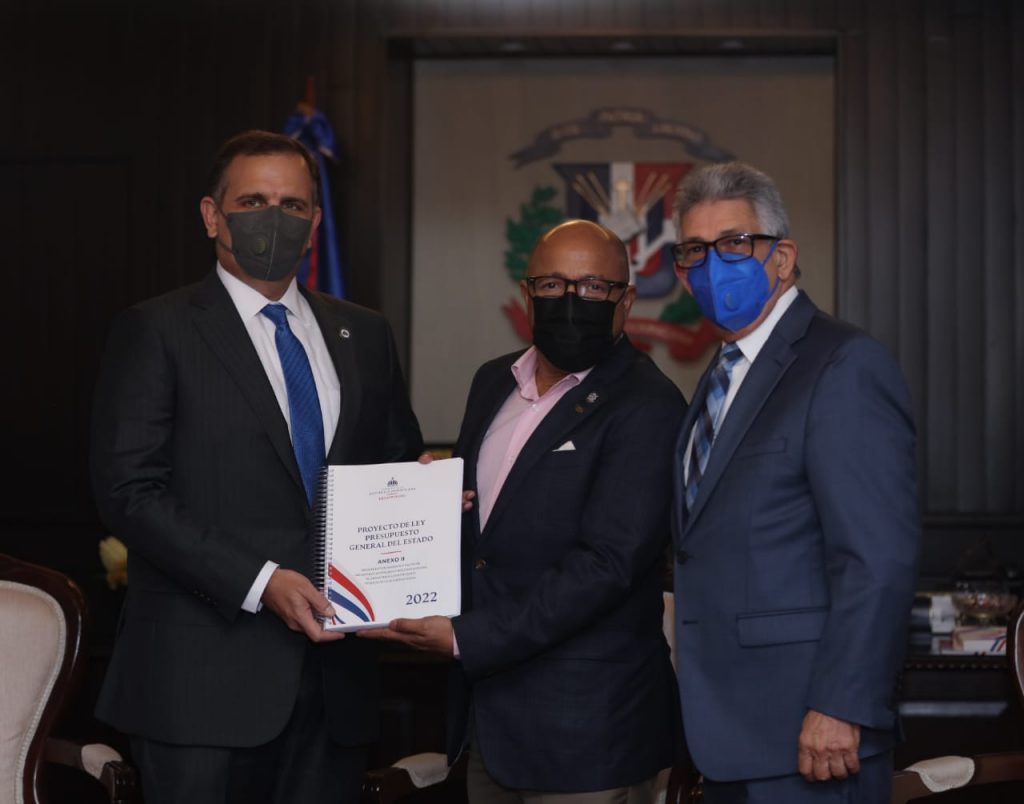
Twelve of the 22 ministries will see reductions in their budget allocations to create the necessary budgetary space to increase funding for priority programs in Santo Domingo. The Executive Branch today submitted to the National Congress, for its review and approval, the draft General State Budget Law for 2022, which contemplates total expenditures for the Central Government amounting to RD$1,155,565.3 million, of which total expenditures are projected at RD$1,046,280.7 million and financial applications at RD$109,284.6 million. The legislative bill was delivered by the Minister of Finance, Jochi Vicente, and the Director General of the Budget, José Rijo Presbot, to the President of the Chamber of Deputies, Alfredo Pacheco Osoria, in accordance with Article 233 of the Constitution of the Republic and Article 34 of the Organic Budget Law for the Public Sector No. 423-06. The bill includes a significant effort to prioritize public funds to support the recovery and relaunch of the national productive sector. Tax revenues for the Central Government in 2022 are projected at RD$1,871,485.9 million, equivalent to 14.9% of the estimated GDP for the year. During the ceremony, Vicente explained that this budget projects a deficit for the Central Government of 3.0% of GDP, in line with the consolidation of fiscal accounts undertaken by the current administration to maintain a sustainable debt trajectory. It is noteworthy that 12 of the 22 ministries will see reductions in their budget allocations compared to 2021. This will create the necessary budgetary space to increase funding for other programs defined as priorities, following the strategy of targeted spending to support the economy's recovery without generating additional financing needs. The Minister of Finance also stated that there are other urgent priorities for the country in the areas of health, social protection, citizen security, and infrastructure projects. These are part of the fiscal reorganization proposal that the Government will present in October for public review and discussion, before its subsequent submission to Congress. The Director General of the Budget explained that the expenditure programming for the 2022 fiscal year has the fundamental purpose of ensuring the country's inclusive and sustainable development, prioritizing the main needs of its citizens. Salary Increase for Police and Military Personnel: The bill includes increases in the budget allocations of the Ministries of the Interior and Police and of Defense, reaching amounts of RD$1,509,182.2 million and RD$1,821.3 million, respectively. This is primarily due to the salary increases for police and military personnel and to provide resources to strengthen the Citizen Security Plan by modernizing the infrastructure, equipment, and technology of national defense institutions. Social Protection and Security: The bill allocates RD$1,500,939.6 million for the universalization of social security through the National Health Insurance (SENASA). This initiative aims to increase enrollment to over 5.8 million Dominicans in the subsidized family health insurance program and 1.2 million in the contributory program. Similarly, it proposes the continuation of the "Supérate" program, which doubles the per capita funding provided by assistance programs prior to the COVID-19 pandemic. Within this framework, the "Aliméntate" program, which replaces "Comer es Primero," has a planned allocation of RD$1,446,730 million to provide conditional cash transfers to eligible households. Investment Projects: The planned capital expenditure includes the execution of high-social-return projects such as the construction of aqueducts and wastewater treatment plants, expansion of electrical grids, construction and expansion of educational facilities, repair and remodeling of hospitals and childcare centers, and the plan for repairing and constructing new homes to reduce the housing deficit. The largest proportion of investment project spending will be concentrated on improving the intra- and interprovincial road network to facilitate the transportation of people and goods, which is essential to catalyzing private investment. RD$16 billion will be allocated for the development program of the physical infrastructure of streets and avenues and another RD$5,600 million for the increase of transport capacity and the construction of sections in the lines of the Santo Domingo Metro.
DIGEPRES provides training on how to formulate a Multi-Year Budget for the first time and presents improvements to SIGEF
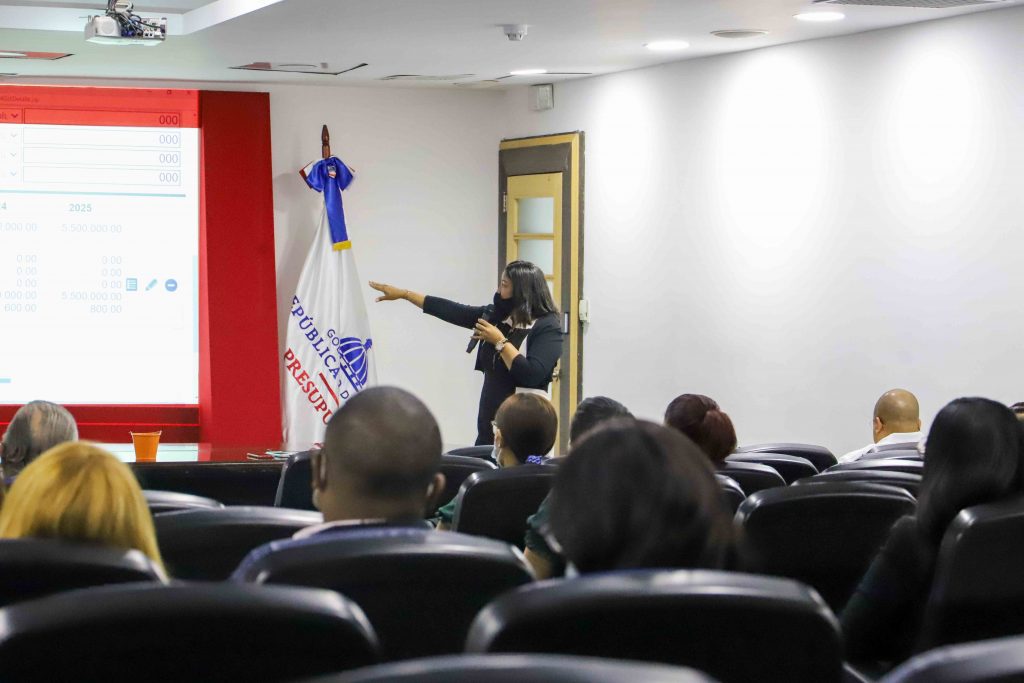
Improvements to the Financial Management Information System (SIGEF) include modules for formulating revenue estimates and expenditure projections. The General Directorate of Budget, through the Standards and Methodologies Department of the Directorate of Quality and Evaluation of Budget Management, conducted training sessions on the “Formulation of the 2022-2024 Physical-Financial Preliminary Budget,” with the objective of providing assistance and support for the annual and multi-year formulation of the preliminary drafts that comprise the General State Budget. This is the first time that DIGEPRES has provided training to comply with the provisions of Article 13 of Law No. 423-06, which establishes the preparation of the Multi-Year Public Sector Budget. DIGEPRES, as the governing body that regulates and manages the administration of the State Budget, is disseminating the general guidelines for each government entity to prepare its preliminary budget. Improvements were also made to the formulation module of the Financial Management Information System (SIGEF) to include the ability to register revenue estimates and expenditure projections with a multi-year horizon. The training sessions were held over five days at the DIGEPRES facilities and were attended by more than 600 employees from 155 entities and agencies of the Non-Financial Public Sector, as a way to ensure compliance with budgetary policy and the proper use and management of public resources. These sessions are conducted with the objective of achieving continuous improvement in the transfer of budgetary knowledge so that each government agency prepares a draft budget that is realistic and aligned with sound planning, thus reducing the number of modifications required during the execution of the 2022 fiscal year. According to the budgetary policy, approved by President Luis Abinader and the Council of Ministers, the deadline for registering draft budgets from state entities and agencies is September 3. The Executive Branch will present the General State Budget Bill to the National Congress on October 1st.
DIGEPRES receives gold medal at National Public Sector Quality Award
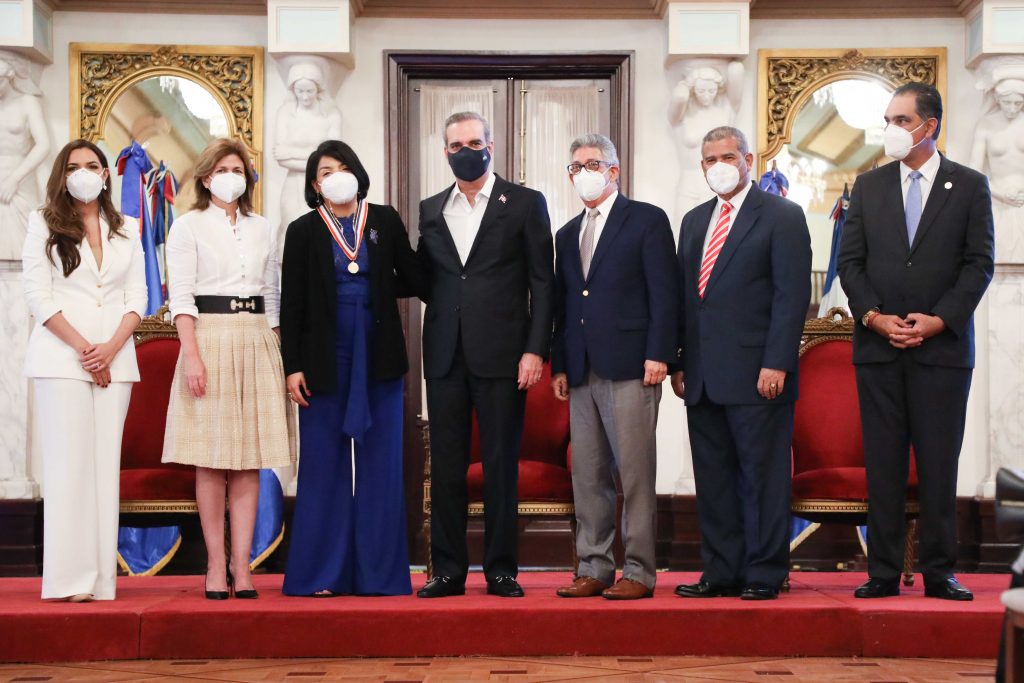
The General Directorate of Budget (DIGEPRES) has been awarded the gold medal at the National Award for Quality and Promising Practices in the Public Sector, for having reached the quality standards, according to the parameters used to measure the services that the institution offers to citizens.