


 EN
EN  ES
ES Digepres presents conceptual model of the new Results-Oriented Multi-Year Budget Project
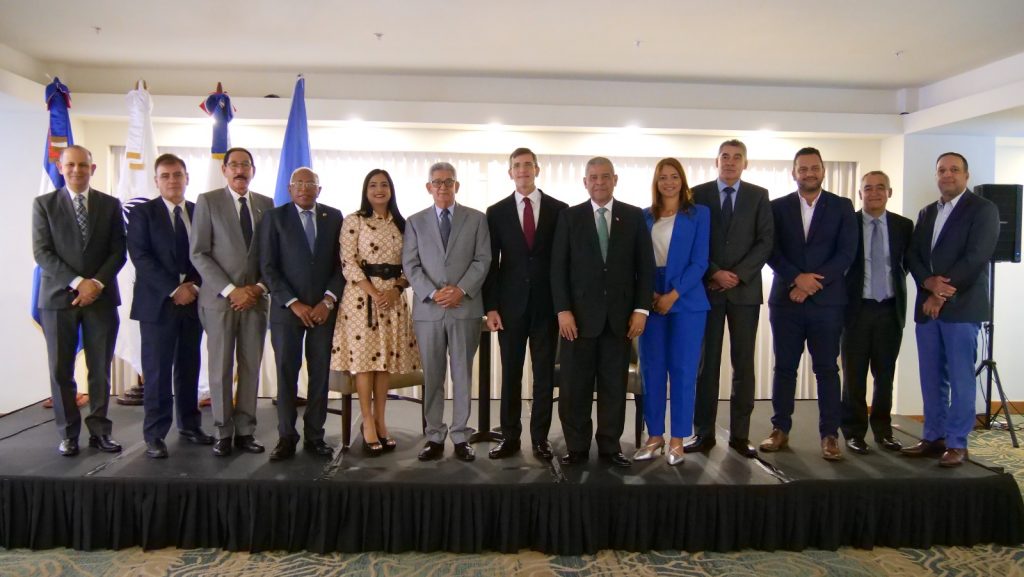
La propuesta, que se lleva a cabo en coordinación con el Ministerio de Hacienda y el Banco Interamericano de Desarrollo (BID), busca impactar positivamente en la cultura presupuestaria del ámbito estatal La Dirección General de Presupuesto presentó a diversas autoridades las principales características y atributos del nuevo Proyecto Presupuesto Plurianual Orientado a Resultados con Modalidad Dinámica, en coordinación con el Ministerio de Hacienda y el Banco Interamericano de Desarrollo (BID). Esta actividad, se suma a las acciones que promueven la transformación y mejora de la Administración Tributaria, que impactará positivamente en la cultura presupuestaria del ámbito estatal. El acto de apertura fue encabezado por el ministro de Hacienda, José Manuel (Jochi) Vicente; el director general de Presupuesto, José Rijo Presbot; Iván Ramírez, subdirector de la Dirección General de Presupuesto; Ariel Teodoro Zaltsman, especialista líder en Gestión Fiscal del Banco Interamericano de Desarrollo (BID) y Griselda Gómez, directora de Calidad y Evaluación del Gasto Público de Presupuesto. José Manuel Vicente, ministro de Hacienda, quien dio las palabras de apertura al evento, agradeció las acciones que las instituciones involucradas en el nuevo sistema vienen realizando y destacó que es parte de los trabajos que marcan la ruta hacia la mejora de la calidad del gasto público e intervenciones estatales. Indicó que la propuesta del modelo conceptual de los procesos presupuestarios presentada busca que el Estado dominicano cuente con un mejor sistema presupuestario que contribuya y garantice la eficacia, eficiencia, calidad de gestión de los recursos públicos y la mejora en los procesos vinculados. “Esta es una obra en construcción, hoy podemos decir que hemos avanzado y actualizado diversos procesos como las acciones que se enmarcan dentro el Proyecto Presupuesto Plurianual Orientado a Resultados con Modalidad Dinámica”, dijo el ministro de Hacienda. Al cierre del evento, José Rijo Presbot, director de Presupuesto entregó ejemplares del Modelo Conceptual a Darío Castillo, ministro de Administración Pública; Rómulo Arias Moscat, director de Contabilidad Gubernamental y Luis Madera, viceministro de Planificación e Inversión Pública del Ministerio de Economía, Planificación y Desarrollo. Rijo Presbot, en su intervención destacó la importancia del Modelo Conceptual y enfatizó la importancia del trabajo que viene realizando Digepres en torno a la implementación de una nueva estructura programática de los gobiernos locales, para mejorar la formulación de los presupuestos de cada ayuntamiento, y con ello, los servicios que ofrecen a los ciudadanos. Generales del proyecto El objetivo del proyecto es fortalecer la eficiencia y la calidad en la gestión de los recursos públicos a través de la elaboración de un modelo conceptual, funcional y el desarrollo tecnológico para el nuevo sistema presupuestario dominicano, incorporando la plurianualidad y atributos dinámicos en todo el ciclo. Para ampliar las generales del proyecto, la actividad contó con un panel que llevó por nombre “Modelo Funcional de Programación y propuesta de interoperabilidad, retos y desafíos del proyecto Presupuesto Plurianual Orientado a Resultados con Modalidad Dinámica”, liderado por Griselda Gómez, directora del proyecto y Waldo Gutiérrez, consultor vinculado a la propuesta. Griselda Gómez y Waldo Gutiérrez, durante su participación, de manera indistinta, explicaron en líneas generales a los presentes las características y atributos del nuevo sistema presupuestario, los conexos del Sistema Integrado de Administración Financiera del Estado (SIAFE), nuevas normativas del Sistema de Información de la Gestión Financiera (SIGEF), el Modelo Integral de Gestión Financiera Pública y el Proyecto de Presupuesto Plurianual Orientado a Resultados con Modalidad Dinámica (PPORMD) finalizando con los retos, desafíos y próximos como parte de la propuesta.
Budget Office receives IMF mission: They present progress and efficient performance of budget management in the Dominican Republic
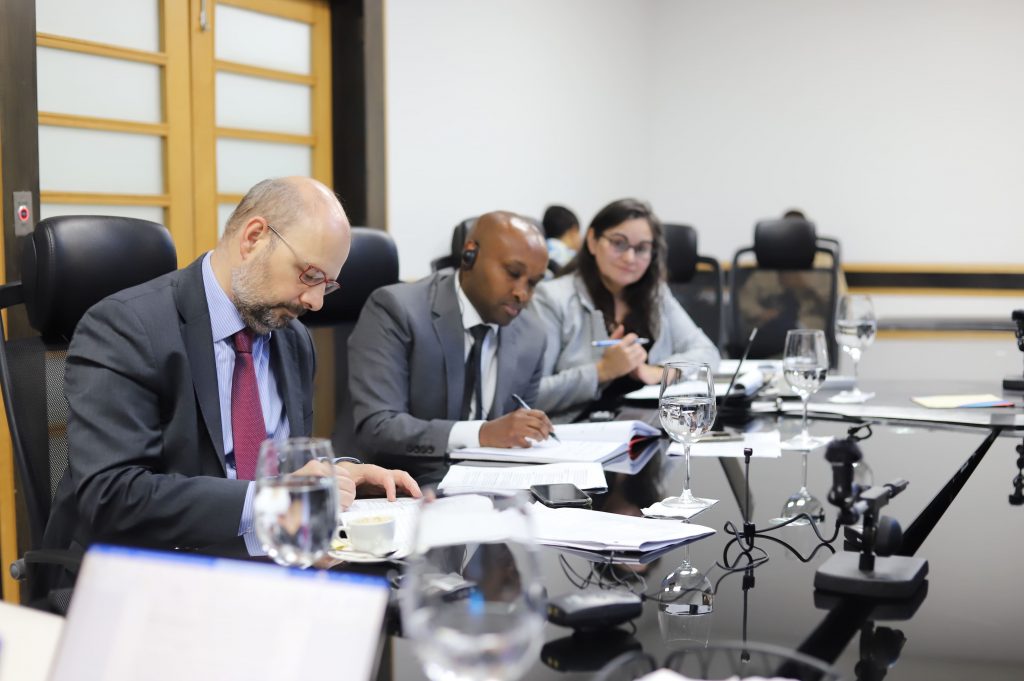
José Rijo Presbot, along with a team of technicians from the Budget Directorate (Digepres), reviewed the achievements and goals of the Budget; they highlighted government measures to mitigate the effects of international conflicts. The Director General of the Budget, José Rijo Presbot, and the Deputy Director, Iván Ramírez, led a meeting with the International Monetary Fund (IMF) mission currently in the country to monitor the performance of the Dominican economy. The visit of the delegation, comprised of Emilio Fernández, head of mission; Pamela Madrid, fiscal specialist; and Hassan Adan, fiscal specialist assigned to the Dominican Republic, served to address some of the IMF's concerns regarding institutional operations. Rijo Presbot briefed the IMF team on the work related to the Organic Budget Law for the Public Sector and outlined the measures taken by President Luis Abinader's administration to ensure that the increase in fuel prices, due to imported inflation, does not directly impact Dominican families. On the other hand, he also detailed the actions taken to respond to those affected by Hurricane Fiona throughout the country. In this regard, the Budget Director stated that, “all this effort by the Government to find money for social subsidies has only one purpose: to protect people and ensure their well-being.” During the meeting, it was emphasized that in the first two years of President Abinader's term, the focus has been on transparency and social oversight, which has allowed the Dominican Republic to rank 9th out of 120 countries in terms of budget transparency and 3rd in Latin America. In his remarks, the Budget Director highlighted achievements in the area of public spending and the prohibition of recognizing administrative debts without first having the resources allocated in the General State Budget Law. “Thanks to the joint effort of the entire public administration, no administrative debts were generated in the country's finances during 2021,” explained Rijo Presbot. For his part, Emilio Fernández, head of the IMF mission, expressed interest in the work being carried out by the Budget Office with the Inter-American Development Bank (IDB). In this regard, Griselda Gómez, Director of Quality and Evaluation of Public Spending, highlighted the new functional classifications for gender and climate change included in the 2023 Budget Bill. These classifications promote a sensitive approach and will strengthen the knowledge of technical staff in public institutions within the budgetary sector, both on gender and climate change issues. At the meeting, Rijo also emphasized the work being done in strict adherence to the Organic Budget Law, as well as the improvements within state institutions to prevent violations of Law No. 10-04 of the Chamber of Accounts of the Dominican Republic and Law No. 10-07, which establishes the National System of Internal Control and the Comptroller General's Office, within their bidding and procurement processes. “Previously, no local government conducted its transactions through the procurement portal. With the new measure, everyone is registered in the system. That's progress,” Rijo Presbot emphasized in her remarks. Regarding changes and improvements to the Dominican budget system, Patricia Castillo, Head of Planning and Development, stated, “We are working on the transformations of SIGEF (Integrated Financial Management System) to identify areas for improvement in the set of regulations, systems, bodies, and processes that enable the collection of public resources through this tool.” For his part, Juan Portalatín, Head of Financial Management for Budget Formulation and Execution, highlighted the Multi-Year Budget and the costing methodology in the 2023 General State Budget. Along the same lines, Rijo also explained how public spending is managed based on results to achieve a positive impact on society with the allocated resources. Also accompanying the Budget Director were Sorangel González, Odilys Hidalgo, and Rolando Reyes, who explained the challenges and goals in various aspects of the budget. The IMF mission thanked the Budget team for the report presented on the performance of the Dominican economy and its forecasts for 2023. This meeting is part of a regular visit that the International Monetary Fund mission conducts with key public finance stakeholders to review the performance of the national economy and future projections.