

 EN
EN  ES
ES DIGEPRES and representatives of the Inclusive Societies program share aspects that promote sustainable mobility in the country
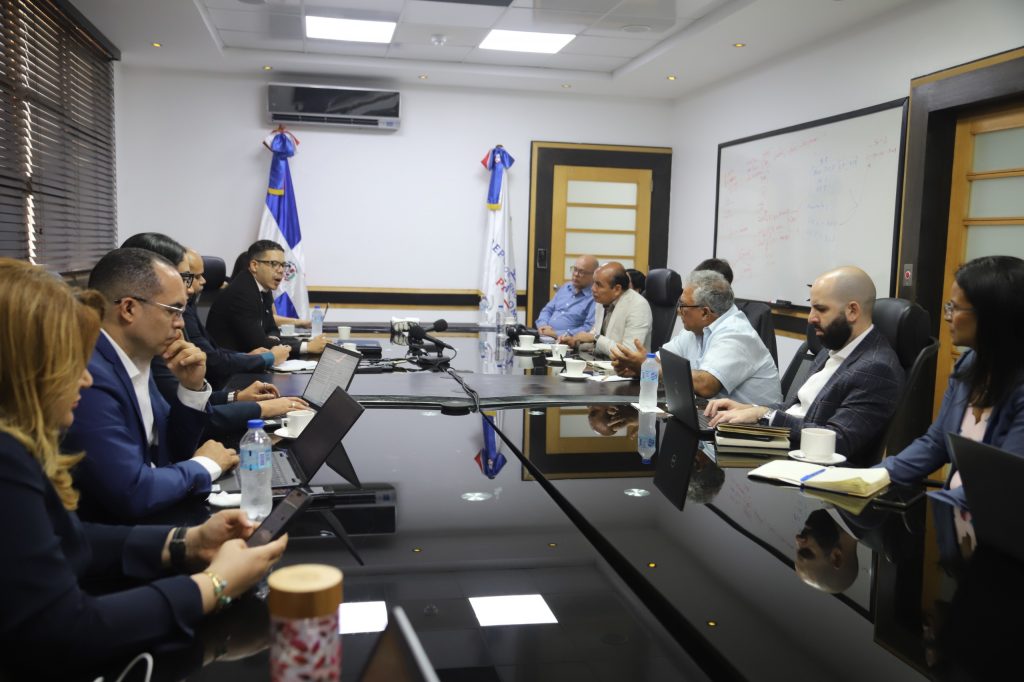
Representatives from the Budget Office and the European Union exchanged views on the program and the mission that DIGEPRES (General Directorate of Budget) carries out in the country's economic sphere. The General Directorate of Budget (DIGEPRES) and representatives of the European Union's Inclusive Societies program technical mission held a meeting to discuss sustainable mobility in public transportation in the Dominican Republic, addressing its structure, services, and social aspects. The meeting allowed mission representatives and Budget Office staff to share their impressions of the European program and DIGEPRES's mission in the country's economic sphere. The event was led by Rafael Jovine, Director of Economic Studies; Odilys Hidalgo, Director of Budget Services; Juan Portalatín, Head of Financial Management for Formulation and Execution; María Victoria Ortiz, Head of Standards and Methodologies; and Yeimi Brown Mendieta, Budget Planning and Gender Equality Analyst. As part of the mission, Bárbara Gómez Valcárcel, a technical specialist in the Governance and Citizenship component of the Inclusive Societies program; Galia Meléndez, a technical specialist in Gender and Women's Empowerment; Ana Pérez, an expert in Gender, Social Law, and Social Protection for Inclusive Societies; and Páscuale Tórtola, from the Just Transitions component of the same initiative, representing the ITILA organization, participated. In presenting the program, Bárbara Gómez indicated that it seeks to prioritize the country in the area of sustainable mobility, recognized as fundamental for the development of the Dominican Republic and key to citizen well-being. She also stated that the European Union in Latin American countries works alongside other European institutions in these territories, paying special attention to women, youth, and the poorest segments of the population to ensure they are not left out of the improvement processes. During the mission's presentation on their work promoting a gender perspective, María Victoria Ortíz, from DIGEPRES (General Directorate of Budget and Public Finance), outlined the actions taken within the framework of the 2026 General State Budget and the work carried out in coordination with international organizations based in the country. "At DIGEPRES, we work on gender labeling and thematic classification, a methodology that identifies and classifies data related to gender equality and estimates statistical units," Ortíz stated. She also noted that the Budget Office is a leader in this type of methodology and provided a general overview of the regulations, monitoring, and budget evaluation within the process. Rafael Jovine, during the meeting, explained DIGEPRES's role in the budget cycle, the institutional starting point for linking transportation, inclusion, and the budget. He also discussed public investment projects and tools for transparency and social participation, noting that the Dominican Republic has received significant international recognition in the latter, solidifying its position as a leader in the Central American and Caribbean region. For his part, Norvin Berges highlighted the work carried out by the Budget Office in the area of local government and presented images of the dashboard that centralizes, organizes, and displays key indicators, metrics, and data from the municipality that could serve as future input for the Inclusive Societies program. Finally, the representatives of the European Union program's technical mission praised the data provided by the Budget Office. They also outlined the agenda of activities and future meetings with government institutions. The Inclusive Societies program is being developed within the framework of a Global Strategy launched in 2021, which establishes an investment agenda and partnerships between the European organization and various countries worldwide, utilizing tools such as development cooperation under the 360-degree approach, to guarantee the social dimension and inclusion policies for vulnerable populations within their borders and in other regions.