


 EN
EN  ES
ES The Budget Office concludes Ethics Week by promoting good practices in public service

The Governmental Integrity and Regulatory Compliance Commission of DIGEPRES reaffirms each year the importance of strengthening integrity, transparency, values, and a culture of institutional responsibility. Under the motto "Development Lies in Integrity," the Governmental Integrity and Regulatory Compliance Commission (CIGCN) of the General Directorate of Budget successfully concluded DIGEPRES Ethics Week, which aimed to promote and strengthen values and ethics within the budgetary institution. At the opening of DIGEPRES Ethics Week, the welcoming remarks were delivered by Lidia Castillo, representative of the occasional staff of occupational group V, and Paola Chaljub, head of the Communications Department. Both emphasized the importance of the event and encouraged employees to continue complying with all regulations and to support the initiatives within the framework of the commemoration of National Civic Ethics Day. The CIGCN celebrated Ethics Week, including in its extensive program the installation of the "Values Swap," the launch of the Citizen Complaint Box, the "Every Decision Counts" workshop for staff in Occupational Groups I and II, and concluding with a film forum. The activities promoted by the CIGCN address key issues such as corruption prevention, strengthening regulatory compliance, and promoting best practices in public service, all within an inclusive and participatory approach. Each year, DIGEPRES Ethics Week is becoming a firmly established forum that strengthens integrity, transparency, values, a culture of responsibility, the common good, the fight against corruption, and improves trust in the institution. With this initiative, the Budget Office reaffirms its commitment to continue promoting actions and policies that strengthen public ethics and the construction of a more just society, institutional strengthening, and civic engagement. DIGEPRES, under the leadership of the General Directorate of Ethics and Governmental Integrity (DIGEIG), established its Governmental Integrity and Regulatory Compliance Commission (CIGCN) in compliance with Decree No. 791-21, which declares the implementation and election of Governmental Integrity and Regulatory Compliance Commissions (CIGCN) in all public institutions a high national priority. DIGEPRES Ethics Week was held with the participation of the Director of the General Directorate of Budget, José Rijo Presbot; the Deputy Director, Iván Ramírez; and Budget staff, technicians, and collaborators. The deployment of activities promoted by the CIGCN of the DIGEPRES, within the framework of the National Day of Citizen Ethics, also seeks to join the actions promoted by the General Directorate of Ethics and Governmental Integrity (DIGEIG) and honor the historical memory and legacy of Ulises Francisco Espaillat, Dominican statesman, nineteenth president of the country, symbol of the common good and citizen ethics.
Rijo Presbot: “The government’s plan in the face of the international situation seeks to contain inflation and protect vulnerable sectors”
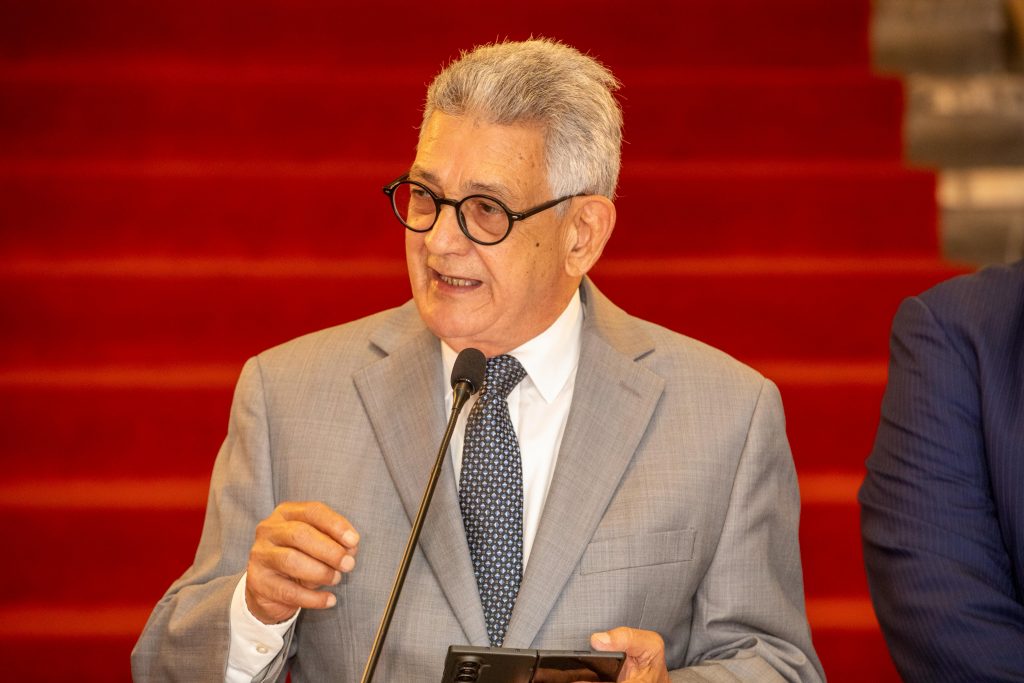
The Director General of the Budget Office highlights that for every 10 gallons of gasoline consumed by a citizen, the Government covers 500 pesos, preventing a greater impact on the basic food basket. José Rijo Presbot, Director General of the Budget Office, reported that President Luis Abinader's administration has a budget adjustment plan that seeks to prioritize fiscal discipline and protect vulnerable sectors affected by the crisis in the Middle East and the instability in oil prices. Rijo Presbot explained that the 2026 General State Budget was formulated under assumptions that did not anticipate such high oil prices, ranging from $90 to $105 per barrel, a scenario that requires the Government to make additional efforts to mitigate the impact on citizens. During an interview on the program “No se Diga Más,” hosted by journalists Alexander Barrios, Jorge Chaljub, Laura de la Nuez, Vianmarie Santana, and Miralba Ruiz, Rijo Presbot emphasized that the country is experiencing an extraordinary situation, which is why Dominican authorities are allocating between RD$1.2 billion and RD$1.6 billion weekly to fuel subsidies. He added that if these subsidies continue, they would have to allocate up to RD$2 billion per week for this purpose. “These increases have a significant impact on public spending, so the proposal seeks to maintain economic stability and growth without neglecting the social protection to which we are committed,” he stated. The Budget Director also indicated that the measure addresses the impact that fuel subsidies have on households. “For every 10 gallons of gasoline consumed by a citizen, the government is absorbing approximately 500 pesos, preventing a greater impact on the basic food basket,” he emphasized. Budget Director Rijo Presbot assured that the measures adopted are the result of a rigorous analysis of spending patterns, identifying areas where responsible adjustments can be made. During his remarks, the Budget Director explained that the measure stems from the need for internal adjustments, prioritizing efficiency and the responsible use of public resources. Finally, Rijo Presbot reiterated President Luis Abinader's government's commitment to fiscal responsibility, adopting timely measures to address the effects of the adverse international environment while ensuring the continuity of essential public policies. Details of the Government's Plan: It is worth noting that the set of measures taken by the Government broadly anticipates savings of RD$1,400,000 million in non-priority spending. This will allow for maintaining economic stability, based on the principle of honoring all commitments already formalized in contracts. Budgetary appropriations not yet committed will be reviewed, adjusted, or reduced according to national priorities. The measures were announced by the Director General of the Budget, José Rijo Presbot, following a Cabinet meeting chaired by the President of the Republic. He detailed that these actions include reducing operating expenses, curbing vehicle acquisitions (except for priority areas such as social assistance and food security), decreasing minor repairs and maintenance, streamlining services and contracts, limiting events to minimal costs, and adjusting spending on textiles, clothing, travel allowances, airfare, fuel, and advertising, among others. In addition, a verifiable reduction in current transfers to autonomous, decentralized bodies and public companies with the capacity to generate their own resources.