EN
 ES
DIGEPRES trains students in Azua on transparency and use of public resources with Budget in the Classrooms

Students from the Los Toros Polytechnic Institute learned about the impact of the General State Budget on their daily lives and explored citizen oversight tools. Los Toros, Azua – With the goal of bringing the workings of the State closer to new generations and fostering a culture of transparency, the General Directorate of Budget (DIGEPRES) brought its “Budget in the Classroom” program to the Los Toros Polytechnic Educational Center, located in the Los Toros Municipal District, Azua province. The activity included the participation of Robert Lara Segura, director of the polytechnic; Alba Iris Rodríguez De La Paz, pedagogical coordinator; and Eladio Marte, mayor, who accompanied the educational community throughout the event. The educational session was led by Rafael Jovine, director of Economic Studies and Financial Monitoring, who delivered the keynote address, “Understanding and Participating in the General State Budget.” During her presentation, Jovine explained to the students what the General State Budget (PGE) is, how decisions are made regarding the use of public funds, and why it directly impacts their daily lives. The practical and technological component of the activity was led by Airon Fernández, a specialist in Economic Studies and Financial Monitoring, who guided students and teachers on a virtual tour of the institutional portal Digepres.gob.do. Through this demonstration, Fernández showed how to navigate the platform effectively and explore the information resources available for public consultation. Similarly, analyst Yeimi Brown presented the Weekly Budget Execution Report in an engaging way. This essential tool, published every Tuesday on the portal, allows citizens to understand, monitor, and oversee the allocation of public resources in real time. For his part, Melvin Rodríguez, Coordinator of Standards and Methodologies, focused his presentation on explaining the budget according to the criteria of the budget classification systems, with a special emphasis on the management of local governments. During this session, the results of the Los Toros Municipal District Board in the Ranking of Indicators of the Municipal Public Administration Monitoring System (SISMAP Municipal) were presented, highlighting the local progress in institutional management. A practical exercise was also conducted to identify the public investment projects planned for the province of Azua, allowing attendees to visualize the specific works and initiatives destined for their community. With the premise that "Understanding the budget is exercising your Right to Know," the visit to the Los Toros Polytechnic reaffirmed the commitment to empowering youth as active monitors of national development. About Budget in the Classroom: This is an educational program of the General Directorate of Budget (DIGEPRES) aimed at secondary and university students. Through a dynamic and participatory format, this initiative seeks to develop a critical understanding of the use of public resources and their impact on society. It is part of the sustained efforts of the Government of the Dominican Republic, through the General Directorate of Budget (DIGEPRES), to consolidate its international leadership in fiscal transparency and accountability. According to the results of the 2025 Open Budget Survey (OBS), presented by the International Budget Partnership (IBP), the country achieved a record score of 82 out of 100 in the transparency pillar, solidifying its position as a leader in Central America and the Caribbean. Likewise, in the public participation pillar, the Dominican Republic made significant progress, surpassing the average of previous assessments and reaffirming the effectiveness of its programs for direct contact with citizens and its social openness tools.
DIGEPRES and representatives of the Inclusive Societies program share aspects that promote sustainable mobility in the country
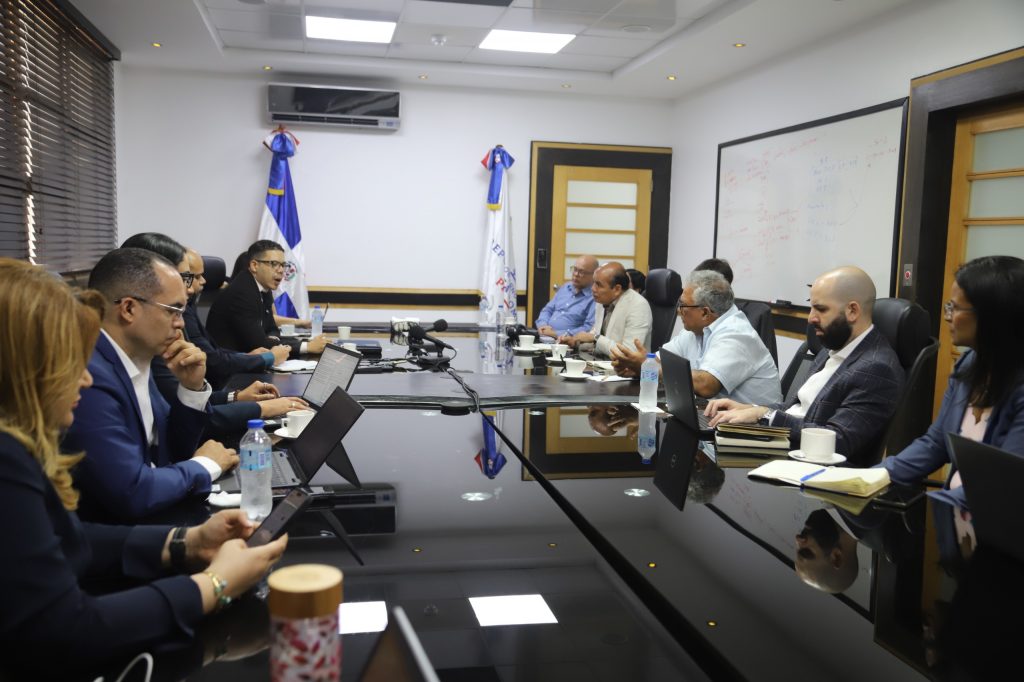
Representatives from the Budget Office and the European Union exchanged views on the program and the mission that DIGEPRES (General Directorate of Budget) carries out in the country's economic sphere. The General Directorate of Budget (DIGEPRES) and representatives of the European Union's Inclusive Societies program technical mission held a meeting to discuss sustainable mobility in public transportation in the Dominican Republic, addressing its structure, services, and social aspects. The meeting allowed mission representatives and Budget Office staff to share their impressions of the European program and DIGEPRES's mission in the country's economic sphere. The event was led by Rafael Jovine, Director of Economic Studies; Odilys Hidalgo, Director of Budget Services; Juan Portalatín, Head of Financial Management for Formulation and Execution; María Victoria Ortiz, Head of Standards and Methodologies; and Yeimi Brown Mendieta, Budget Planning and Gender Equality Analyst. As part of the mission, Bárbara Gómez Valcárcel, a technical specialist in the Governance and Citizenship component of the Inclusive Societies program; Galia Meléndez, a technical specialist in Gender and Women's Empowerment; Ana Pérez, an expert in Gender, Social Law, and Social Protection for Inclusive Societies; and Páscuale Tórtola, from the Just Transitions component of the same initiative, representing the ITILA organization, participated. In presenting the program, Bárbara Gómez indicated that it seeks to prioritize the country in the area of sustainable mobility, recognized as fundamental for the development of the Dominican Republic and key to citizen well-being. She also stated that the European Union in Latin American countries works alongside other European institutions in these territories, paying special attention to women, youth, and the poorest segments of the population to ensure they are not left out of the improvement processes. During the mission's presentation on their work promoting a gender perspective, María Victoria Ortíz, from DIGEPRES (General Directorate of Budget and Public Finance), outlined the actions taken within the framework of the 2026 General State Budget and the work carried out in coordination with international organizations based in the country. "At DIGEPRES, we work on gender labeling and thematic classification, a methodology that identifies and classifies data related to gender equality and estimates statistical units," Ortíz stated. She also noted that the Budget Office is a leader in this type of methodology and provided a general overview of the regulations, monitoring, and budget evaluation within the process. Rafael Jovine, during the meeting, explained DIGEPRES's role in the budget cycle, the institutional starting point for linking transportation, inclusion, and the budget. He also discussed public investment projects and tools for transparency and social participation, noting that the Dominican Republic has received significant international recognition in the latter, solidifying its position as a leader in the Central American and Caribbean region. For his part, Norvin Berges highlighted the work carried out by the Budget Office in the area of local government and presented images of the dashboard that centralizes, organizes, and displays key indicators, metrics, and data from the municipality that could serve as future input for the Inclusive Societies program. Finally, the representatives of the European Union program's technical mission praised the data provided by the Budget Office. They also outlined the agenda of activities and future meetings with government institutions. The Inclusive Societies program is being developed within the framework of a Global Strategy launched in 2021, which establishes an investment agenda and partnerships between the European organization and various countries worldwide, utilizing tools such as development cooperation under the 360-degree approach, to guarantee the social dimension and inclusion policies for vulnerable populations within their borders and in other regions.
The Budget Office concludes Ethics Week by promoting good practices in public service
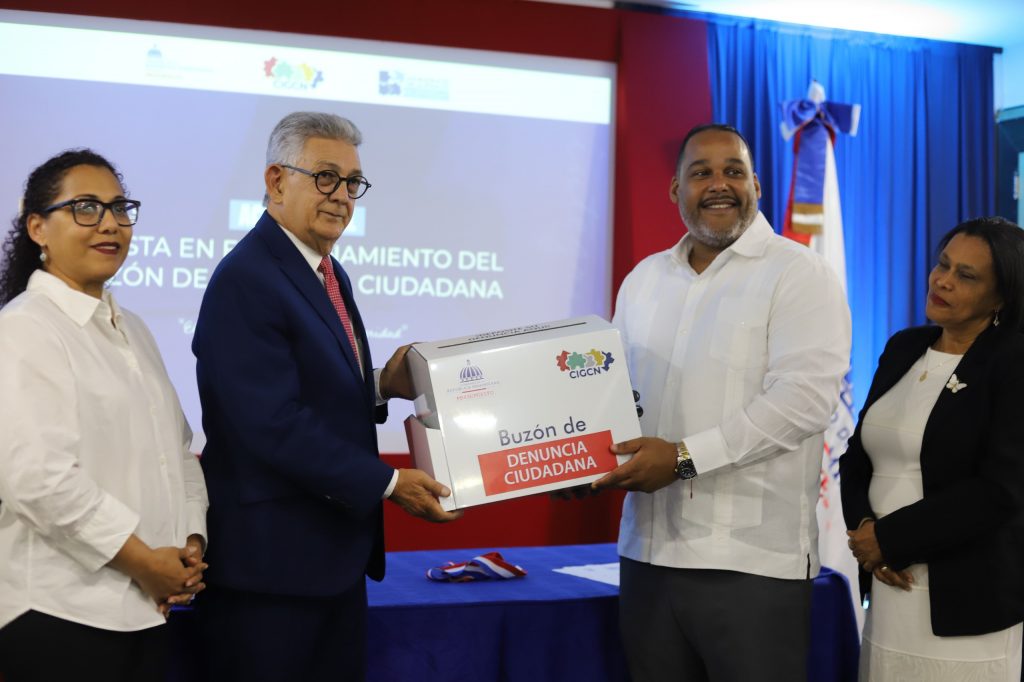
The Governmental Integrity and Regulatory Compliance Commission of DIGEPRES reaffirms each year the importance of strengthening integrity, transparency, values, and a culture of institutional responsibility. Under the motto "Development Lies in Integrity," the Governmental Integrity and Regulatory Compliance Commission (CIGCN) of the General Directorate of Budget successfully concluded DIGEPRES Ethics Week, which aimed to promote and strengthen values and ethics within the budgetary institution. At the opening of DIGEPRES Ethics Week, the welcoming remarks were delivered by Lidia Castillo, representative of the occasional staff of occupational group V, and Paola Chaljub, head of the Communications Department. Both emphasized the importance of the event and encouraged employees to continue complying with all regulations and to support the initiatives within the framework of the commemoration of National Civic Ethics Day. The CIGCN celebrated Ethics Week, including in its extensive program the installation of the "Values Swap," the launch of the Citizen Complaint Box, the "Every Decision Counts" workshop for staff in Occupational Groups I and II, and concluding with a film forum. The activities promoted by the CIGCN address key issues such as corruption prevention, strengthening regulatory compliance, and promoting best practices in public service, all within an inclusive and participatory approach. Each year, DIGEPRES Ethics Week is becoming a firmly established forum that strengthens integrity, transparency, values, a culture of responsibility, the common good, the fight against corruption, and improves trust in the institution. With this initiative, the Budget Office reaffirms its commitment to continue promoting actions and policies that strengthen public ethics and the construction of a more just society, institutional strengthening, and civic engagement. DIGEPRES, under the leadership of the General Directorate of Ethics and Governmental Integrity (DIGEIG), established its Governmental Integrity and Regulatory Compliance Commission (CIGCN) in compliance with Decree No. 791-21, which declares the implementation and election of Governmental Integrity and Regulatory Compliance Commissions (CIGCN) in all public institutions a high national priority. DIGEPRES Ethics Week was held with the participation of the Director of the General Directorate of Budget, José Rijo Presbot; the Deputy Director, Iván Ramírez; and Budget staff, technicians, and collaborators. The deployment of activities promoted by the CIGCN of the DIGEPRES, within the framework of the National Day of Citizen Ethics, also seeks to join the actions promoted by the General Directorate of Ethics and Governmental Integrity (DIGEIG) and honor the historical memory and legacy of Ulises Francisco Espaillat, Dominican statesman, nineteenth president of the country, symbol of the common good and citizen ethics.
Rijo Presbot: “The government’s plan in the face of the international situation seeks to contain inflation and protect vulnerable sectors”
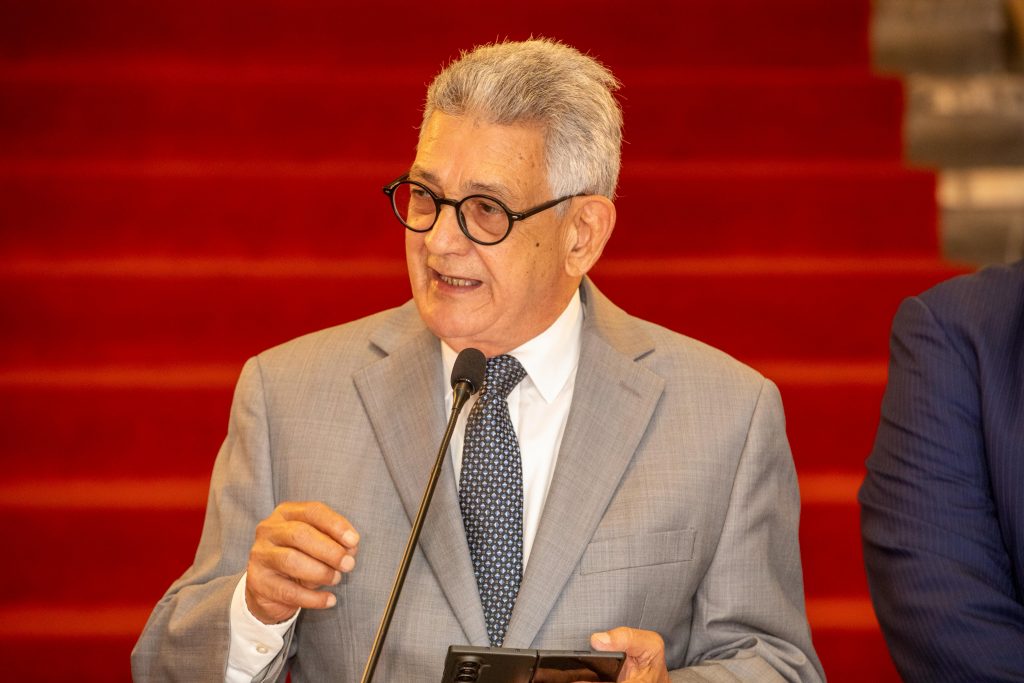
The Director General of the Budget Office highlights that for every 10 gallons of gasoline consumed by a citizen, the Government covers 500 pesos, preventing a greater impact on the basic food basket. José Rijo Presbot, Director General of the Budget Office, reported that President Luis Abinader's administration has a budget adjustment plan that seeks to prioritize fiscal discipline and protect vulnerable sectors affected by the crisis in the Middle East and the instability in oil prices. Rijo Presbot explained that the 2026 General State Budget was formulated under assumptions that did not anticipate such high oil prices, ranging from $90 to $105 per barrel, a scenario that requires the Government to make additional efforts to mitigate the impact on citizens. During an interview on the program “No se Diga Más,” hosted by journalists Alexander Barrios, Jorge Chaljub, Laura de la Nuez, Vianmarie Santana, and Miralba Ruiz, Rijo Presbot emphasized that the country is experiencing an extraordinary situation, which is why Dominican authorities are allocating between RD$1.2 billion and RD$1.6 billion weekly to fuel subsidies. He added that if these subsidies continue, they would have to allocate up to RD$2 billion per week for this purpose. “These increases have a significant impact on public spending, so the proposal seeks to maintain economic stability and growth without neglecting the social protection to which we are committed,” he stated. The Budget Director also indicated that the measure addresses the impact that fuel subsidies have on households. “For every 10 gallons of gasoline consumed by a citizen, the government is absorbing approximately 500 pesos, preventing a greater impact on the basic food basket,” he emphasized. Budget Director Rijo Presbot assured that the measures adopted are the result of a rigorous analysis of spending patterns, identifying areas where responsible adjustments can be made. During his remarks, the Budget Director explained that the measure stems from the need for internal adjustments, prioritizing efficiency and the responsible use of public resources. Finally, Rijo Presbot reiterated President Luis Abinader's government's commitment to fiscal responsibility, adopting timely measures to address the effects of the adverse international environment while ensuring the continuity of essential public policies. Details of the Government's Plan: It is worth noting that the set of measures taken by the Government broadly anticipates savings of RD$1,400,000 million in non-priority spending. This will allow for maintaining economic stability, based on the principle of honoring all commitments already formalized in contracts. Budgetary appropriations not yet committed will be reviewed, adjusted, or reduced according to national priorities. The measures were announced by the Director General of the Budget, José Rijo Presbot, following a Cabinet meeting chaired by the President of the Republic. He detailed that these actions include reducing operating expenses, curbing vehicle acquisitions (except for priority areas such as social assistance and food security), decreasing minor repairs and maintenance, streamlining services and contracts, limiting events to minimal costs, and adjusting spending on textiles, clothing, travel allowances, airfare, fuel, and advertising, among others. In addition, a verifiable reduction in current transfers to autonomous, decentralized bodies and public companies with the capacity to generate their own resources.