

 EN
EN  ES
ES New tool for labeling public spending allows progress towards achieving the 2030 SDGs: Ministry of Finance and UNDP present details to the Budget
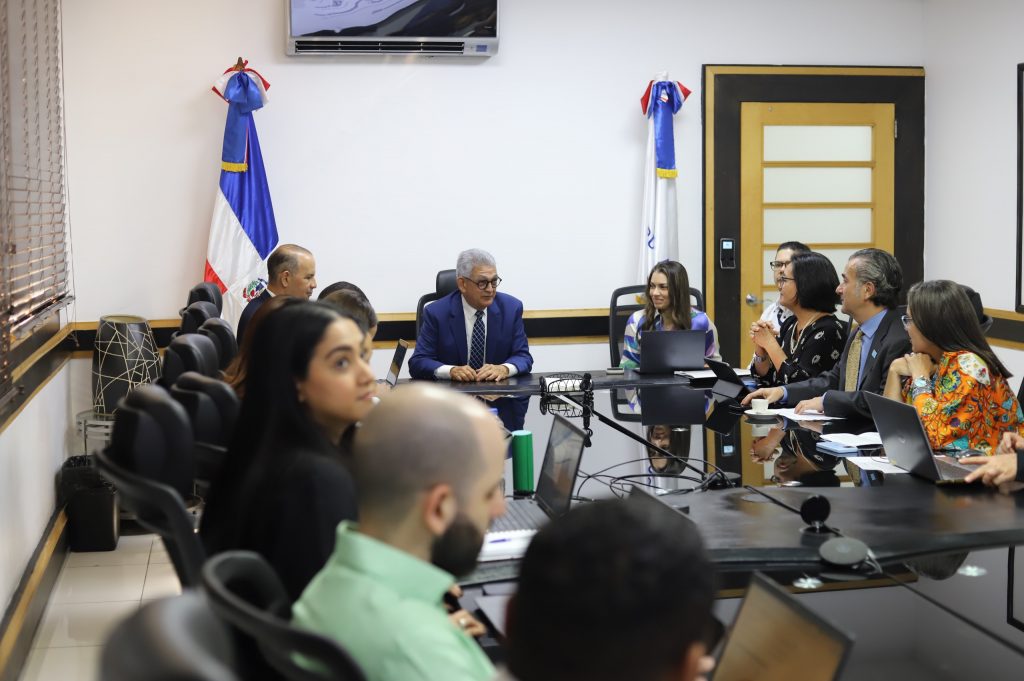
The Dominican government and the United Nations Development Programme will present the Dominican Republic's success story in using a new Artificial Intelligence tool for budgeting at the Annual Sustainable Economy Forum in April 2026 in Chile. The General Directorate of Budget (DIGEPRES), along with the United Nations Development Programme (UNDP) and the Ministry of Finance and Economy, held a meeting to present the project for labeling public spending aligned with the Sustainable Development Goals (SDGs) using artificial intelligence. This initiative seeks to strengthen and contribute to the achievement of the 2030 Agenda for Sustainable Development. During the meeting, they highlighted the Dominican Republic's work and leadership in seeking actions, tools, and implementation to support the fulfillment of this agenda. They also explained that the public spending labeling project uses a technological platform based on artificial intelligence to improve the monitoring and analysis of public spending and government investments. The event was led by the Director General of Budget, José Rijo Presbot, along with a technical team from DIGEPRES, including Iván Ramírez, Deputy Director of Budget; Odilys Hidalgo, Director of Budgetary Services; Rafael Jovine, Director of Economic Studies; Ana Miguelina Terrero, Head of Budgetary Performance Evaluation; Karla Ureña, Head of Planning and Development; Juan Portalatín, Head of Financial Management for Formulation and Execution; María Victoria Ortíz, Head of Standards and Methodologies; Alexander Hilario, Head of Information Technology; and Lowenski Matos, Head of the ICT Systems Development and Implementation Division. Representatives from the Ministry of Finance and Economy and the United Nations System also participated. Rijo Presbot thanked those present for their participation and acknowledged the support that the participating entities have provided to consolidate initiatives aimed at strengthening processes and public management. “This support has allowed us to move forward with implementing actions that promote more efficient and sustainable management,” he noted. Nelson Chávez, Director General of Economic and Social Development at the Ministry of Finance and Economy, representing Martín Franco, Vice Minister of Planning and Public Investment, thanked the UNDP for promoting tools that allow the country to improve sustainable development and institutional frameworks. Chávez added that these efforts are framed within a broader vision of long-term development and planning, aligned with major national objectives and collaborative work. Julia Sánchez, Resident Coordinator of the United Nations System in the Dominican Republic, explained that the process being developed with the government and private institutions seeks to advance the remaining goals related to the 2030 Sustainable Development Goals (SDGs). She also reported that the work developed to date on budgeting and planning using artificial intelligence will be presented by the Dominican Government and UNDP at the Annual Sustainable Economy Forum in April 2026 in Chile. “This is an opportunity to demonstrate how budget planning and execution can contribute to the country’s development,” Sánchez said in her remarks. The UNDP representative added that the collaborative work they are developing with the institutions will have a significant impact in the future. Sánchez also stated that financing is crucial for achieving the 2030 Sustainable Development Goals and that this tool will help in this regard.