

 EN
EN  ES
ES Digepres and MEPyD coordinate process to understand provincial demands with a view to the 2025 General State Budget
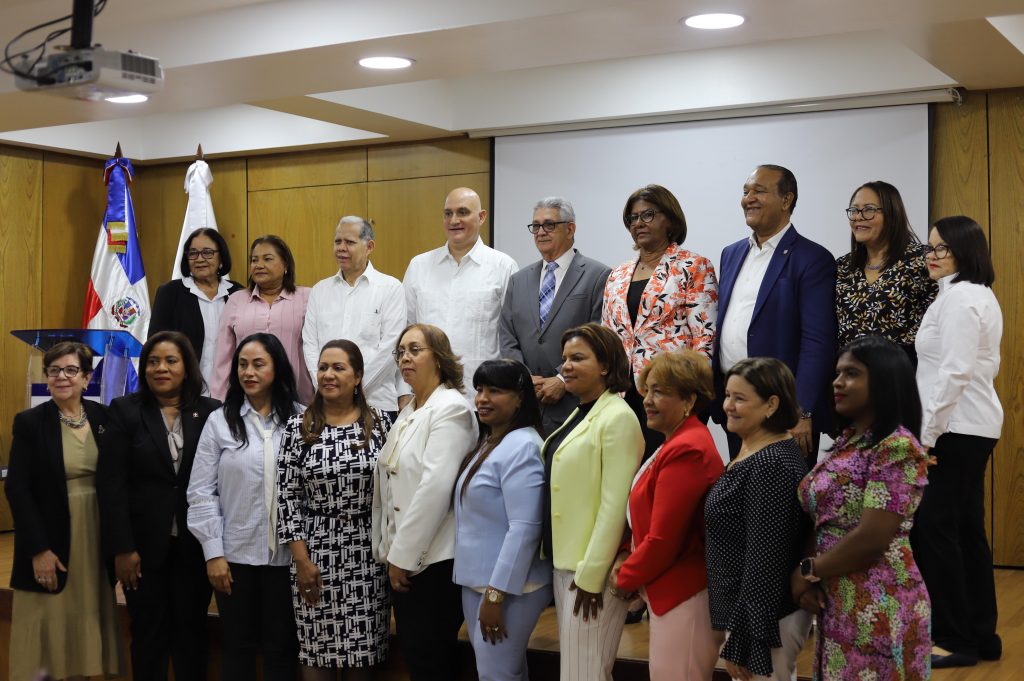
The activity provided guidance and highlighted the importance of local governments for the development and well-being of residents and the community. Representatives from the General Directorate of Budget participated in a meeting with Provincial Governors to coordinate the process of gathering citizen demands for the 2025 Budget, in an event organized by the Ministry of Economy, Planning and Development (MEPyD). The meeting also provided guidance and highlighted the importance of local governments for the development and well-being of residents and the community. The event was led by the Minister of Economy, Planning and Development (MEPyD), Pável Isa Contreras; José Rijo Presbot, Director of the General Directorate of Budget (Digepres); accompanied by the Vice Ministers Domingo Matías, of Territorial Planning and Regional Development (VIOTDR); Horacio Medrano, Head of Development Plans at the MEPyD; and Leomary Liriano, Head of the Planning Coordination Department. The welcoming remarks were delivered by the Minister of Economy, Planning and Development (MEPyD), Pável Isa Contreras, who, in thanking those present, emphasized that improving people's quality of life is the objective of public policies. "Having quality policies implies two things: planning and good resource management, territorializing the plan, establishing indicators, and coordinating actions," highlighted Pável Isa Contreras. For his part, José Rijo Presbot, in his address, pointed out the importance of the Geographic Classifier for identifying economic investments and types of public policies in a province or community, and also the responsibility of the regional governments to streamline the collection of this data. "The regional governments have the responsibility to unify information at the local level, through a sectoral cabinet in the communities, to have a single profile of the public policy implemented in the territory," emphasized Rijo Presbot. He also highlighted the projects the government has been carrying out in communities to improve people's lives, indicating that consultation and social participation are essential to minimize the possibility of errors when designing these projects or prioritizing them. Domingo Matías, from VIOTDR, stated that the current administration's program centers on citizen power, which should be the core of every state institution's actions. The program revolved around topics such as the presentation of the process for gathering territorial citizen demands as a mechanism of the Single Registry of Territorial Citizen Demands (RUDCT) system, the current state of management and the sectoral response to territorial demands, social oversight of the 2025 General State Budget (PGE) calendar, and changes in the programmatic structure, including transfers to provincial governments—the latter presented by Rafael Jovine, Director of Economic Studies at Digepres. Citizen Participation and the Budget Cycle: It is worth noting that the Budget Office has been implementing coordinated actions to strengthen and promote the transformation of local governments, aiming for more transparent and efficient budget execution in municipalities and fostering citizen participation in the budget cycle. The meeting with Provincial Governors to coordinate the process of gathering citizen demands for the 2025 budget was held in the Ascuasiati Room of the Ministry of Economy, Planning and Development (MEPyD), with the participation and representation of governors from various provinces across the country.
Government shows less variation in spending, greater control of the deficit and the first precedent of reduction of public debt stock in the last 7 election years.
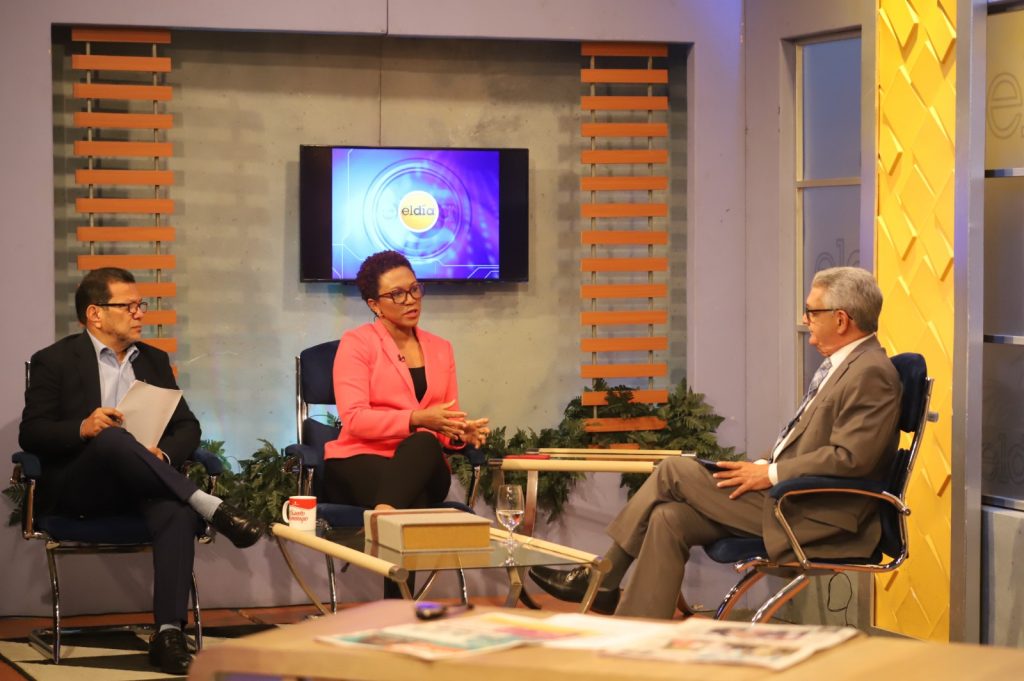
The statement was made by the Director of the Budget Office, who highlighted the public's trust in the government and its positive assessment, attributing this to transparency in the management of public resources. The Director General of the Budget Office, José Rijo Presbot, affirmed that the current budget management's adherence to strict controls and rational spending has enabled the proper execution of public funds. In this regard, he indicated that salaries and contributions decreased from 1.121% of GDP in the first quarter of 2020 to 0.981% of GDP in 2024; contracted services decreased from 0.331% to 0.261%; materials and supplies decreased from 0.221% to 0.101%; and movable, immovable, and intangible assets decreased from 0.131% to 0.041% of GDP. Similarly, the central government deficit, as a percentage of GDP, in the first quarter of 2024 is practically half of that recorded in 2016, which stands at 1.1% of GDP, and 601% lower than that recorded in 2012, when it reached 1.31% of GDP. Rijo attributes this positive performance to the control and rationalization of spending, and the public's confidence in the government of President Luis Abinader, who, according to the Budget Director, “has demonstrated that what you pay for won't be stolen.” He also reiterated the government's constant commitment to investing resources in projects that address the needs of the population. He recalled that the largest deficit in the Dominican Republic's economy was recorded during the 2012 elections. “What caused that? It caused the economic package, when a 161% VAT was imposed on chocolate and cooking oil.” He also pointed out that, “it’s a shame that people who have served in Congress, who have participated in budget formulation, are now attacking what they never did.” According to data provided by the Budget Director, 2024 is projected to be the first election year in the last two decades in which public debt is decreasing year-on-year relative to GDP. Debate from the ground up: public investment and results. In an interview on the program “El Día,” hosted by Edith Febles and German Marte, Rijo Presbot indicated that the debate now transcends the political aspect and that, instead, to discuss the results of the government's management, it is necessary to go to the local level and speak with the people. “The debate today is territorial. For example, if you go to a town like Hato Mayor, you'll see an investment of 8 billion pesos in three and a half years, while in 14 years less than 1 billion pesos were invested,” he said, highlighting the construction of the campus of the Autonomous University of Santo Domingo and the Hato Mayor-Sabana de la Mar highway, among other projects. He also explained how investment at the national level has raised people's quality of life and attributed this to the implementation of current public policies in the territories: “That's why what happened in the municipal elections happened, because people understand that they have a transparent, honest government that uses resources to meet their needs, that there is no corruption, and that any corruption that does appear is combated. There is no impunity.”