EN
 ES
Rijo Presbot: “Never before has the budget been so transparent.”
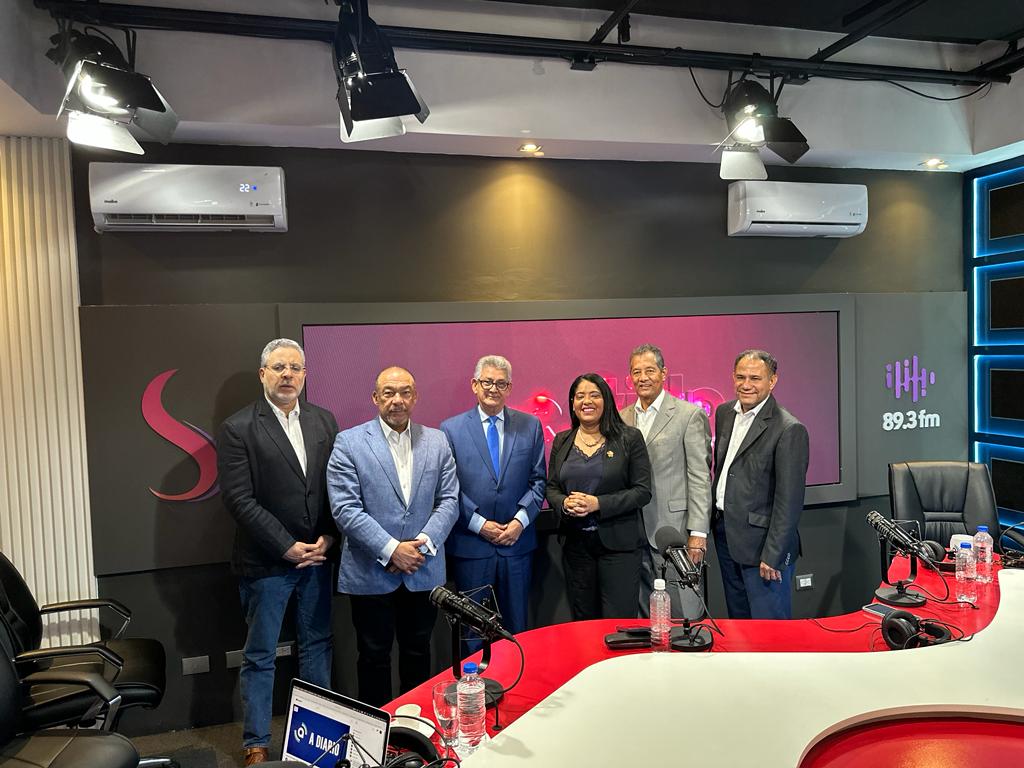
The Director of the Budget Office highlighted the country's performance in terms of the economy and growth, asserting that the Luis Abinader administration has accomplished more with fewer resources, despite the challenging circumstances and the international landscape. The Director General of the Budget Office, José Rijo Presbot, praised the progress made in this budget management, particularly in terms of transparency and the fight against corruption. He noted that the current administration has focused on strengthening controls to prevent waste and illegal borrowing. "We have achieved third place in the region for budget transparency and ninth place out of 120 countries evaluated, because our fundamental principle is transparency and adherence to the law," stated Rijo Presbot. He also emphasized that, due to the established control and monitoring measures, it is impossible to conduct a bidding process without the necessary budget allocation, as the Procurement and Contracting Portal is connected to and registered with the Financial Management Information System (SIGEF) portal. According to the Budget Director, despite the challenging situation from 2020 to 2022, the Dominican Republic has been recognized by international banks, by the International Monetary Fund (IMF), and has been the only country whose risk rating improved, despite the pandemic and its effects. Regarding public investment, Rijo made a historical comparison, stating that, “in terms of water, between 2018 and 2019, the governments of Fuerza del Pueblo and the PLD only invested RD$1,441,700; in contrast, despite facing a challenging situation, not only in terms of the pandemic, but also the impact of the war between Russia and Ukraine and all the imported inflation, between 2021 and 2022 we invested RD$1,441,360,000 in water; in housing, the governments of Leonel and Danilo invested RD$1,441,840,000 in two years, and we, between 2021 and 2022, invested RD$1,441,600,000,000.” He added that in land infrastructure alone, investment exceeded RD$301,300 over the previous two years, even though there was neither a pandemic nor a war during those years. “This government doesn’t know how to spend on corruption.” The Budget Director revealed that the old practice of incurring administrative debt has ceased under this administration and explained the increase in these illegal debts from 2010 to August 2020. “To give you an idea, in 2010 the administrative debt was RD$1,443 billion; in 2017, RD$1,448 billion; in 2018, it rose to RD$1,445 billion; in 2020, it reached RD$1,446 billion, and all of this was done in violation of the Budget Law.” According to Rijo, this represented, on average, RD$251,330 billion in debt incurred by the previous government. He recalled that from January 1, 2020, to August 14 alone, RD$1,446.2 billion in illegal debt was incurred, debt that was not generated through the budgetary process. Rijo stated that "this government doesn't know how to spend on corruption." The level of indebtedness began in 2008. Rijo explained that the debt, as a result of the deficit, began in 2008 with the reelection of Leonel Fernández and due to non-compliance with the National Development Strategy Law, which mandated the Fiscal Pact. "In 2008, with the reelection of Leonel Fernández, the accumulation of needs began because there were more expenses than income, and as an act of government irresponsibility, they should have complied with the law mandating the fiscal pact in 2015. It wasn't approved because it didn't benefit Danilo's reelection in 2016, and that affected all fiscal policy for the following years," Rijo Presbot stated. He estimated the deficit and debt level between 2017 and 2019 at 3.51% of GDP, while between 2021 and 2023, the deficit has remained at an average of 31%, despite the aforementioned circumstances. He stated that, although Congress authorized borrowing RD$1.363 billion this year, the financing need has been reduced to RD$1.333 billion due to internal savings, efficient spending management, and improved revenues—a reduction of RD$1.66 billion for this year. Rijo's statements were made during an interview on the radio program "A Diario," hosted by journalists Christian Jiménez, Pablo McKinney, Rosario Medina, Francisco Arias, and Julián Roa, which airs on Sentido 89.3 FM, part of RCC Media.
Dominican delegation travels to Colombia for exchange of experiences and best practices in budget management
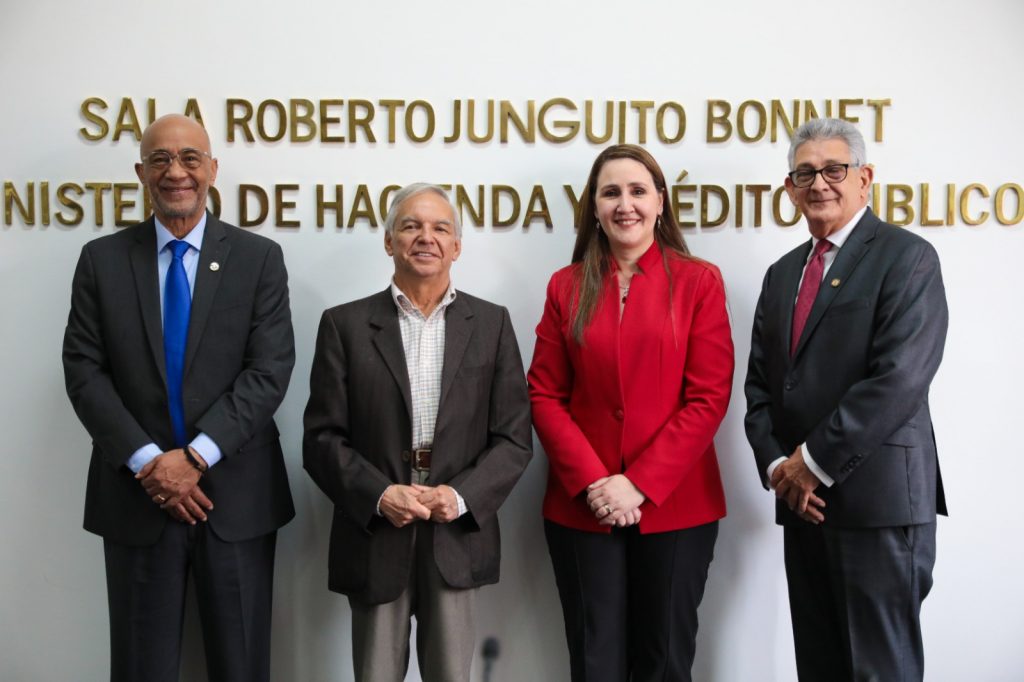
The mission, led by the Director General of the Budget, José Rijo Presbot, held meetings with the Minister of Finance and Public Credit and the Director General of the National Budget of Colombia. Bogotá, Colombia – The visit of representatives from the General Directorate of Budget (Digepres) to the Ministry of Finance and Public Credit of Colombia concluded successfully. This visit was part of an exchange between the two countries to share experiences and best practices in budget management. José Rijo Presbot, Director General of the Budget, along with the accompanying Dominican delegation, met for three days with Ricardo Bonilla, Minister of Finance and Public Credit, and Claudia Marcela Numa, Director General of the National Public Budget, to review the economic outlook of both countries with the aim of applying this knowledge to the redesign of economic processes. The public entities developed a common agenda that included addressing issues related to the functioning of Colombia's budget system, budgetary standards and methodologies; the operation of public companies in Colombian territory; transparency, social oversight, and citizen participation. Likewise, they discussed aspects related to the interoperability of processes and the financial management system; and Results-Based Budgeting, which seeks to promote more effective management of public spending by linking the allocation and use of resources to the performance results of the institutions. The meeting included details of implemented strategies and analyses from the Dominican and Colombian governments, related to the topics presented by staff from both institutions. The Dominican delegation accompanying the Director of the Budget included Elvis Eusebio Abreu, Coordinator of the Advisory Committee and Special Projects; Griselda Gómez, Director of Quality and Evaluation of Budgetary Management; and Odilys Hidalgo, Director of Budgetary Services. María José Castro, specialist in Quality and Evaluation of Budget Management, and Andrea Candelario, in charge of Business Processes and DIGEPRES-SIGEF liaison. Also participating were Martín Francos Rodríguez, Director General of Public Investment at the Ministry of Economy, Planning and Development; Camila Hernández, Director of Fiscal Analysis and Policy at the Ministry of Finance; and Yulisa Benzán, Analyst of Tax Studies and Policies at the Directorate General of Tax Policy and Legislation (DGPLT) of the Ministry of Finance. Colombia, as a benchmark for planning, monitoring, and evaluation. The selection of Colombia as the destination for this exchange of experience and best practices is primarily due to its robust system of planning, monitoring, and evaluation integrated into the medium-term budget. Furthermore, Colombian budget management serves as a model and benchmark for the medium-term spending framework, and the country has sectoral programs applied to investment spending, with a solid structuring of investment projects. During the bilateral meeting, Colombian authorities acknowledged the Dominican Republic's economic and financial achievements and commended its progress in transparency and public accountability. The Dominican Republic ranks third in the region for budget transparency and ninth out of 120 countries, as evaluated by the International Budget Partnership (IBP).