EN
 ES
Budget Director presents Dominican Republic's budget management progress to IMF mission
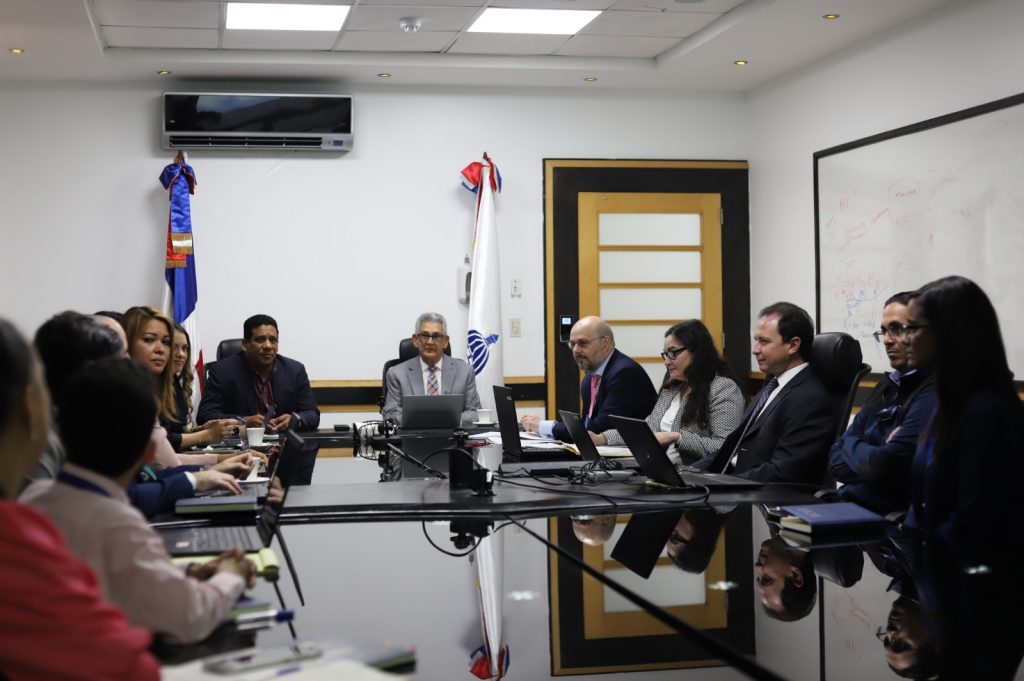
Carlos Pimentel, Director of Public Procurement, along with Rijo Presbot, led the meeting. They reiterated that indicator evaluations show the government's measures are effective in benefiting the most vulnerable. Representatives from the General Directorate of Budget (Digepres) and the International Monetary Fund (IMF) held a meeting to monitor the Dominican Republic's economic activity. José Rijo Presbot, Director General of Budget, and Carlos Pimentel, Director General of Public Procurement, jointly received the IMF mission, which included Emilio Fernández Corugedo and Pamela Madrid. During the meeting, Rijo Presbot provided a general overview of the country's economic performance and the short-term outlook for the Dominican economy, including challenges, tools, and reforms implemented by President Luis Abinader's administration to strengthen transparency and integrity and promote citizen participation. He detailed the government's response to the effects of Hurricane Fiona on the Dominican Republic and the fuel costs resulting from the conflict between Russia and Ukraine. “This scenario increased the deficit from 3% to 3.6%, however, we ended up below that latter figure, and we covered all the effects of Hurricane Fiona without resorting to debt, using only existing resources,” explained Rijo Presbot. Meanwhile, Fernández Corugedo from the IMF directed questions toward the distribution of spending, social investment, budget management, fiscal matters, the multi-year budget, and the prevention and control of corruption. The Budget Director referred to administrative debt, an outdated practice eliminated by this administration. “An article in the Budget Law states that no official can enter into a transactional agreement that generates administrative debt, and anyone who does so must pay it with their own assets,” reiterated Rijo Presbot. He also added that, in the Transactional Portal for Purchases and Contracts, when a project, good, or service is awarded, the money is already reserved precisely to avoid generating administrative debt. Rijo Presbot also outlined the government's subsidy measures for the electricity, transportation, agricultural, and other social sectors to address fuel prices and prevent them from impacting Dominican families. He stated that the evaluation of indicators shows these measures have benefited the country's most vulnerable populations. Pimentel, for his part, explained the work carried out by his institution related to the Financial Management Information System (SIGEF). "The Ministry of Finance, through resolution number 157-2022, announced the automatic integration of the Expenditure Module of the Financial Management Information System (SIGEF) with the Electronic Public Procurement System (SECP), to improve the procurement process in public institutions," Pimentel emphasized. Rijo Presbot referred to the Budget Management Index (IGP), explaining that this tool measures quarterly the degree to which institutions carry out effective, efficient, and transparent budget management. He highlighted work aimed at local governments in the areas of the environment and gender. Finally, he stated that DIGEPRES has encouraged citizen participation and social oversight with initiatives such as Citizen Budget, which offers a more streamlined explanation of the General State Budget, and Citizen Meetings, which facilitate engagement with organized civil society. IMF: Positive Government Measures The International Monetary Fund (IMF), in its May 2022 report, presented the conclusions of the 2022 Article IV Consultation, assessing the measures taken by the Dominican government to protect the population from external inflationary pressures as positive. Also participating in the event on behalf of DIGEPRES were Odilys Hidalgo, Sorangel González Díaz, Juan Portalatin, and Luis Antonio Rodríguez. In addition, Ruth Henríquez, Katherine Gutierrez, Aldo García and Mabel Infante from Public Procurement.